 0
0
 0
0
NEW DELHI — In a transformative move for India’s rural healthcare landscape, the Union Ministry of Health and Family Welfare officially launched a specialized mobile application on Monday, designed to digitize and standardize the clinical workflows of Community Health Officers (CHOs).
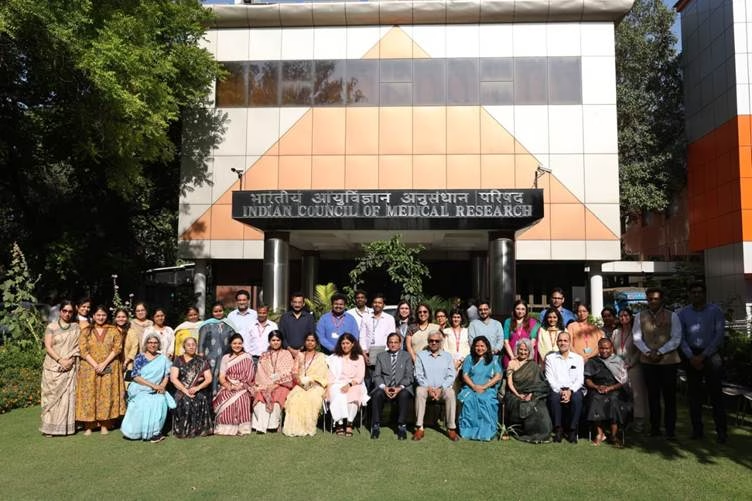
Developed by the Indian Council of Medical Research (ICMR), the application serves as a sophisticated clinical decision-support tool. It is specifically tailored for frontline providers stationed at Sub-Centre Ayushman Arogya Mandirs (SC-AAMs), the primary touchpoints for millions of citizens seeking medical care. The launch, coinciding with the eighth anniversary of the Ayushman Arogya Mandir initiative, signals a shift from manual record-keeping to data-driven, evidence-based primary care.
A Digital “Safety Net” for Primary Care
The core objective of the new app is to reduce the cognitive load on CHOs while ensuring that no critical symptoms are overlooked. By providing structured checklists and step-by-step guidance, the tool assists in patient assessment, history taking, and physical examinations.
“Primary healthcare forms the foundation of any nation’s health architecture,” said Dr. V.K. Paul, Member (Health), NITI Aayog, during the launch event. “India’s journey towards Universal Health Coverage is firmly anchored in robust primary healthcare systems. This tool provides a practical, impactful digital resource to every CHO across the country.”
The application is aligned with the government’s Comprehensive Primary Health Care (CPHC) framework, which expanded the traditional maternal and child health focus to include 12 essential service packages, including non-communicable diseases, mental health, and geriatric care.
How it Works: The Color-Coded Triage System
To ensure rapid and accurate decision-making, the ICMR-developed app utilizes a visual “Traffic Light” system to categorize patient severity:
-
Red (Urgent): Indicates an immediate threat to life or organ. The app provides protocols for pre-referral stabilization and triggers an urgent referral to higher-level facilities.
-
Orange (Specialist Care): Suggests that while not an immediate emergency, the patient requires evaluation by a medical doctor or specialist.
-
Yellow (Manageable): Covers mild to moderate conditions that can be treated at the SC-AAM, often assisted by teleconsultation.
-
Green (Stable): Denotes healthy cases or very mild conditions manageable at the local facility.
Beyond triage, the app integrates Electronic Health Records (EHR), diagnostic reporting, and follow-up tracking. This ensures that a patient’s medical history follows them if they are referred to a district hospital, preventing the loss of vital clinical data.
Bridging the Rural-Urban Healthcare Gap
For the general public, particularly in remote areas, this technology means more than just a digital file. It translates to timely referrals. One of the primary challenges in rural health is “referral lag”—the delay between the onset of symptoms and arrival at a hospital capable of treating them. By automating the identification of “Red” flags, the app empowers CHOs to make life-saving decisions faster.
Dr. Rajiv Bahl, Director General of ICMR and Secretary, Department of Health Research (DHR), emphasized that the app is not a static product. “The launch marks a beginning. This application will continue to evolve based on usage in the field and feedback from the CHOs themselves,” Dr. Bahl stated. He also noted that ICMR is committed to building user-centric solutions that adapt to the realities of frontline healthcare.
The Road Ahead: AI and Integration
Looking toward the future, Dr. V.K. Paul highlighted the necessity of integrating Artificial Intelligence (AI) into the platform. AI capabilities could eventually predict local disease outbreaks based on real-time data entry or provide even more nuanced diagnostic suggestions based on a patient’s multi-year health history.
However, the transition to a fully digital workflow is not without hurdles. Public health experts note that the success of the app will depend heavily on:
-
Connectivity: Reliable internet access in remote “shadow zones” where SC-AAMs are often located.
-
Digital Literacy: Continuous training for CHOs to ensure they remain the masters of the technology, rather than being slowed down by it.
-
Data Privacy: Ensuring that the sensitive health data of millions of citizens remains secure within the national digital health ecosystem.
What This Means for You
For the health-conscious consumer, this development signifies a professionalization of rural health outposts. If you or a family member visits an Ayushman Arogya Mandir, the care received will now be backed by the same standardized ICMR protocols used in major hospitals. It bridges the expertise gap, ensuring that a patient in a remote village receives the same evidence-based screening as someone in a metropolitan center.
As India moves closer to its 2030 goals for Universal Health Coverage, tools like this clinical workflow app represent the “digital glue” holding together a massive, decentralized healthcare system.
Medical Disclaimer: This article is for informational purposes only and should not be considered medical advice. Always consult with qualified healthcare professionals before making any health-related decisions or changes to your treatment plan. The information presented here is based on current research and expert opinions, which may evolve as new evidence emerges.
References and Sources
Official Government Statements:
-
Press Information Bureau (PIB). (2026, April 13). Ministry of Health and Family Welfare Launches Mobile Application to Strengthen Clinical Workflow of Community Health Officers. Release ID: 210xxxx.