 0
0
 0
0
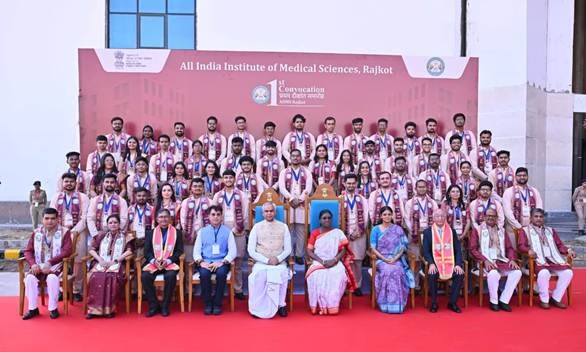
RAJKOT, GUJARAT — In a landmark event signaling a new chapter for healthcare in Western India, President Smt. Droupadi Murmu addressed the inaugural convocation of the All India Institute of Medical Sciences (AIIMS), Rajkot, on April 13, 2026. Speaking to the institution’s very first batch of medical graduates, the President emphasized that the practice of medicine must transcend clinical expertise to become a lifelong commitment to human service.
The ceremony, attended by Union Minister of State for Health and Family Welfare, Smt. Anupriya Patel, arrives at a critical juncture as India accelerates its “Viksit Bharat 2047” vision—a roadmap to becoming a developed nation by the centenary of its independence. President Murmu framed healthcare not merely as a service industry, but as the foundational pillar upon which a developed India must be built.
A New Vanguard for the Saurashtra Region
Established to correct regional imbalances in tertiary healthcare, AIIMS Rajkot serves the Saurashtra region, an area historically rich in culture but often challenged by specific health disparities. President Murmu reminded the graduates that as the “first brand ambassadors” of the institute, their conduct would set the gold standard for years to come.
The President’s address focused heavily on the symbolism of the white coat, describing it as a mantle of public trust. “The white coat you wear symbolizes the trust that people place in doctors during times of illness and uncertainty,” she remarked, urging the new doctors to anchor their practice in ethics and humility.
Addressing Regional Health Crises
A significant portion of the address was dedicated to the unique medical challenges facing the local population. President Murmu specifically called for a focused approach to:
-
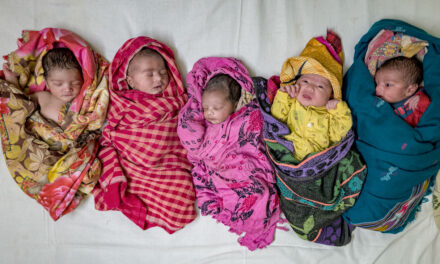
Maternal and Child Health: Improving neonatal outcomes and maternal mortality rates in rural Gujarat.
-
Sickle Cell Anemia: Addressing this genetic blood disorder, which disproportionately affects tribal and certain regional communities in India.
The National Sickle Cell Anemia Elimination Mission, launched by the Indian government, aims to eliminate the disease by 2047. The President’s emphasis at AIIMS Rajkot underscores the role of premier academic institutions in localized genetic screening and counseling.
Innovation vs. The Human Touch
As healthcare enters an era defined by Artificial Intelligence (AI), robotics, and precision medicine, the President offered a balanced perspective on the “digital health revolution.” While acknowledging that these technologies are transforming the possibilities of care, she issued a vital caveat: technology must never eclipse empathy.
“Human compassion in medicine can never be replaced,” President Murmu stated. “Now that you have the opportunity to render service, pour your soul into it and learn to enjoy it thoroughly.”
Experts in medical ethics agree that as diagnostic tools become more automated, the role of the physician as a “healer” rather than a “technician” becomes more critical.
The Road to Viksit Bharat 2047
The convocation highlighted the government’s massive expansion of the AIIMS network. For decades, AIIMS New Delhi stood as the lone beacon of its kind; today, over 20 such institutions are in various stages of operation or development across India.
According to data from the Ministry of Health and Family Welfare (MoHFW), this expansion aims to:
-
Reduce the Doctor-Patient Ratio: Bringing India closer to the World Health Organization (WHO) recommended ratio of 1:1,000.
-
Affordable Tertiary Care: Providing high-end surgeries and treatments (like oncology and neurosurgery) at a fraction of private sector costs.
-
Indigenous Research: Encouraging “Make in India” solutions for medical devices and pharmaceuticals.
Expert Perspective
Dr. Arvin Sahni, a public health consultant not affiliated with AIIMS Rajkot, noted the significance of this graduation. “The decentralization of medical excellence is vital. When you train world-class doctors in regions like Rajkot, you aren’t just producing clinicians; you are building a local ecosystem of research that understands the DNA and lifestyle of that specific population,” Sahni said.
Limitations and Future Challenges
Despite the celebratory atmosphere, the road ahead for new AIIMS institutions involves significant hurdles. Critics and health policy analysts often point to the “brain drain” phenomenon, where graduates from premier Indian institutes frequently seek opportunities abroad. President Murmu touched upon this by noting that while AIIMS graduates lead globally, their contribution to India’s domestic health equity is the ultimate measure of the system’s success.
Furthermore, building “world-class” infrastructure is only half the battle. Maintaining transparency, good governance, and a robust faculty-to-student ratio in newer AIIMS locations remains a primary concern for the National Medical Commission (NMC).
Practical Implications for the Public
For the citizens of Gujarat and the surrounding states, the full operationalization of AIIMS Rajkot means:
-
Access to Specialists: Reduced travel time to major metros for complex procedures.
-
Cost Savings: Access to the Ayushman Bharat Digital Mission (ABDM) and subsidized treatments.
-
Education: Higher opportunities for local students to pursue medical education without migrating to other states.
As the ceremony concluded, the President’s message was clear: The future of Indian medicine is high-tech, but its heart must remain high-touch. For the inaugural batch of AIIMS Rajkot, the real exam begins not in the classroom, but at the bedside of the patient.
Reference Section
-
Official Source: Press Information Bureau (PIB) Delhi. “President Smt. Droupadi Murmu Addresses First Convocation Ceremony of AIIMS Rajkot.” Posted 13 APR 2026.
Medical Disclaimer: This article is for informational purposes only and should not be considered medical advice. Always consult with qualified healthcare professionals before making any health-related decisions or changes to your treatment plan. The information presented here is based on current research and expert opinions, which may evolve as new evidence emerges.