 0
0
 0
0
Read Time:4 Minute, 35 Second
Published: August 9, 2026
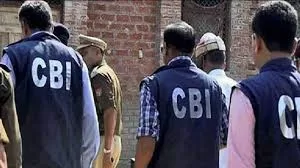
NEW DELHI — In one of the most significant breaches of medical examination security in recent history, the Central Bureau of Investigation (CBI) has submitted a detailed chargesheet to the Special CBI Court at Rouse Avenue, Delhi. The investigation details how confidential examination papers for the National Eligibility cum Entrance Test (NEET-UG) 2026 were compromised days before the test date, impacting more than 2.27 million medical aspirants nationwide.
The investigative findings detail an organized operational ring involving National Testing Agency (NTA) subject-matter experts, coaching institute operators, and intermediaries who utilized encrypted digital networks to extract, monetize, and distribute test materials. Beyond the immediate administrative disruptions, health policy experts emphasize that compromises in medical entry standards pose long-term risks to healthcare system integrity and patient safety.
Forensic Analysis and the Digital Trail
What began as a localized inquiry expanded into a multi-state investigation following the recovery of forensic artifacts from seized digital devices. Initial evidence emerged from intercepted mobile communications, including an unprompted message from a parent offering luxury gifts to an NTA subject expert.
Subsequent digital forensic examination of mobile hardware, portable storage drives, and cloud repositories revealed cached image files, PDF documents, and timestamped message logs on encrypted messaging platforms, including WhatsApp and Telegram.
“The investigation illustrates a tension between secure operational design and digital footprinting,” noted digital forensics specialist Dr. Ananya Sen, who reviewed standard cyber-investigation frameworks for this report. “Even when protocols are intended to operate offline, secondary digitizations—such as capturing images or scanning hand-written transcripts—create persistent metadata that allow investigators to trace origin points.”
+-------------------------------------------------------------------------+
|                  ANATOMY OF THE DIGITAL TRAIL                          |
+-------------------------------------------------------------------------+
|                                                                         |
|  [NTA Subject Experts]                                                  |
|       │ (Extraction of questions 3 days prior to exam)                  |
|       ▼                                                                 |
|  [Coaching Sessions]                                                    |
|       │ (Offline dictation to prevent direct leaks)                     |
|       ▼                                                                 |
|  [Handwritten Transcripts]                                              |
|       │ (Aspirant's relative scans & converts to PDF in Rajasthan)      |
|       ▼                                                                 |
|  [Encrypted Channels]                                                   |
|       │ (Distribution via Telegram / WhatsApp across 5+ states)         |
|       ▼                                                                 |
|  [Forensic Reconstruction]                                              |
|       └─► CBI recovers metadata, timestamped logs, and financial records|
|                                                                         |
+-------------------------------------------------------------------------+
The chargesheet alleges that the compromise originated during the paper-setting phase, three days prior to the national exam date. While early stages were conducted offline to prevent electronic capture, secondary participants created handwritten transcripts, scanned them into document files, and distributed them across regional coaching hubs in Rajasthan, Maharashtra, Haryana, Bihar, and Kerala. Financial tracking indicates illicit transactions ranging between ₹2 lakh and ₹5 lakh per candidate.
Breakdown of Key Developments
| Parameter | Details Recorded in Chargesheet |
| Total Candidates Affected | ~2.27 Million nationwide |
| Primary Charges | Criminal Conspiracy, Cheating, Theft, Public Examinations Act (2024) |
| Primary Entities Named | 13 individuals (including 3 NTA Subject-Matter Experts) |
| Financial Actions | Freezing of bank accounts, lockers, and demat accounts |
| Regulatory Response | Exam cancellation (May 12, 2026); Reschedule pending |
Systemic and Public Health Implications
While examination integrity is fundamentally an educational administrative issue, public health scholars stress its direct connection to clinical care quality. NEET-UG serves as the single standardized entry point for undergraduate medical (MBBS) and dental (BDS) programs across India.
       EXAMINATION INTEGRITY & PUBLIC HEALTH IMPACT

   Standardized Selection (NEET-UG)
               │
               ▼
   Competitive Merit Verification  ──►  Maintains baseline competency
               │                       for medical education
               ▼
   Rigorous Medical Training
               │
               ▼
   Safe Clinical Practice         ──►  Ensures patient safety and
                                       public trust in healthcare
In medical pedagogy, admissions processes function as a foundational screen for cognitive capacity and ethical alignment. When entry mechanisms are compromised, non-meritorious candidates may bypass baseline competency checks.
“Medical training is cumulative,” explains Dr. Priya Sharma, a medical education researcher not connected to the case. “The foundational sciences assessed during entrance examinations test core analytical capacities essential for diagnostic reasoning. Bypassing these filters creates downstream challenges during clinical training and raises questions about long-term professional preparedness.”
Furthermore, behavioral health specialists point out the severe psychological impact on the candidate pool. The uncertainty surrounding re-examinations, combined with prolonged preparation timelines, elevates stress and anxiety metrics among young adults entering demanding health professions.
Limitations and Counterarguments
While the CBI chargesheet details a multi-layered network, legal experts emphasize that the filings represent prosecutorial allegations that must be tested in court. The accused maintain the right to due process, and judicial proceedings will determine individual liability.
From a structural standpoint, some education policy researchers argue that focusing exclusively on individual criminal acts overlooks broader systemic pressures.
“High-stakes, single-tier entrance examinations naturally generate extreme economic incentives for malpractice,” observed a policy analyst who requested anonymity due to ongoing institutional reviews. “While enforcement under the Public Examination (Prevention of Unfair Means) Act of 2024 is necessary, long-term mitigation requires structural reforms in exam security, secure item-banking technology, and potential diversification of evaluation criteria.”
Summary for Students and Families
-
Legal Enforcement: Criminal liability extends beyond primary organizers to intermediaries and candidates who knowingly participate in fraudulent activity.
-
System Safeguards: The deployment of digital forensics, metadata tracing, and financial auditing reflects enhanced capabilities in detecting examination fraud.
-
Administrative Status: The Ministry of Education and NTA have indicated that revised testing protocols and rescheduled examination windows will be released through official channels to ensure a secure re-assessment process.
Medical Disclaimer: This article is for informational purposes only and should not be considered medical advice. Always consult with qualified healthcare professionals before making any health-related decisions or changes to your treatment plan. The information presented here is based on current research and expert opinions, which may evolve as new evidence emerges.
References
-
Special CBI Court Filings. State v. Kulkarni et al. Chargesheet under BNS, Prevention of Corruption Act, and Public Examination (Prevention of Unfair Means) Act, 2024. Filed August 7, 2026.


Happy
0 %

Sad
0 %

Excited
0 %

Sleepy
0 %

Angry
0 %

Surprise
0 %