 0
0
 0
0
In the complex world of nutrition, the mantra has long been simple: eat more “good” fats (unsaturated) and fewer “bad” fats (saturated). However, the internal mechanism that decides which fats enter our bloodstream and which are sent to the “trash” has remained a biological black box—until now.
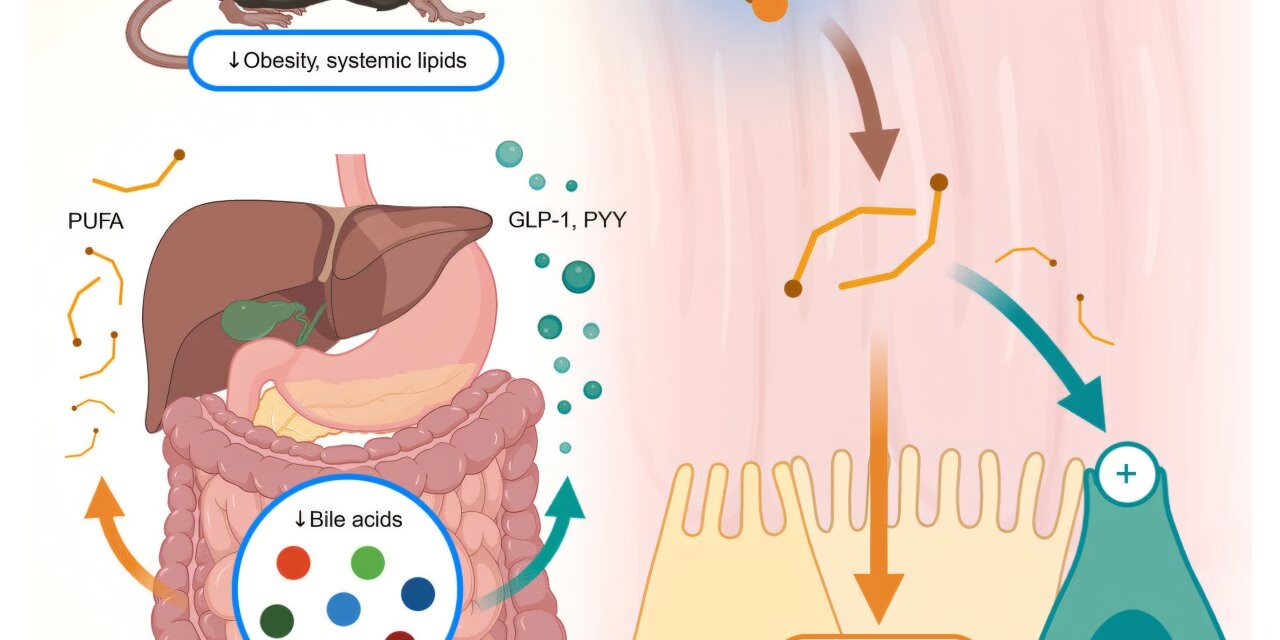
A groundbreaking study led by researchers at the UCLA Division of Cardiology has revealed that our bodies do not process all fats equally. The research, featured on the cover of the February edition of Cell Metabolism, identifies bile acids as highly selective gatekeepers. By manipulating these molecules, researchers successfully “programmed” the digestive systems of lab models to absorb heart-healthy polyunsaturated fats while excreting artery-clogging saturated fats.
The implications are significant: this discovery provides a molecular blueprint for a new generation of metabolic treatments that could mimic the weight-loss effects of drugs like Ozempic, but through a completely different biological pathway.
The “Detergent” Discovery: Not All Bile is Equal
For decades, scientists viewed fat absorption as a passive, non-specific process. We eat fat, bile acids acting like biological dish soap (detergents) break it down, and the body absorbs it.
“This study really shows that different types of fats are being absorbed very differently,” says Dr. Alvin P. Chan, a pediatric gastroenterologist and co-first author of the study. “Polyunsaturated fatty acids—the healthier fats—are actually absorbed more efficiently in the body.”
The UCLA team, led by Thomas A. Vallim, Ph.D., used CRISPR gene-editing technology to disable an enzyme called CYP7A1, which is responsible for bile acid synthesis. By reducing bile acid levels by 50%, they discovered something startling: the body didn’t just stop absorbing fat entirely; it became picky.
Selective Absorption
The researchers found that:
-
Saturated fats (found in butter, red meat, and processed foods) require a high concentration of specific bile acids to be absorbed.
-
Unsaturated fats (found in fish, nuts, and olive oil) are “easier” to dissolve and require much less bile to enter the system.
When bile levels were lowered, the “bad” saturated fats remained undissolved and passed through the system as waste, while the “good” fats were still successfully absorbed.
A Natural GLP-1 Boost
Perhaps the most exciting find for the general public involves the hormone GLP-1 (glucagon-like peptide-1). This is the same hormone targeted by blockbuster weight-loss drugs like Wegovy and Zepbound to suppress appetite and regulate blood sugar.
The study compared the CRISPR-edited mice to a group taking orlistat (an FDA-approved weight-loss drug sold over-the-counter as Alli). While both groups absorbed less fat, the results were vastly different:
-
The Orlistat Group: Absorbed less fat but became hungrier, eating more to compensate for the lost calories.
-
The Bile-Reduction Group: Did not experience increased hunger.
“We think what’s happening is that as these fats travel further into the gut, they stimulate receptors that promote the secretion of GLP-1,” explains Dr. Vallim. “That’s a way your body tells your brain, ‘Hey, I’ve had enough of this nutrient.'”
By forcing fat further down the digestive tract before it is absorbed, the body naturally triggers its own satiety signals, effectively “quieting” the brain’s hunger centers without the need for external injections.
Impact on Liver Health
The study also utilized lipidomic analysis—a high-tech way of mapping every fat molecule in a tissue—to see how these changes affected the liver.
In the group where bile acids were reduced, the liver profile shifted toward “good” fats, reducing the risk of fatty liver disease. In contrast, the orlistat group saw a reduction in all fats, including the healthy ones. This triggered the liver to go into overdrive, creating new fats from scratch (de novo lipogenesis), a process often linked to metabolic dysfunction.
“Seeing bile acids and absorption as multi-faceted molecules and processes adds novelty that previous research might not have put together,” says Rocelle W. Lai, MS, RD, a dietitian and researcher on the team.
Statistical Context and Human Relevance
To ensure these findings weren’t limited to mice, the team tested the mechanism using human bile.
-
Efficiency Gap: The study found that human bile is actually more efficient at absorbing fat than mouse bile, suggesting humans may be even more evolutionary “primed” to hold onto every calorie—a disadvantage in the modern age of fast food.
-
The Cholic Acid Key: Specifically, the researchers found that removing cholic acid (a specific type of bile acid) almost exclusively blocked saturated fat absorption while leaving unsaturated fat absorption intact.
Limitations and The Road Ahead
While the results are promising, experts caution that this research is currently in the pre-clinical stage.
-
Species Differences: While human bile was tested in a lab setting, the long-term effects of altering human bile acid composition via gene editing or medication are unknown.
-
Digestive Side Effects: Increased fat excretion can sometimes lead to gastrointestinal discomfort, a common side effect of current fat-blocking medications.
Dr. Sarah Jenkins, an endocrinologist not involved in the study, notes: “The ability to selectively target ‘bad’ fats while preserving ‘good’ ones is the ‘holy grail’ of metabolic nutrition. However, we need to see how the human gut microbiome reacts to these undigested saturated fats traveling further down the colon.”
What This Means for You
For now, the advice remains to prioritize unsaturated fats in your diet. However, this research suggests that in the near future, we may have “small molecule” therapies—pills that can tweak your bile chemistry to help your body naturally reject the components of a “Western diet” while keeping the nutrients it needs.
References
-
Primary Study: Chan, A. P., Jarrett, K. E., Lai, R. W., et al. (2026). “Bile acids regulate lipid metabolism through selective actions on fatty acid absorption.” Cell Metabolism. DOI: 10.1016/j.cmet.2025.11.010.
- Medical Disclaimer: This article is for informational purposes only and should not be considered medical advice. Always consult with qualified healthcare professionals before making any health-related decisions or changes to your treatment plan. The information presented here is based on current research and expert opinions, which may evolve as new evidence emerges.