 0
0
 0
0
Health and Medical News Journalist
June 2, 2026
WASHINGTON — Continuous glucose monitoring (CGM) has revolutionized diabetes care for people living with type 1 diabetes. Now, a mountain of clinical data is showing compelling benefits for millions of individuals with type 2 diabetes who do not use insulin. This evidence has prompted major medical organizations to call for a sweeping expansion of device access.
In a landmark shift, the American Diabetes Association (ADA) updated its 2026 Standards of Care in Diabetes to explicitly recommend CGM use for adults with type 2 diabetes regardless of their treatment approach. This updates previous guidelines that primarily reserved the technology for individuals on intensive insulin regimens. The move is triggering a profound re-evaluation of how public health systems track and manage metabolic health.
Key Findings: CGM Benefits Extend to Non-Insulin Users
Recent evidence demonstrates that CGM consistently improves glycemic control across diverse patient populations, including those managed solely with oral medications or lifestyle modifications.
A comprehensive meta-analysis of eight randomized controlled trials involving 541 participants found that CGM use in non-insulin-treated type 2 diabetes led to substantial clinical improvements across several key metrics:
Glycemic Outcomes in Non-Insulin CGM Users
| Outcome Parameter | Average Improvement | Statistical Significance |
| HbA1c Reduction | -0.37% | $p < 0.00001$ |
| Time in Range (TIR) Increase | +8.84% | $p < 0.0001$ |
| Time Above Range (TAR) Decrease | -8.14% | $p = 0.0004$ |
The study noted that these benefits remained remarkably consistent across all patient subgroups, irrespective of baseline diabetes characteristics.
These clinical trial findings are strongly mirrored in real-world environments. A large-scale study analyzing data from 7,336 patients within a major United States insured population revealed even more dramatic results. Following CGM initiation, beneficiaries experienced a significant overall A1c reduction of 0.7%. Crucially, the sub-cohort of patients with non-insulin-dependent type 2 diabetes ($n = 264$) experienced an even greater average decrease of 0.9% in their A1c levels.
The clinical impact extended far beyond laboratory numbers. Across the entire study cohort, diabetes-related hospitalizations plummeted by 67%, while emergency department visits dropped by 40%.
According to a comprehensive narrative review published in Diabetes Therapy, the mechanism behind these improvements is fundamentally behavioral. For individuals who do not use insulin, a CGM acts as a biofeedback tool. By allowing patients to visualize real-time fluctuations in their blood sugar, it connects daily choices—such as eating a high-carbohydrate meal or taking a brisk walk—directly to metabolic outcomes, acting as a powerful catalyst for sustained lifestyle modification.
Expert Commentary: A Paradigm Shift in Diabetes Care
The ADA’s updated 2026 guidelines represent a fundamental rewrite of the clinical playbook. Specifically, Recommendation 9.25 now mandates that CGM use should be initiated right at diabetes onset and anytime thereafter for adults on insulin therapy, those on non-insulin therapies that carry a risk of hypoglycemia (such as sulfonylureas), or any treatment plan where CGM data actively aids management.
Medical organizations are taking note of this definitive shift. Commentaries from the American Academy of Family Physicians (AAFP) point out that the guidelines no longer suggest clinicians merely “consider” the technology. Instead, they explicitly recommend its use for adults with type 2 diabetes who are managed with alternative glucose-lowering therapies, embedding technology directly into baseline primary care.
Furthermore, the updated guidelines emphasize equity, stating that the clinical benefits of CGM manifest regardless of a patient’s age, sex, education, income level, or baseline diabetes traits.
“I think that this is an important step forward to showcase that the medical community recognizes the data you get from CGMs is universally meaningful,” said Dr. Elena Christofides, MD, FACE, an endocrinologist who was not involved in the guideline drafting. “We now have to focus on giving primary care providers and patients the clear framework to interpret and apply this data daily.”
This shift is heavily supported by the validation of “Time in Range” (TIR)—the percentage of time a patient’s blood sugar stays between 70 and 180 mg/dL—as a core clinical target alongside traditional HbA1c. Writing in a Medscape analysis, Dr. Anne Peters, a leading clinical diabetologist, noted that a mere 5% increase in Time in Range correlates with measurable reductions in long-term microvascular complications, including diabetic retinopathy, nephropathy (albuminuria), and neuropathy, while drastically enhancing patient quality of life.
Background: How CGM Transformed Diabetes Management
Traditional glucose management has long relied on two tools: the finger-stick blood glucose meter, which provides a single snapshot in time, and the laboratory HbA1c test, which provides a three-month weighted average.
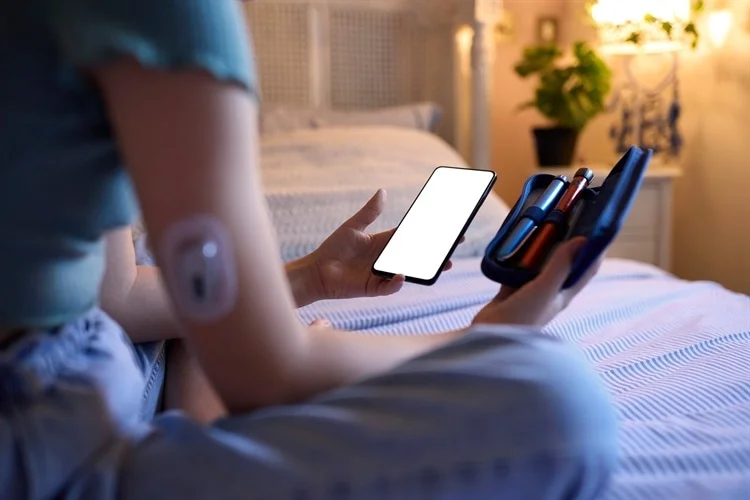
How it works: Continuous glucose monitors bridge this gap by using a tiny sensor inserted just beneath the skin to measure glucose levels in the interstitial fluid. The device transmits readings automatically every few minutes, mapping out detailed trends, glycemic variability, and post-meal spikes that an A1c test completely misses.
While early generations of these devices required secondary finger-stick calibrations, modern systems have proven highly accurate and reliable. The technology has evolved so rapidly that the ADA’s 2026 guidelines officially removed older, intermittently scanned “flash” systems from its primary technology tables, solidifying real-time CGM (rtCGM) as the contemporary standard of care.
Public Health Implications: Addressing a Growing Epidemic
The expansion of these medical recommendations arrives at a critical juncture in public health. In the United States alone, approximately 25 million individuals live with type 2 diabetes and do not require insulin therapy. For this massive population, utilizing CGM can expose unrecognized glycemic excursions, facilitating earlier therapy intensification and helping to curb the progression of chronic metabolic decline.
This technology is also intersecting with a parallel revolution in pharmacology: the widespread adoption of glucagon-like peptide-1 (GLP-1) receptor agonists and dual incretin therapies. Clinical data presented by device manufacturers like Dexcom indicates that combining CGM data with GLP-1 therapy provides a powerful dual-action effect, maximizing both medical and behavioral adherence.
Furthermore, data from post-hospital discharge programs reveals that using a CGM even temporarily helps stabilize blood sugar long after the patient goes home, suggesting that the behavioral habits learned while wearing the sensor leave a lasting impression.
Important Limitations and Barriers to Access
Despite an ironclad clinical case, major systemic hurdles block widespread adoption. The most prominent barrier remains financial.
A real-world evaluation published in Endocrine Practice found that cost and restrictive insurance coverage were cited as major hurdles by 46% of all surveyed participants. Among individuals who ultimately discontinued using their CGM, financial barriers were an overwhelming factor, cited by 75% of those who stopped compared to just 32% of those who managed to continue.
CGM Utilization Rates:
[██████████████████████████████████] 89% (During Study/Financial Support)
[██████████] 34% (After Financial Support Ended / Routine Care)
This dramatic drop-off underscores a harsh reality: when the financial or administrative support ends, patients are frequently forced to abandon the technology due to high out-of-pocket costs and burdensome prior authorization paperwork required by insurance companies.
To bridge this market gap, the U.S. Food and Drug Administration (FDA) previously cleared the first over-the-counter (OTC) continuous glucose monitor, the Dexcom Stelo Glucose Biosensor System. Available without a prescription, it is aimed directly at adults with type 2 diabetes who do not use insulin. However, regulatory bodies emphasize a vital safety limitation: OTC systems are strictly prohibited for individuals with a history of severe or problematic hypoglycemia, as these specific consumer-grade devices lack the built-in, aggressive alarm systems necessary to alert users to dangerously low, life-threatening blood sugar drops.
What This Means for Readers
For health-conscious consumers and individuals navigating non-insulin type 2 diabetes, the expanding body of clinical evidence means it may be highly beneficial to ask your healthcare provider if a CGM is right for you.
According to current evidence, adopting a CGM can help you:
-
Identify exactly how specific foods, stress levels, and sleep patterns impact your glucose.
-
Recognize hidden patterns of glycemic variability throughout the night or after meals.
-
Stay motivated through immediate, visual biofeedback on lifestyle choices.
-
Potentially reduce your overall A1c by 0.3% to 0.9%.
For medical professionals, the ADA underscores that prescribing the device is only the first step. Success requires providing structured, ongoing training regarding data interpretation, skin care management to prevent adhesive irritation, and an understanding of over-the-counter medications (like acetaminophen or high-dose vitamin C) that can occasionally interfere with sensor accuracy. Crucially, clinicians are reminded that patients must always retain access to a traditional blood glucose meter as a vital safety backup.
The Path Forward
Continuous glucose monitoring has successfully transitioned from a specialized niche tool for type 1 diabetes into a comprehensive digital health platform capable of driving metabolic optimization and behavioral empowerment.
As manufacturing scales and clinical guidelines consolidate, the central question for the medical community has shifted. The debate is no longer about whether CGM benefits individuals with non-insulin-treated type 2 diabetes. Instead, the challenge lies in how rapidly public health systems, insurers, and policymakers can dismantle systemic financial barriers to ensure equitable access for the millions of people who stand to benefit.
Medical Disclaimer: This article is for informational purposes only and should not be considered medical advice. Always consult with qualified healthcare professionals before making any health-related decisions or changes to your treatment plan. The information presented here is based on current research and expert opinions, which may evolve as new evidence emerges.
References
- https://www.medscape.com/viewarticle/continuous-glucose-monitoring-it-time-expand-use-2026a1000i5q