 0
0
 0
0
April 6, 2026
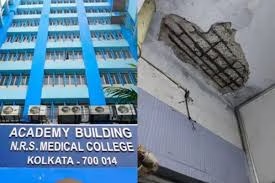
KOLKATA — In a near-catastrophic incident that has sent shockwaves through the medical community, a significant portion of the ceiling collapsed inside the Medicine Department’s Critical Care Unit (CCU) at Nil Ratan Sircar (NRS) Medical College and Hospital on Friday, April 3, 2026. The collapse, which occurred on the sixth floor of the UNB building, narrowly spared at least 12 critically ill patients from severe injury or death. This event has reignited urgent alarms over the structural integrity and safety standards of government-run healthcare facilities across West Bengal, coming just weeks after a fatal lift malfunction at R.G. Kar Medical College Hospital raised similar systemic concerns.
The Incident: Minutes from Tragedy
According to hospital sources and eyewitness accounts, a substantial chunk of concrete gave way from the ceiling within the 13-bed CCU, crashing onto the floor and sending a thick cloud of dust and debris across the ward. At the time of the collapse, between 10 and 12 patients were present in the unit. Most of these individuals were in highly precarious states of health, relying on ventilators and other life-support devices that require a stable, sterile environment.
The response from frontline workers was immediate. Nurses, junior doctors, and security personnel coordinated a rapid evacuation, moving the critically ill patients to the High Dependency Unit (HDU) and other wards within minutes. While no injuries or fatalities were officially reported, the psychological toll was evident. Staff members described a scene of “sheer panic” as they scrambled to disconnect and transport patients whose lives literally hung by a thread—all while dust obscured their vision and the threat of further structural failure loomed.
Evidence of Prior Structural Distress
The collapse appears to be less a freak accident and more the result of a documented, progressive failure. Public Works Department (PWD) and hospital records reveal that the building had been “speaking” for days.
A formal letter from a group of hospital doctors addressed to the medical superintendent—obtained by local media—cited “fresh cracks” in the ceiling and visible distress at the junctions where columns meet the walls. These warnings prompted an inspection by the PWD earlier in the week.
A senior health department official confirmed that a specific crack in the CCU wall was identified on April 1. Following this, the PWD decided to remove parts of the false ceiling to inspect the structural slab. Despite these preemptive observations, the unit remained occupied, and the subsequent partial collapse underscores a dangerous lag between the identification of structural risk and the execution of emergency repairs.
Institutional Response and Political Fallout
In the immediate wake of the incident, State Health Secretary Narayan Swaroop Nigam announced that the CCU would remain non-operational until restoration work is fully certified. Hospital management has pledged an internal structural assessment of the entire UNB building, along with other critical care areas, to prevent a recurrence.
However, the incident has fueled intense political and civil-society criticism. Opposition leaders have been quick to point to a pattern of “systemic neglect,” citing the recent R.G. Kar tragedy as evidence of a burgeoning infrastructure crisis. Public queries have been raised regarding how many “at-risk” units currently exist across the state’s tertiary care network and why comprehensive safety audits were not mandated sooner.
Medical associations have reiterated a list of urgent demands:
-
Mandatory Structural Audits: Independent, third-party assessments of all state-run hospital buildings over 20 years old.
-
Transparency: Clear timelines for repairs and open communication channels with staff and patient families regarding building safety.
-
Budgetary Realignment: Shifting focus from purely clinical recruitment and equipment procurement to include dedicated, non-negotiable funds for infrastructure maintenance.
Why This is a Public Health “Red Flag”
Critical Care Units are the most vulnerable settings in any hospital. From a public health perspective, a structural failure in a CCU is a “never event” that converts a design flaw into a potential mass-casualty scenario.
Patients in these units are often:
-
Immobile: Intubated, sedated, or paralyzed by illness, making them incapable of self-evacuation.
-
Equipment-Dependent: Their survival relies on continuous power, oxygen delivery, and monitoring. Even a “minor” collapse can sever oxygen lines or cause electrical surges that disable life-saving hardware.
-
Immunocompromised: The introduction of construction dust and debris into a sterile CCU environment poses a high risk of secondary infections and respiratory distress.
Studies on hospital safety in high-density urban areas suggest that older buildings are prone to “progressive deterioration” when routine maintenance is deferred in favor of expanding clinical services. The NRS incident serves as a stark reminder that medical excellence cannot exist without structural safety.
Who is Most at Risk?
While the 12 patients at NRS escaped physical harm this time, the incident highlights the disproportionate risks faced by three specific groups:
-
Critically Ill Inpatients: As noted, these individuals face the highest physiological risk from any disruption to their environment.
-
Families and Attendants: Often staying overnight in cramped conditions near the wards, families are rarely briefed on evacuation routes or structural hazards.
-
Frontline Staff: Nurses and paramedics bear the burden of performing high-stakes evacuations in emergencies, often without proper training or protective gear for structural failures.
Practical Implications for Patients and Families
For those seeking care in public hospitals, the NRS collapse highlights the importance of being an informed advocate for safety. While patients often have little choice in where they receive emergency care, families can take the following steps:
-
Inquire About Protocols: Politely ask the nursing station if the unit has a written evacuation plan and if the staff has recently undergone emergency drills.
-
Report Visible Signs: Do not ignore sagging false ceilings, exposed reinforcement bars (rebar), or large cracks in walls. Report these to the hospital grievance cell or local health department helplines immediately.
-
Monitor the Environment: If you notice sudden leaks or unusual sounds from the ceiling, alert the medical staff immediately.
Unresolved Questions
As repairs begin, significant questions remain. It is unclear how long the reported cracks were present before the April 1st inspection, or why the CCU was not emptied the moment structural distress was confirmed. Furthermore, the incident raises concerns about the quality of materials used in previous renovations.
Experts in hospital safety stress that “patchwork” repairs will not suffice. Without a systemic shift toward rigorous, transparent, and frequent infrastructure auditing, the safety of patients in West Bengal’s public hospitals remains a matter of chance rather than a guarantee.
Medical Disclaimer
Medical Disclaimer: This article is for informational purposes only and should not be considered medical advice. Always consult with qualified healthcare professionals before making any health-related decisions or changes to your treatment plan. The information presented here is based on current research and expert opinions, which may evolve as new evidence emerges.
Reference Section
News and Media Sources:
-
The Telegraph India. “Ceiling collapse in critical care unit at NRS Medical College and Hospital.” April 3, 2026.
-
Medical Dialogues. “Ceiling collapses at NRS Medical College CCU, 12 critically ill patients escape.” April 4, 2026.