 0
0
 0
0
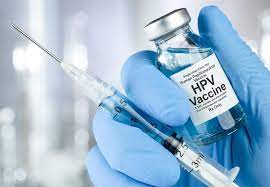
NEW DELHI — Four months after Prime Minister Narendra Modi launched India’s ambitious, nationwide Human Papillomavirus (HPV) vaccination campaign, a troubling administrative breakdown has emerged. In the state of Tamil Nadu alone, less than 12% of the 5.3 lakh (530,000) government-allocated vaccine doses have been utilized. Barely 65,000 out of a targeted 7.7 lakh (770,000) eligible girls have received the shot. The quadrivalent Gardasil-4 vaccine, which protects against the high-risk HPV types 16 and 18 responsible for the majority of cervical cancer cases, routinely costs ₹3,500 per dose in private clinics. Today, millions of these free, life-saving doses sit completely unused in cold storage facilities across the country due to rigid logistical policies and digital barriers.
The Staggering Public Health Context
Cervical cancer represents one of India’s most devastating, yet entirely preventable, health crises. According to data from the National Cancer Registry Programme and the World Health Organization’s International Agency for Research on Cancer (IARC), cervical cancer ranks as the second most common cancer among Indian women, accounting for 22.86% of all female cancer cases.
The human toll is immense: every year, approximately 122,844 Indian women are diagnosed with cervical cancer, and 67,477 succumb to the disease. In Tamil Nadu alone, 8,534 new cases were recorded in 2023.
To combat this, the Union government launched the nationwide “Swastha Nari” HPV vaccination drive on February 28, 2026. The program’s goal is to immunize 1.15 crore (11.5 million) 14-year-old girls every year across all 36 States and Union Territories free of charge. The current gridlock threatens to derail these public health milestones.
Why the Rollout is Stumbling
Public health experts point to a combination of predictable scheduling conflicts and strict structural policies that have crippled the initial phase of the rollout.
1. Timing Challenges and Seasonal Disruptions
The campaign’s launch at the end of February collided directly with school board exams in March and April, making it difficult for schools to coordinate student health initiatives. This was immediately followed by intense summer holidays, which scattered the target group of 14-year-old girls, and the May state elections, which fully occupied the district-level administrative machinery responsible for implementing health drives.
2. The School Vaccination Ban
While scheduling conflicts are temporary, structural barriers pose a deeper threat. The Union government currently prohibits school-based vaccination camps for this program. Instead, every eligible girl must travel directly to a government healthcare facility to receive the vaccine. For families in rural areas, or those facing limited mobility and economic constraints, this requirement creates a massive accessibility barrier.
Dr. A. Somasundaram, Tamil Nadu’s Director of Public Health, highlighted a proven alternative implemented prior to the national mandate:
“Tamil Nadu launched a pilot in four high-incidence districts—Dharmapuri, Perambalur, Tiruvannamalai, and Ariyalur. The pilot targeted 27,196 girls aged 14 studying in government and government-aided schools, vaccinating them right on campus. Within weeks, coverage reached 81%. We have formally requested the Union Health Ministry to permit vaccination in schools nationwide.”
3. The Digital Consent Bottleneck
Before an adolescent can receive the vaccine, her details must be registered on U-WIN, the Union government’s digital immunization registry modeled after the COVID-19 CoWIN platform. The registry enforces strict accountability by requiring parents to verify consent via a One-Time Password (OTP) sent to their mobile phones.
“If we cannot get the OTP, we cannot vaccinate the girl. The Centre states that parental digital consent is mandatory,” noted a senior public health official who requested anonymity. In regions with poor cellular connectivity or low digital literacy, this digital-first requirement becomes an instant bottleneck. While the health department has noted that hard-copy, physical consent forms will technically be permitted in areas with zero internet access, systemic reliance on the digital workflow continues to slow down daily operations.
Expert Commentary on the Crisis
Public health leaders argue that the program’s design requires immediate modification to prioritize community realities over strict digital tracking.
Dr. Soumya Swaminathan, former Chief Scientist of the World Health Organization (WHO), suggested a structural shift in how consent is managed:
“The government could allow parents to opt out after reviewing the comprehensive medical information provided, instead of requiring them to actively volunteer through a digital registry. States must also deploy aggressive multimedia messaging to the community, building clear awareness about the program and the profound benefits of vaccination. Cervical cancer vaccines are safe—the evidence is entirely in the science.”
According to the HPV Board, broader research on vaccine hesitancy in India highlights several interconnected socio-cultural challenges. These include negative community perceptions, a general hesitation to discuss adolescent sexual health openly, and widespread confusion regarding how an asymptomatic viral infection in youth can lead to fatal cancer decades later.
What the Science Says About Vaccine Efficacy
The clinical data supporting the HPV vaccine remains exceptionally robust. The Gardasil-4 vaccine utilized in the national program has consistently demonstrated near-perfect efficacy. According to India’s Press Information Bureau (PIB), the vaccine provides 93% to 100% protection against the specific HPV strains that cause the vast majority of cervical malignancies.
Furthermore, long-term Indian research has helped shift global guidelines. A landmark prospective cohort study published in the Journal of the National Cancer Institute Monographs (October 2024) followed Indian recipients over 15 years. The study established that a single dose of the HPV vaccine provides a 92.0% protective efficacy against persistent HPV 16 and 18 infections. This protection is highly comparable to the two-dose (94.8%) and three-dose (95.3%) regimens.
Similarly, an IARC study conducted in India confirmed that a single dose triggers a highly durable antibody response that remains protective a decade after vaccination. These findings emphasize that the doses currently sitting in cold storage are highly effective tools capable of altering India’s cancer trajectory.
Public Health Implications and the Road Forward
The current paralysis in the vaccine rollout represents a critical missed opportunity in cancer prevention. With an age-standardized mortality rate of 12.4 per 100,000 women per year, cervical cancer is a leading cause of premature death among Indian women. Prior epidemiological projections estimated that India’s cervical cancer burden would account for 1.5 million Disability-Adjusted Life Years (DALYs) by 2025.
Recent data presented at the IARC 2026 conference underscores the scale of the awareness gap: a study among college-going girls in Delhi-NCR revealed that while 51% were aware of the HPV vaccine, only 11.9% had received a dose. Financial constraints (48%) and a lack of structured awareness (40%) were cited as primary barriers, alongside a fatalistic belief that cancer cannot be prevented.
While immunization experts defend the U-WIN platform as a transformative tool for tracking zero-dose children in early childhood, its application in adolescent vaccination requires refinement.
The logistical success of Tamil Nadu’s school pilot indicates that high coverage is entirely achievable when healthcare is brought directly to the population. Public health experts maintain that unless the Union Health Ministry relaxes the school-based vaccination ban and simplifies the digital consent framework, millions of pre-allocated doses will remain unused, leaving another generation of young women vulnerable to a preventable disease.
Medical Disclaimer
Medical Disclaimer: This article is for informational purposes only and should not be considered medical advice. Always consult with qualified healthcare professionals before making any health-related decisions or changes to your treatment plan. The information presented here is based on current research and expert opinions, which may evolve as new evidence emerges.
References
- https://health.economictimes.indiatimes.com/news/industry/govts-free-cervical-cancer-vaccine-lies-idle/131830895?utm_source=top_story&utm_medium=homepage