 0
0
 0
0
LONAVALA, MAHARASHTRA — As chronic lifestyle disorders and mental health crises continue to strain global healthcare systems, medical researchers and policymakers are increasingly looking toward time-tested, integrative solutions. In a major step toward standardizing and expanding the footprint of traditional wellness, the Indian Ministry of Ayush has formally welcomed the commencement of YOGOTSAV 2026.
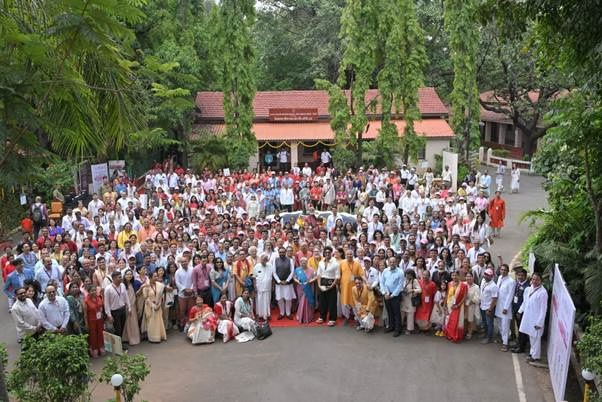
The sixth National Conclave of the Indian Yoga Association (IYA) opened on May 29, 2026, at the historic Kaivalyadhama Yoga Institute in Lonavala. Under the central theme “Celebrating Diversity in Yoga,” the two-day national event brings together an unprecedented coalition of traditional yoga acharyas (masters), medical researchers, policymakers, and public health educators. The conclave aims to build a definitive bridge between ancient lineage practices and modern, evidence-based medicine to establish yoga as a core pillar of global preventive healthcare.
A Unified Front for Global Well-being
The event was marked by high-level government and institutional endorsement. Shri Prataprao Jadhav, Union Minister of State for the Ministry of Ayush and Minister of State for Health and Family Welfare, emphasized the broader societal and clinical impact of unifying India’s diverse yogic lineages.
“Yoga is one of India’s greatest contributions to humanity,” Minister Jadhav stated during his opening address. “When traditions come together with mutual respect, openness, and a shared purpose, yoga becomes not merely a practice, but a powerful force for harmony, collective well-being, and human unity.”
The conclave’s location carries significant scientific weight. Founded in 1924, the Kaivalyadhama Yoga Institute is widely regarded as one of the world’s pioneer centers for literary and scientific research into yoga, making it a fitting backdrop for talks centered on clinical validation.
Prominent leaders guiding the sessions include:
-
Ms. Monalisa Dash, Joint Secretary, Ministry of Ayush
-
Shri O.P. Tiwari, Chairman of Kaivalyadhama
-
Guruji Dr. H.R. Nagendra, Chancellor of S-VYASA University
-
Maa Dr. Hansaji Yogendra, President of the Indian Yoga Association
-
Shri Subodh Tiwari, Secretary General of the IYA and CEO of Kaivalyadhama
The Clinical Shift: From Fitness Trend to Preventive Medicine
For decades, the general public viewed yoga primarily as a regimen for physical flexibility or stress relief. However, data presented and discussed at forums like YOGOTSAV 2026 paint a vastly different picture—one where yoga acts as a complex behavioral intervention capable of modifying biological markers of disease.
A major focus of the conclave is the experiential segment, “Traditions in Practice – Demonstration by Living Lineages of Yoga.” Leading institutions—including the Krishnamacharya Yoga Mandiram, Iyengar Yoga, S-VYASA University, and The Yoga Institute—are demonstrating specialized protocols across asana (postures), pranayama (breath regulation), yoga nidra (guided relaxation), and targeted therapeutic yoga.
Medical literature increasingly supports these applications. According to large-scale clinical reviews published by organizations like the American Heart Association (AHA), regular yoga practice significantly lowers blood pressure, reduces lipid profiles, and improves body mass index (BMI). The biological mechanism driving these changes centers heavily on the autonomic nervous system.
[Chronic Stress] ---> Overactive Sympathetic System ("Fight or Flight") ---> High Cortisol & Inflammation
                                     |
                         (Yoga Intervention: Breath + Mindfulness)
                                     v
[Rest & Digest] ---> Activated Parasympathetic System ---> Lower Heart Rate & Reduced Disease Risk
By down-regulating the sympathetic nervous system (“fight-or-flight” response) and activating the parasympathetic nervous system (“rest-and-digest”), structured yoga practices diminish the chronic, low-grade inflammation that underpins cardiovascular disease, type 2 diabetes, and metabolic syndrome.
Expert Perspectives on Integrative Care
Public health experts not directly connected to the Lonavala conclave note that the integration of diverse lineages is crucial for creating scalable health interventions.
“What makes an event like YOGOTSAV vital for modern medicine is the emphasis on standardization alongside diversity,” explains Dr. Arisudan Sian, a preventative medicine specialist and public health consultant. “In western clinical trials, we struggle with the ‘heterogeneity’ of yoga—meaning one study tests power yoga while another tests gentle stretching, making it hard to prescribe clinically. When top institutions collaborate to map out specific lineages for therapeutic use, it helps clinical researchers design precise, reproducible trials for conditions like chronic back pain, insomnia, and generalized anxiety.”
Furthermore, neuroscience has begun validating the specific mental health interventions highlighted at the conclave, such as yoga nidra and cyclic meditation. Neuroimaging studies show that deep relaxation practices can alter theta and delta brainwave activity, mimicking aspects of deep sleep and promoting neurological recovery in individuals suffering from chronic burnout and psychological distress.
Public Health Implications and Daily Decisions
For the health-conscious consumer, the takeaway from YOGOTSAV 2026 is clear: yoga is moving toward a highly personalized, therapeutic discipline. Rather than adopting a one-size-fits-all approach, individuals can look to specific yogic tools to address specific health goals:
-
For Structural and Musculoskeletal Health: Lineages like Iyengar Yoga utilize precise alignments and props, which clinical trials have shown to be highly effective in reducing chronic lower back pain and improving mobility in osteoarthritis patients.
-
For Cardiometabolic and Stress Regulation: Slow, deliberate pranayama (breathing exercises) and cyclic meditation help rapidly reduce acute anxiety and assist in stabilizing heart rate variability (HRV).
-
For Sleep and Psychological Recovery: Practices like Yoga Nidra offer structured, effortless relaxation protocols designed to combat insomnia and mitigate emotional exhaustion.
The Ministry of Ayush highlighted that these accessible, low-cost practices are essential pillars for sustainable living and preventive healthcare models worldwide, reducing the overall economic burden on tertiary medical care.
Limitations, Safety, and the Need for Caution
Despite the overwhelming positive data, medical professionals urge consumers and instructors to maintain a realistic, objective outlook. Yoga is an integrative therapy—a supportive practice meant to accompany, not replace, standard medical treatments.
“We have to guard against sensationalized claims that yoga can ‘cure’ irreversible pathology, such as advanced cancer or insulin-dependent diabetes,” warns Dr. Sian. “Yoga drastically improves quality of life, glycemic control, and stress management in diabetic patients, but it does not replace insulin. Additionally, improper practice without qualified supervision can lead to musculoskeletal injuries, particularly in the cervical spine, lower back, and knees.”
Epidemiological surveys on yoga injuries indicate that while the practice is generally safe, aggressive or unguided postures can cause muscle strains, ligament tears, and, in rare instances, nerve compression. Public health authorities emphasize that standardizing teacher training and professional qualifications—a key objective of the Indian Yoga Association—is paramount to ensuring public safety as yoga therapy integrates further into mainstream hospital systems.
As YOGOTSAV 2026 concludes its sessions in Lonavala, it sets a rigorous agenda for the future: preserving the profound, holistic philosophy of India’s ancient heritage while exposing it to the uncompromising scrutiny of modern scientific inquiry. For patients and practitioners alike, this convergence promises a safer, more effective, and globally recognized pathway to collective well-being.
Reference Section
1. Event and Institutional Sources
-
Press Information Bureau (PIB) Delhi. (2026, May 29). “Yoga is a Powerful Force for Harmony and Collective Well-being”: Union Minister Shri Prataprao Jadhav – Ministry of Ayush Welcomes YOGOTSAV 2026 Organised by Indian Yoga Association at Kaivalyadhama, Lonavala. Government of India.
Medical Disclaimer: This article is for informational purposes only and should not be considered medical advice. Always consult with qualified healthcare professionals before making any health-related decisions or changes to your treatment plan. The information presented here is based on current research and expert opinions, which may evolve as new evidence emerges.