 0
0
 0
0
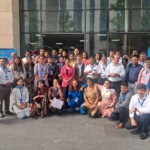
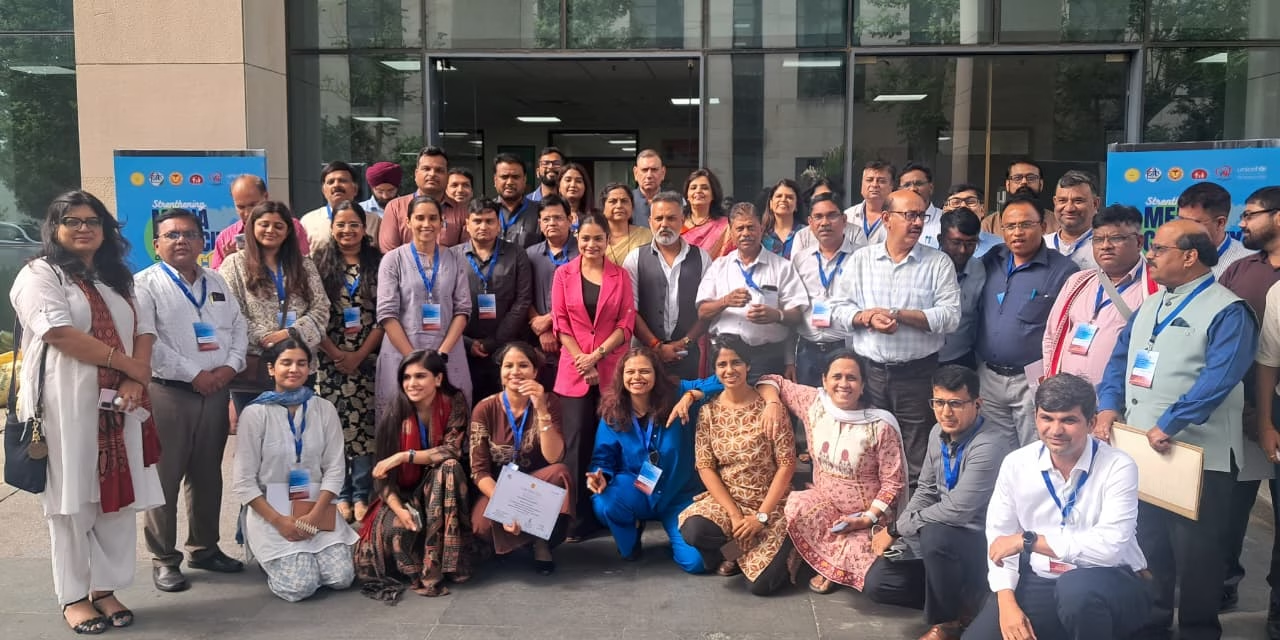
NAGPUR, INDIA — In a landmark initiative to confront the surging yet frequently overlooked crisis of non-communicable diseases (NCDs) in youth, over 30 leading journalists from Western India concluded a specialized two-day media capacity-building workshop on July 14, 2026, at the All India Institute of Medical Sciences (AIIMS), Nagpur.
Co-organized by UNICEF India, the Press Information Bureau (PIB) Western Zone, and AIIMS Nagpur, the intensive program provided media professionals with direct, first-hand exposure to the clinical realities of childhood NCDs at a designated national Centre of Excellence. The collaborative effort answers an urgent public health need: transforming complex clinical data into impactful, compassionate, and accurate health reporting that can drive early diagnosis and save young lives.
The Changing Face of Pediatric Health
For generations, public health strategies regarding Indian children focused primarily on infectious diseases and acute malnutrition. However, epidemiological shifts show a dual burden of disease. Childhood NCDs—ranging from type 1 and type 2 diabetes, childhood obesity, and cardiovascular anomalies to severe mental health disorders and chronic respiratory conditions—are escalating rapidly.
The crisis is sweeping across different socio-economic strata, presenting unique challenges in distinct environments:
-
Urban Ecosystems: Sedentary lifestyles, exponentially increased screen time, and a high intake of ultra-processed foods are driving an unprecedented surge in childhood obesity, early-onset metabolic syndromes, and mental health challenges among children (ages 5–9) and adolescents (ages 10–19).
-
Rural and Tribal Belts: In contrast, younger populations in remote areas face a different hurdles. Conditions such as congenital heart defects, chronic kidney issues, and Type 1 diabetes frequently go undiagnosed due to limited access to primary screening facilities, healthcare infrastructure, and pediatric specialists.
Because many NCDs have prolonged incubation periods, symptoms are regularly missed until debilitating or irreversible complications manifest.
Journalists as Catalysts for Public Health Action
Public health reporting acts as a vital bridge between laboratory discoveries, policy decisions, and community behaviors. Leaders at the workshop emphasized that journalists are not merely observers but critical stakeholders in the healthcare ecosystem.
“Public health reporting shapes awareness and public action,” noted Smita Vats Sharma, Director General of the Press Information Bureau (Western Zone), Ministry of Information and Broadcasting. “Journalists have an important responsibility to present evidence-based information and tell stories that help citizens understand emerging health challenges affecting children.”
Medical experts point out that because these conditions root themselves deeply during developmental years, public communication must focus heavily on the timeline of prevention.
“Childhood non-communicable diseases have a long incubation period and start from childhood; hence, it is imperative and important to demand early diagnosis, continuous care and strong public health systems,” explained Dr. Prashant Joshi, Executive Director of AIIMS Nagpur. Dr. Joshi highlighted that AIIMS Nagpur is actively pioneering scalable care models, adding that “the media can help families recognise symptoms early and encourage timely treatment.”
From Clinical Corridors to the Newsroom
The capacity-building framework moved beyond traditional lecture formats, integrating immersive clinical site visits with data-driven journalism resources.
Inside the Centre of Excellence
A core component of the program involved an immersive visit to the specialized childhood NCD unit at AIIMS Nagpur. Media professionals engaged directly with pediatric clinicians, young patients, and their caregivers, gaining a nuanced understanding of the economic, psychological, and physical tolls of managing long-term, chronic conditions.
Navigating National Health Data
The session featured an introductory address by Dr. Meenakshi Girish, Professor and Head of Pediatrics at AIIMS Nagpur, providing a foundational baseline for understanding pediatric pathology. Furthermore, journalists were trained to leverage official, open-source Government of India data systems to enrich their reporting, including:
-
National Family Health Surveys (NFHS) and the Sample Registration System (SRS) for localized statistical baselines.
-
The POSHAN-Tracker platform for nutritional metrics.
-
PIB multi-lingual updates to distribute localized health warnings effectively across diverse linguistic groups.
[Early Community Detection] ➔ [PIB/Media Awareness] ➔ [Referral to Centre of Excellence (AIIMS)] ➔ [Sustained Pediatric Care]
Challenging Stigma and Building Policy Frameworks
A key obstacle in managing pediatric chronic illnesses—particularly mental health conditions and metabolic disorders—is social stigma, which often causes families to delay seeking medical help.
Zafrin Chowdhury, Chief of Communication, Advocacy and Partnership for UNICEF India, emphasized the transformative role of empathetic reporting: “When the media reports on childhood NCDs with accuracy and compassion, it shines light on a hidden issue, encourages early detection, challenges stigma, and reinforces that these conditions are preventable and treatable.”
This workshop builds upon institutional foundations laid earlier this year when the Government of Maharashtra signed a strategic Memorandum of Understanding (MoU) with AIIMS Nagpur, supported by UNICEF India. The agreement establishes AIIMS Nagpur as the technical Centre of Excellence, tasked with standardizing referral networks and clinical protocols across the region.
“Childhood NCDs are no longer rare conditions; they are an emerging public health priority,” stated Sanjay Singh, Chief of UNICEF Maharashtra. He reiterated that the tripartite alliance aims to strengthen early detection pipelines so that children receive support long before secondary complications occur.
Journalism Frameworks: Balancing Nuance and Limitations
While the workshop marks the launch of a sustained media engagement running through to NCD Week in September 2026, health journalists face structural challenges when reporting on pediatric NCDs.
Balancing Hope with Reality
Journalists must balance reporting on breakthrough treatments with the realities of systemic infrastructure limitations. While urban centers boast advanced tertiary care, resource-constrained rural clinics face ongoing challenges in maintaining consistent supplies of essentials like pediatric insulin or specialized diagnostic tools.
Avoiding Sensationalism
Epidemiological data requires careful contextualization. Increased diagnosis rates often reflect improved screening infrastructure rather than a sudden health crisis. Media professionals must present data responsibly to prevent panic while emphasizing preventive lifestyle modifications.
What This Means for Everyday Health Decisions
For health-conscious consumers and parents, the shift in public health focus underscores an essential takeaway: prevention begins in the household.
Simple interventions—such as managing recreational screen time, replacing processed foods with nutrient-dense regional diets, encouraging daily physical activity, and paying attention to behavioral changes in adolescents—serve as primary defenses against the rise of metabolic and psychological disorders. Early screening remains the most effective tool to ensure that manageable pediatric conditions do not develop into chronic adult illnesses.
Medical Disclaimer
Medical Disclaimer: This article is for informational purposes only and should not be considered medical advice. Always consult with qualified healthcare professionals before making any health-related decisions or changes to your treatment plan. The information presented here is based on current research and expert opinions, which may evolve as new evidence emerges.
References
Institutional and Event Sources
-
Press Information Bureau (PIB) Western Zone, Ministry of Information and Broadcasting, Government of India. Press Release: Media Persons Gain First-Hand Exposure to Childhood Non-Communicable Diseases Care at Centre of Excellence, AIIMS Nagpur. Published July 14, 2026.