 0
0
 0
0
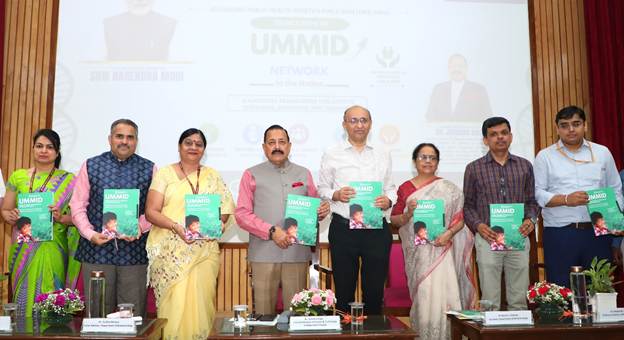
NEW DELHI — In a major structural shift toward precision medicine, Union Minister Dr. Jitendra Singh dedicated the UMMID (Unique Methods of Management of Inherited Disorders) national framework to the nation on May 21, 2026. The milestone initiative aims to bring equitable, affordable genomic testing and early clinical intervention to thousands of families devastated by rare genetic diseases, steering Indian healthcare away from reactive, one-size-fits-all treatments and toward individualized, genome-based care.
Speaking at a national assembly organized by the Department of Biotechnology (DBT) at Prithvi Bhawan, Dr. Singh—who is also a trained medical professional—declared that India is steadily transitioning into a medical era where diagnosis and therapeutic selection will be mapped to a patient’s individual genetic blueprints.
“The entire future of medicine is moving towards gene and genome-based individualized treatment,” Dr. Singh noted. “Inherited and rare genetic disorders remained neglected for decades because diagnosis itself was difficult, treatment inaccessible, and medicines either unavailable or prohibitively expensive.”
To streamline nationwide data management, the Minister released a comprehensive UMMID Compendium and launched an interactive digital Dashboard designed to track real-time diagnostics, prenatal counseling, and public health outreach across the country.
The Scale of the Silent Burden
While a specific genetic condition may only impact a fraction of a percent of the population, the collective footprint of rare diseases is massive. Globally, researchers have identified between 5,000 and 8,000 distinct rare diseases, roughly 80% of which are rooted in genetic anomalies. According to data from the Indian Organization for Rare Diseases (IORD), approximately 70 to 80 million people in India live with a rare disease, representing nearly a quarter of the global patient volume.
Historically, families caught in this “diagnostic odyssey” spend an average of five to seven years shuffling between different tertiary hospitals before obtaining an accurate answer. This delay stems from several structural problems:
-
Mainstream Curricula Gaps: Rare phenotypes have historically been underrepresented in basic medical training.
-
Consanguinity and High Birth Rates: Cultural patterns of consanguineous marriage (marrying close biological relatives) in specific communities significantly elevate the risk of inheriting rare autosomal recessive traits.
-
Severe Financial Depletion: In specialized testing markets, single-gene sequencing or whole-exome diagnostics have been prohibitively expensive for low-income and rural households, often costing more than a family’s monthly earnings.
Inside the UMMID Public Health Architecture
Supported directly by the DBT, the UMMID initiative targets these challenges via an integrated, decentralized public health delivery model. The infrastructure functions across three parallel axes:
1. Advanced Molecular Testing (NIDAN Kendras)
The network has expanded from its initial 2019 rollout to approximately 30 operational National Inherited Diseases Administration (NIDAN) Kendras housed within premier public hospitals. These hubs deliver advanced molecular pathology, genomic sequencing, and metabolic tracking. By placing these centers within state-run medical facilities, advanced diagnostics have expanded beyond private metropolitan laboratories into ordinary public clinics.
2. Early Population Screening & Preventive Care
To break the cycle of late-stage disease discovery, UMMID targets foundational prevention through a tiered system:
[Primary Prevention]   --> Identification of at-risk couples via premarital counseling
[Secondary Prevention] --> Prenatal molecular testing & routine newborn metabolic screening
[Tertiary Prevention]  --> Early-stage supportive care to curb progressive clinical deterioration
To date, the program has provided diagnostic screening and genetic counseling services to nearly 300,000 individuals, deliberately extending its reach into underserved territories and Aspirational Districts.
3. Clinician Sensitization and Capacity Building
The program runs dedicated genomic training modules for pediatricians, obstetricians, and primary care doctors to help them recognize early biomarkers of metabolic and chromosomal diseases, reducing downstream diagnostic delays.
Shifting from Rare Anomalies to Chronic Disease Management
Public health experts emphasize that the long-term benefit of the UMMID network extends far beyond rare diseases. The structural expertise gained from analyzing large-scale genetic variations within India’s ethnically diverse population will serve as the baseline database for national precision medicine.
“India’s immense genetic diversity provides enormous opportunities for scientific innovation and translational healthcare solutions relevant not only for India but globally,” stated Dr. Rajesh S. Gokhale, Secretary of the Department of Biotechnology and Director General of BRIC, during the event.
As genomic sequencing costs fall, public health models intend to utilize these national genetic profiles to predict individual drug responses and disease predispositions for widespread chronic conditions.
| Therapeutic Frontier | Precision Medicine Application |
| Oncology | Matching tumor genetic profiles to specific targeted biological therapies, avoiding ineffective systemic chemotherapy. |
| Cardiology | Identifying inherited hypercholesterolemia variants early to prevent premature cardiac events. |
| Diabetology | Categorizing monogenic vs. polygenic sub-types of diabetes to prescribe precise metabolic interventions. |
Implementation Challenges and Balancing Perspectives
Despite these structural gains, independent public health specialists argue that creating advanced diagnostic frameworks resolves only part of a complex equation.
“UMMID is an exceptional framework for mapping out where genetic vulnerabilities lie, particularly in prenatal and neonatal phases,” says Dr. Anita Sen, a public health policy analyst not affiliated with the government initiative. “However, identification is only step one. The critical bottleneck in India remains therapeutic access.”
Dr. Sen highlights that for many confirmed genetic conditions—such as Lysosomal Storage Disorders (LSDs) or Spinal Muscular Atrophy (SMA)—the required orphan drugs and enzyme replacement therapies can demand lifelong expenditures running into hundreds of thousands of dollars annually. While the government’s National Policy for Rare Diseases provides financial support of up to ₹50 lakhs for specific patient categories, processing times, high drug costs, and local distribution gaps remain persistent obstacles for low-income families.
Furthermore, running large-scale genetic screenings across rural communities requires careful management of data privacy and sensitive genetic counseling. Without comprehensive community education, genetic screening risks creating social stigma around families flagged as carriers of inherited conditions.
What This Means for Individual Health Decisions
For health-conscious consumers and prospective parents, the formalization of the UMMID network signals a clear shift toward proactive health planning:
-
Pre-Conception Awareness: Families with a known history of unexplained infant mortality, recurring developmental delays, or progressive neurological disorders can seek out designated NIDAN Kendras for accurate pre-conception screening.
-
The Power of Early Screening: Simple newborn metabolic screening tests (often using a single prick of blood from an infant’s heel) can catch metabolic conditions like phenylketonuria or congenital hypothyroidism before permanent cognitive or physiological damage occurs.
-
Informed Family Planning: Validated prenatal counseling gives couples clear, data-driven insights into genetic risks, allowing them to make fully informed medical and reproductive choices.
By integrating biotechnology with local health clinics, the UMMID network represents a concerted effort to ensure that the future of genetic medicine becomes an accessible public utility rather than an exclusive luxury.
Reference Section
Government and Official Sources
-
Press Information Bureau (PIB) Delhi: Dr. Jitendra Singh Dedicates UMMID Programme to the Nation; Says Genomic and Precision Medicine Will Shape the Future of Healthcare. Published May 21, 2026. [PRID: 2263736].
Medical Disclaimer: This article is for informational purposes only and should not be considered medical advice. Always consult with qualified healthcare professionals before making any health-related decisions or changes to your treatment plan. The information presented here is based on current research and expert opinions, which may evolve as new evidence emerges.