 0
0
 0
0
NEW DELHI — In a significant move to address long-standing health inequities, the Union Ministry of Health and Family Welfare has announced a massive scale-up of the Tribal Health Programme. By relaxing decades-old infrastructure norms and deploying thousands of mobile medical units, the government aims to bring life-saving clinical care to the country’s most “invisible” populations.
The initiative, detailed in a recent report to the Lok Sabha by Union Minister of State for Health and Family Welfare, Shri Prataprao Jadhav, marks a shift from a “one-size-fits-all” healthcare model to a localized, terrain-specific strategy. With over 31,000 Ayushman Arogya Mandirs now operational across 178 tribal districts, the program is designed to tackle the unique geographical and socio-economic barriers that have historically left tribal communities with higher rates of malnutrition, anemia, and maternal mortality.
Redefining the “Last Mile”
For a resident of a remote village in a “plain” district, a healthcare center is typically mandated for every 5,000 people. However, in the dense forests and rugged highlands where many of India’s tribal communities reside, a 5-kilometer trek can be a life-threatening journey for a pregnant woman or an elderly patient.
Recognizing this, the National Health Mission (NHM) has officially lowered the population thresholds for setting up facilities in tribal and hilly areas. Under the new norms:
-
Sub-Health Centres (SHCs): Requirement reduced from 5,000 to 3,000 people.
-
Primary Health Centres (PHCs): Requirement reduced from 30,000 to 20,000 people.
-
Community Health Centres (CHCs): Requirement reduced from 120,000 to 80,000 people.
“These adjustments are not just numbers; they represent a fundamental acknowledgment that distance is a social determinant of health,” says Dr. Aruna Sharma, a public health consultant not involved in the government report. “By lowering the threshold, the government is essentially saying that even a small, isolated cluster of homes deserves a formal point of care.”
Hospitals on Wheels: The Rise of MMUs
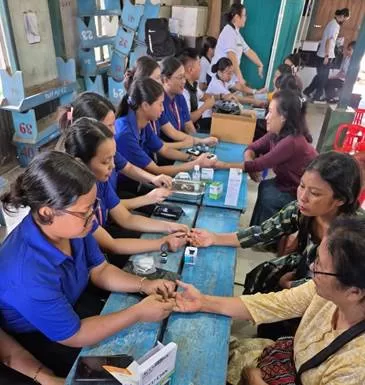
Perhaps the most visible change in tribal healthcare is the deployment of Mobile Medical Units (MMUs). As of early 2026, 1,453 MMUs are operational nationwide. These “hospitals on wheels” provide diagnostic services, maternal care, and basic treatments to villages where building a permanent structure remains a logistical impossibility.
The push has been further accelerated by the Pradhan Mantri Janjati Adivasi Nyaya Maha Abhiyan (PM-JANMAN), launched in late 2023. Under this scheme, districts with Particularly Vulnerable Tribal Groups (PVTGs) can now operate up to 10 MMUs—a fivefold increase over standard district allowances. As of February 2026, over 800 of these units are dedicated specifically to PVTG areas, ensuring that even the most marginalized subgroups are not left behind.
Strengthening the Grassroots: Ayushman Arogya Mandirs
A cornerstone of this transformation is the conversion of existing health centers into Ayushman Arogya Mandirs (AAMs). These centers have evolved from simple immunization outposts into hubs for “Comprehensive Primary Healthcare.”
In tribal regions, 31,023 AAMs are now functional. These centers offer a wide range of services, including:
-
Non-Communicable Disease (NCD) Screening: Testing for hypertension and diabetes.
-
Palliative and Rehabilitative Care: Support for chronic illnesses and disabilities.
-
Mental Health Services: Integrating psychological well-being into primary care.
To solve the perennial problem of specialist shortages in remote areas, these Mandirs utilize eSanjeevani, a national teleconsultation platform. This allows a patient in a remote corner of Odisha or Chhattisgarh to consult with a specialist in a metropolitan medical college via video link. Nationally, more than 44 crore teleconsultations have been recorded, proving that digital health can bridge the physical gap in infrastructure.
Data-Driven Accountability
While infrastructure is growing, health experts emphasize the importance of monitoring outcomes. The government currently relies on the National Family Health Survey (NFHS-5) and the National Sample Survey (NSS) to track progress in tribal health indicators.
Historically, tribal populations have faced a “triple burden” of disease: high rates of communicable diseases like TB and Malaria, a rising prevalence of non-communicable diseases, and genetic conditions such as Sickle Cell Disease.
“The real test of these 31,000 centers will be whether we see a measurable drop in neonatal mortality and severe anemia over the next five years,” notes Dr. Sharma. “Infrastructure is the first step, but consistent staffing and a reliable supply of medicines are the second and third.”
Challenges and Limitations
Despite the progress, significant hurdles remain. The government’s Common Review Missions (CRM)—annual audits of health schemes—frequently highlight the “human resource gap.” Attracting and retaining doctors and nurses in “hard-to-reach” areas remains a global challenge.
Furthermore, while the population norms have been relaxed, the actual construction of facilities in protected forest zones often faces environmental and regulatory delays. Critics also point out that while teleconsultation is a powerful tool, it relies heavily on stable internet connectivity, which is often spotty in deep tribal pockets.
What This Means for You
For health-conscious citizens and healthcare providers, these developments signal a shift toward inclusive healthcare.
-
For Professionals: There are increasing opportunities and incentives for rural service and digital health integration.
-
For Consumers: If you reside in or near a tribal district, your access to primary screening and specialist consultations via AAMs has likely expanded significantly. You are encouraged to utilize local AAMs for preventive screenings rather than waiting for symptoms to become severe.
As India moves toward the goals of the Dharti Aaba Janjatiya Gram Utkarsh Abhiyan, the focus remains on ensuring that the “last mile” is no longer the longest mile in Indian healthcare.
References & Sources
-
Primary Source: Press Information Bureau (PIB) Delhi. “Steps taken under Tribal Health Programme for Tribal Population.” Posted March 23, 2026. [Government of India].
Medical Disclaimer: This article is for informational purposes only and should not be considered medical advice. Always consult with qualified healthcare professionals before making any health-related decisions or changes to your treatment plan. The information presented here is based on current research and expert opinions, which may evolve as new evidence emerges.