 0
0
 0
0
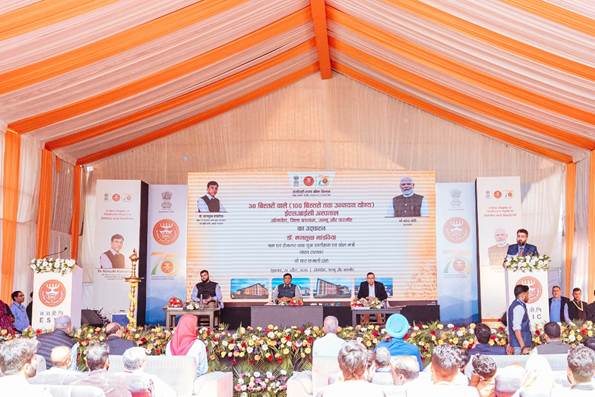
Srinagar, Jammu & Kashmir — In a landmark move for industrial health in Northern India, Union Minister for Labour & Employment Dr. Mansukh Mandaviya inaugurated the first-ever Employees’ State Insurance Corporation (ESIC) hospital in the Kashmir Valley on April 24, 2026. The 30-bedded facility in Ompora, Budgam, marks a critical pivot toward preventive medicine and social security for a workforce that has historically faced significant barriers to specialized occupational healthcare.
The inauguration serves as the centerpiece of a broader national strategy to integrate annual health screenings into the daily lives of the Indian workforce. “A country that values the dignity of its workers is unstoppable on the path of progress,” Dr. Mandaviya stated during the ceremony, emphasizing that the health of the laborer is the primary engine of national economic growth.
A Milestone for Regional Healthcare Access
The new hospital, constructed at a cost of ₹165 crore, is designed to serve as a hub for more than 50,000 workers and their families in the Budgam and Srinagar regions. While the facility opens with 30 beds, the infrastructure is engineered for future expansion to 100 beds, anticipating the growing industrial footprint in the Union Territory.
For the workers of Jammu & Kashmir, the hospital represents more than just bricks and mortar; it is a shift toward localized care. Previously, many insured persons (IPs) had to rely on the regional office in Jammu or empanelled private providers for secondary care. The Ompora facility brings diagnostic services, emergency care, and outpatient departments (OPD) directly to the valley’s industrial workforce.
From Treatment to Prevention: The Role of Labour Codes
The highlight of the Minister’s address was the focus on preventive healthcare mandated under the recently implemented Labour Codes. These reforms transition the ESIC from a “sick-care” system—where workers visit only when injured or ill—to a “well-care” system.
Key Developments under the New Framework:
-
Mandatory Annual Health Checks: Workers are now entitled to comprehensive yearly screenings, allowing for early detection of non-communicable diseases (NCDs) like hypertension and diabetes.
-
Occupational Health Monitoring: Specialized focus on detecting respiratory issues or musculoskeletal disorders common in industrial labor.
-
Social Security Convergence: The integration of ESIC with the Ayushman Bharat (PM-JAY) scheme ensures that beneficiaries can access cashless treatment across a wider network of empanelled hospitals if specialized tertiary care is required.
“Early detection is the cornerstone of public health,” says Dr. Arpit Sharma, a public health consultant not affiliated with the project. “By providing annual check-ups to millions of workers, the ESIC can mitigate chronic illnesses that often lead to catastrophic out-of-pocket expenditures and loss of livelihood.”
Statistical Context: A Global Recognition
The expansion comes at a time when India’s social security net is widening at an unprecedented rate. According to data cited from the International Labour Organisation (ILO), India’s social security coverage has jumped from 19% in 2015 to 64.3% in 2025.
This rapid scaling earned India the ‘Excellence in Social Security’ Award from the International Social Security Association (ISSA) in 2025. Currently, the ESIC scheme covers approximately 3.84 crore insured persons and provides benefits to nearly 15 crore total beneficiaries nationwide.
Expert Perspectives and Public Health Implications
Medical experts suggest that the “Budgam Model” of placing hospitals in proximity to worker clusters is essential for reducing “absenteeism due to illness.”
“When healthcare is accessible, workers are more likely to seek help for minor symptoms before they become debilitating,” notes Dr. Sarah Khan, an occupational health specialist. “In a region like Kashmir, where geography and weather can impede travel, having a dedicated ESIC facility in Budgam is a vital intervention for the local economy.”
However, some health policy analysts urge caution regarding the staffing of these new facilities. While the infrastructure is world-class, the long-term success of the hospital will depend on the consistent recruitment of specialized medical officers and the maintenance of advanced diagnostic equipment in a high-altitude environment.
What This Means for the Worker
For the average factory worker or artisan in Srinagar, the Labour Codes and the new hospital provide three distinct layers of security:
-
Dignity: Mandatory appointment letters and minimum wages provide financial stability.
-
Safety: Occupational health standards reduce the risk of workplace accidents.
-
Longevity: Preventive screenings ensure that silent killers, like heart disease, are caught in stages where they are still manageable.
As Dr. Mandaviya concluded, the goal is to create a “future-ready” labor ecosystem where the worker is not merely a cog in the machine but a protected and valued asset of the nation.
Reference Section
Primary Sources:
-
Government Announcement: Press Information Bureau (PIB) Delhi, “Dr. Mansukh Mandaviya Inaugurates First ESIC Hospital in J&K,” Posted 24 April 2026.
Medical Disclaimer: This article is for informational purposes only and should not be considered medical advice. Always consult with qualified healthcare professionals before making any health-related decisions or changes to your treatment plan. The information presented here is based on current research and expert opinions, which may evolve as new evidence emerges.