 0
0
 0
0
BANGKOK, THAILAND — Health and environment policymakers from across the World Health Organization (WHO) South-East Asia Region mobilized this week in Bangkok to accelerate the phase-out of mercury-containing dental fillings. The two-day regional workshop, which concluded on July 13, 2026, focused on translating the landmark 2025 international mandate under the Minamata Convention on Mercury—which sets a hard deadline of 2034 to eliminate dental amalgam—into enforceable national health strategies. According to the WHO, the global initiative aims to mitigate structural toxic risks to ecological systems while aggressively scaling up universal access to modern, mercury-free oral health alternatives.
The Core Mandate: From “Phase Down” to Total Phase-Out
Dental amalgam, a filling material that has been a mainstay of dentistry for more than 150 years, is composed of roughly 50% elemental mercury by weight mixed with a powder alloy of silver, tin, and copper.
While individual countries previously operated under voluntary “phase-down” measures, the sixth Conference of the Parties (COP6) to the Minamata Convention on Mercury in 2025 legally bindingly escalated this timeline into a complete global phase-out by 2034.
DENTAL AMALGAM PHASE-OUT TIMELINES
│
├── 2024 Baseline ── Only 19% of South-East Asian nations met initial phase-down benchmarks
│
├── 2030 Target   ── WHO Global Oral Health Action Plan targets a 90% worldwide phase-down/out rate
│
└── 2034 Deadline ── Global legally binding elimination of dental amalgam manufacturing & placement
The data shows an uphill battle for the region. The WHO Global Oral Health Action Plan targets 90% of countries to have phased down or entirely eliminated amalgam by 2030. However, according to WHO’s 2024 baseline statistics, only 19% of South-East Asian nations have achieved this milestone, compared to a still-low 31% global average.
Why the Paradigm Shift Matters: Health and the Environment
Mercury is classified by the WHO as one of the top ten chemicals of major public health concern. The primary challenge of dental amalgam lies not simply within the patient’s mouth, but across the entire operational lifecycle of the material—spanning manufacturing, clinical placement, drilling-based removal, and final disposal.
Ecological Scale: The United Nations Environment Programme (UNEP) estimates that between 3,000 and 5,000 metric tonnes of elemental mercury are currently stored inside the teeth of populations globally.
When dental waste is improperly handled, mercury accumulates in municipal wastewater, soil, and air. Through biological processes, it transforms into methylmercury, bioaccumulating up the marine food chain and posing documented neurological risks to humans and wildlife alike.
“Phasing out dental amalgam offers countries a unique opportunity to protect people’s health and the environment while accelerating the transition to prevention-oriented, minimally invasive, and more sustainable oral health care,” stated Dr. Catharina Boehme, Officer-in-Charge for the WHO Regional Office for South-East Asia.
Global Blueprint for Clinical Care
To guide this transition, the WHO officially launched its new comprehensive document: Environmentally friendly and less invasive oral health care for preventing and managing dental caries.
Rather than advocating for a simple one-to-one material swap, the clinical guideline introduces a structural “prevention-first” philosophy. The protocol emphasizes non-invasive therapies to arrest tooth decay before cavities even form. When structural restorations are necessary, the WHO recommends evidence-based, mercury-free materials included in the WHO Model List of Essential Medicines:
-
Fluoride Varnish & Silver Diamine Fluoride (SDF): Topically applied compounds to remineralize enamel and arrest active moderate lesions non-invasively.
-
Glass Ionomer Cements (GICs): Biocompatible materials that bond chemically to teeth and slowly release protective fluoride, highly recommended for pediatric and elderly populations.
-
Resin-Based Composites: Tooth-colored synthetic materials used widely for durable aesthetic restorations.
Regional Reality Check and Clinical Limitations
Transitioning an entire health sector away from a cheap, durable material introduces steep systemic hurdles. A primary obstacle is resource disparity. In remote or resource-limited settings across South-East Asia, alternative materials like resin composites present operational difficulties. Composites require absolute moisture isolation (keeping the tooth completely dry during placement) and advanced curing lights, which are difficult to maintain in dental clinics facing erratic electrical infrastructure or high patient volumes.
Furthermore, there is an industrial critique regarding current mitigation strategies. Organizations like the World Alliance for Mercury-Free Dentistry have raised concerns regarding the financial structures of certain phase-down programs, noting that some infrastructure funding involves contributions from amalgam manufacturers and the dental lobby. Independent environmental advocates argue that relying heavily on clinical “amalgam separators”—devices designed to catch mercury scraps before they enter wastewater—is inherently inefficient in developing economies that lack specialized hazardous waste processing facilities.
However, pilot programs show progress. As part of a larger Global Environment Facility (GEF-7) project running from 2023 to 2026, Thailand has demonstrated measurable declines in dental amalgam utilization. By modernizing its public health procurement and upgrading training, Thailand’s Department of Health has proven that structural scaling is possible when backed by cross-sectoral financing.
Practical Impact: What This Means for Patients
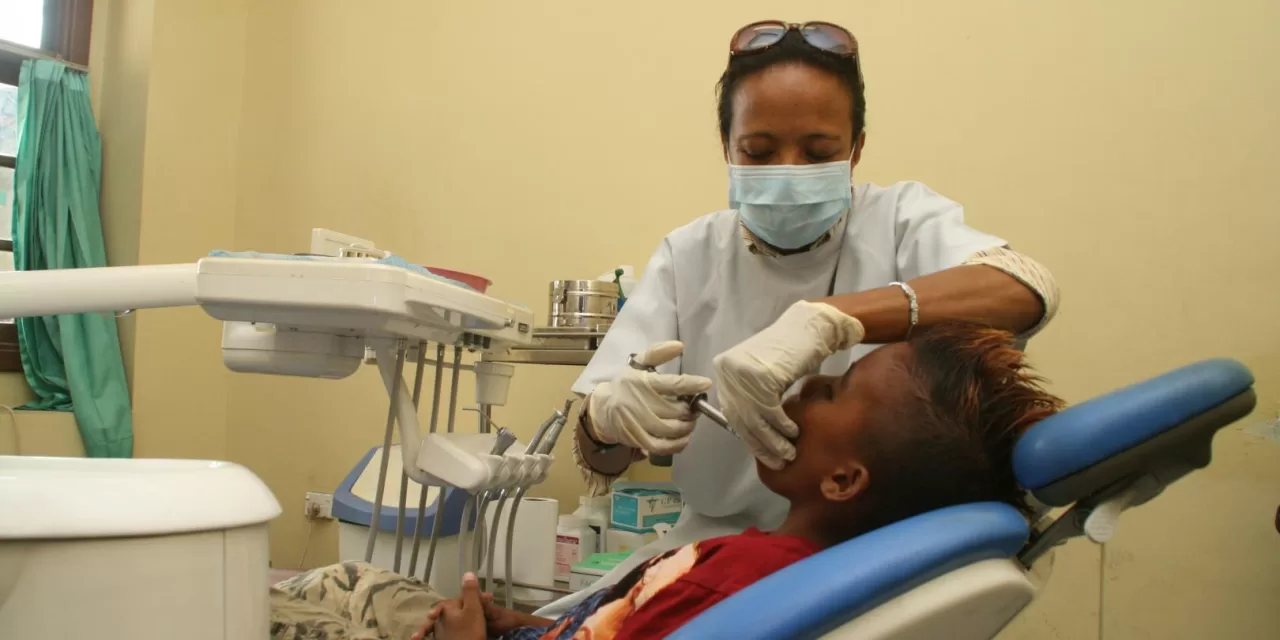
For individual patients, this policy shift redefines what to expect at the dentist’s office. Future treatments will favor early interceptive diagnostics, sealants, and tooth-colored restorations over conventional drill-and-fill techniques.
Importantly, public health authorities stress that existing, stable silver fillings do not present an emergency and should not be routinely removed. The act of drilling out a functional amalgam filling actually releases a transient spike of mercury vapor, creating unnecessary exposure for the patient. Removal should only occur if the filling is structurally compromised, cracked, or suffering from recurrent decay.
The WHO guideline advises heightened caution for specific groups, recommending that resin-based composites containing Bisphenol A (BPA) derivatives be limited where possible in children, adolescents, and pregnant or breastfeeding women due to potential endocrine-disrupting profiles. Patients are encouraged to discuss tailored, biocompatible options with their providers during routine checkups.
Ultimately, the 2034 target forces a necessary evolution. By phasing out a legacy environmental pollutant, public health infrastructure is pushed to shift its entire focus away from managing structural damage and toward protecting natural teeth from the very start.
Reference Section
Study & Policy Citations
-
World Health Organization. (2026). WHO guideline on environmentally friendly and less invasive oral health care for preventing and managing dental caries. Geneva: World Health Organization. ISBN 978-92-4-011694-8.
Medical Disclaimer: This article is for informational purposes only and should not be considered medical advice. Always consult with qualified healthcare professionals before making any health-related decisions or changes to your treatment plan. The information presented here is based on current research and expert opinions, which may evolve as new evidence emerges.