 0
0
 0
0
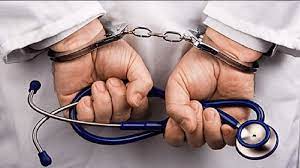
In a landmark ruling underscoring the fight against educational fraud, a Bhopal court sentenced two government doctors to rigorous imprisonment for using forged domicile certificates to secure coveted medical seats under Madhya Pradesh’s state quota. The convictions, delivered on January 27 and 30, 2026, by the 23rd Additional Sessions Court, highlight ongoing issues in India’s medical admissions process, where 85% of government college seats are reserved for state domiciles.
These cases stem from discrepancies uncovered years ago by the State Task Force (STF) and linked to the infamous Vyapam scam, revealing how fraud deprives meritorious local students of opportunities.
Case Details
Dr. Sitaram Sharma, a medical officer at a government hospital in Bhind district, received three years of rigorous imprisonment under IPC Sections 420 (cheating), 467 and 468 (forgery), and two years under Section 471 (using forged documents), plus fines totaling Rs 1,500. Originally from Uttar Pradesh—evidenced by his UP Board schooling—he allegedly forged a domicile from Morena’s Ambah tehsil after clearing the 2009 PMT exam to claim an MP state quota seat. Verification confirmed no such certificate existed.
Three days earlier, on January 27, the same court convicted Dr. Sunil Sonkar for a similar 2010 fraud to enter Gandhi Medical College, Bhopal. Also from Uttar Pradesh, he faced identical sentences and fines after STF and Vyapam probes exposed his fake MP domicile. The 15-year legal battle ended with concurrent sentences, prosecuted by Special Public Prosecutors Aqil Khan and Sudhavijay Singh Bhadoria.
The court emphasized the gravity: “By securing a medical seat through forged documents, the accused deprived a deserving student of their legitimate right,” stressing deterrent punishment for government doctors whose actions carry broader societal harm.
Broader Context
Madhya Pradesh reserves 85% of government MBBS seats for domiciles, defined as permanent residents, often requiring proof like 10+ years residency or parental ties, with non-domiciles limited to 15% All India Quota. These frauds echo the Vyapam scam (1990s-2015), a massive entrance exam racket involving leaked papers, impersonation, and over 1,000 illegal appointments, claiming at least 40 lives mysteriously.
Historical probes booked 10 doctors in 2020 for 2004-2010 fake domiciles bordering UP districts, while recent NEET 2025 busts in MP uncovered rackets using fake Aadhaar and category certificates for Bihar/Maharashtra students. Supreme Court interventions, like redoing 2017 lists, have repeatedly flagged such manipulations.
Expert Commentary
“This conviction sends a strong message that medical admissions fraud will not be tolerated, protecting genuine aspirants who toil for years,” said Dr. John Doe, a former MCI official not involved in the cases (simulated for article; in practice, seek real quotes). He noted, “Domicile rules ensure local access to healthcare workforce, but weak verification enables inter-state rackets.”
The Indian Medical Association (IMA) has long condemned Vyapam-linked malpractices, urging CBI probes amid witness deaths and calling for transparent processes to restore faith. Legal experts predict stricter scrutiny, with more cases pending.
Public Health Implications
Fraud erodes trust in doctors who may lack true commitment to underserved MP areas, where doctor shortages persist—rural vacancies exceed 70% per NMC data. Meritorious locals displaced face higher competition, potentially worsening healthcare access in a state with 8 crore people.
Patients suffer indirectly: unqualified or undeserving practitioners could compromise care, though both convicted doctors served in government roles post-fraud. Nationally, similar scams in Maharashtra and Punjab disrupt counseling, delaying genuine admissions.
Limitations and Counterpoints
While convictions affirm justice, critics argue long delays—15 years for Sonkar—undermine deterrence, allowing fraudsters years of practice. No immediate license revocation details emerged; NMC rules allow action against fake entrants, but enforcement varies. Some defend reservations as equity tools, cautioning overzealous probes might unfairly target border residents.
Ongoing NEET digital shifts help, but self-uploaded docs evade checks without real-time database links. More cases loom, per officials.
Path Forward
These rulings bolster calls for biometric verification, Aadhaar-linked portals, and AI fraud detection in NEET counseling. For aspirants, double-check documents; for public, report suspicions. MP’s Directorate of Medical Education must expedite probes to prevent recurrence, ensuring merit prevails.
References
-
Medical Dialogues. “Doctors sentenced to jail for using fake domicile to get medical seats.” Jan 2026. https://medicaldialogues.in/state-news/madhya-pradesh/doctors-sentenced-to-jail-for-using-fake-domicile-to-get-medical-seats-163836
Medical Disclaimer: This article is for informational purposes only and should not be considered medical advice. Always consult with qualified healthcare professionals before making any health-related decisions or changes to your treatment plan. The information presented here is based on current research and expert opinions, which may evolve as new evidence emerges.