 0
0
 0
0
Read Time:6 Minute, 0 Second
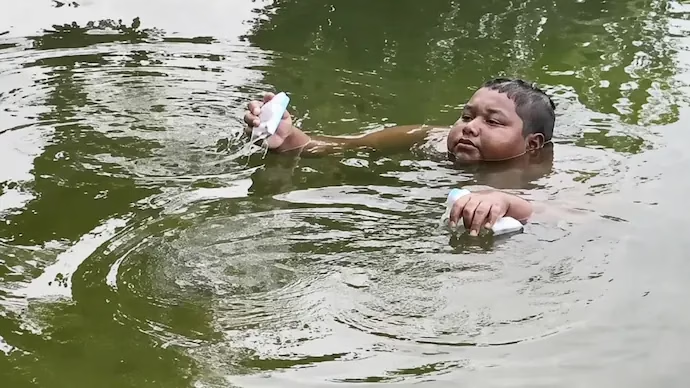
MURSHIDABAD, India — Social media feeds were recently gripped by viral footage of a 16-year-old boy sitting submerged in a local pond for hours. According to regional reports, the teenager, identified as Iqbal, claims that stepping onto dry land triggers an intolerable burning sensation across his skin, while remaining under water brings immediate relief. Local observers and family members initially interpreted his extreme behavior through a supernatural lens, but medical experts are stepping forward to urge caution, pointing to complex biological conditions—and emphasizing that viral videos cannot replace standard medical evaluation.
The unusual account has sparked widespread public curiosity about a rare medical condition known as aquagenic pruritus, where contact with water triggers intense stinging, itching, or burning. However, leading dermatologists emphasize that the teenager’s specific symptoms actually invert the classic medical presentation of the disease, pointing to a broader differential diagnosis that requires urgent, in-person clinical care.
What Is Aquagenic Pruritus?
Aquagenic pruritus is an uncommon dermatological condition characterized by severe itching, prickling, stinging, or burning sensations triggered by water contact. It can occur during or immediately after bathing, swimming, sweating, or exposure to rain. Unlike common skin allergies or hives, aquagenic pruritus typically occurs without any visible skin changes, such as redness, rash, or swelling.
Because the skin looks completely normal during an episode, patients frequently face skepticism from family members and healthcare providers alike.
“It can be very confusing because a patient may experience intense discomfort even when the skin looks completely normal,” explains Dr. Kritika Sharma, a Pune-based dermatologist. “The sensation occurs after water contacts the skin without the typical signs associated with a visible allergic reaction.”
Water Exposure (Shower, Rain, Sweat) ➔ Intense Itching / Burning ➔ Skin Appears Entirely Normal
Symptoms often begin within minutes of exposure or shortly after drying off. In a landmark study of 36 patients published in the Journal of the American Academy of Dermatology, researchers found that water-induced discomfort lasted between 10 and 120 minutes, averaging about 40.6 minutes per episode. For roughly half of the study participants, the burning began almost instantly upon contact; for others, it lagged by 2 to 15 minutes after stepping away from water.
The Hidden Mechanisms Behind Water Sensitivity
To understand aquagenic pruritus, it is essential to distinguish it from related water-triggered skin phenomena:
-
Aquagenic Pruritus: Triggers intense discomfort, burning, or itching without visible welts or rashes.
-
Aquagenic Urticaria: A distinct, true form of physical hives where water contact causes small, raised, swollen welts (wheals) on the skin.
While the precise cellular mechanism of aquagenic pruritus remains under investigation, clinical evidence suggests that water contact causes localized chemical changes within the skin. Exposure to water can trigger mast-cell activation, the release of neurotransmitters like acetylcholine, and altered local fibrinolytic (blood-clot breakdown) activity. These microscopic chemical shifts stimulate cutaneous nerve fibers without triggering full-blown inflammation or raised hives.
| Feature | Aquagenic Pruritus | Aquagenic Urticaria | Contact Dermatitis |
| Primary Symptom | Intense burning, itching, or tingling | Raised, itchy welts (hives) | Redness, scaling, or localized rash |
| Visible Skin Changes | None (Skin appears normal) | Yes (Visible hives within minutes) | Yes (Inflammation, redness, bumps) |
| Underlying Mechanisms | Neurochemical / Mast-cell pathways | IgE / Histamine-mediated hives | Delayed immune / Irritant response |
Underlying Systemic Links
In many instances, aquagenic pruritus occurs as an isolated primary condition. However, persistent or severe symptoms can sometimes serve as an early clinical warning sign for underlying hematological (blood) disorders.
The most prominent association is with polycythemia vera, a rare, slow-growing blood cancer in which the bone marrow produces an excess of red blood cells. Research indicates that aquagenic pruritus can precede the diagnosis of polycythemia vera by several years. Other, rarer associations include:
-
Essential thrombocythemia
-
Myelodysplastic syndromes
-
Lymphoma
-
Hepatitis C infection
-
Hypereosinophilic syndrome
Dermatologists stress that experiencing mild itching after a bath does not mean a person has a blood disorder. Dry winter air, harsh soaps, and skin dehydration are far more common culprits. Nevertheless, persistent, severe water-induced pain warrants comprehensive medical testing, including a complete blood count (CBC).
Why the Viral Case Triggers Clinical Doubt
While media reporting has linked the Murshidabad teenager’s story to aquagenic pruritus, dermatologists point out a fundamental discrepancy in the narrative.
In classic aquagenic pruritus, water is the trigger, and drying off leads to gradual recovery. In contrast, reports regarding the Murshidabad youth claim he experiences relief while remaining submerged in the pond and suffers severe pain only upon exiting.
“Stress or anxiety may intensify physical symptoms in some patients, while allergy, connective-tissue conditions, nutritional deficiencies, and other medical causes need careful consideration,” says Dr. Priyanka Hemrajani, Senior Consultant in Dermatology. She emphasizes that unusual clinical presentations should be methodically evaluated rather than prematurely labeled as rare, exotic syndromes.
Physicians urge patients and families to avoid using natural bodies of water—such as stagnant ponds or rivers—as a long-term self-soothing strategy. Extended immersion carries severe public health risks, including:
-
Bacterial and parasitic skin infections
-
Accidental drowning or hypothermia
-
Contact with environmental toxins
-
Aggravation of open skin lesions
Navigating Diagnosis and Management
Because aquagenic pruritus has diverse potential causes, management must be tailored to the individual. When evaluating suspected cases, clinicians typically perform detailed blood panels to rule out underlying systemic disease.
Clinical Evaluation ➔ Blood Panels (CBC) ➔ Identify Underlying Cause ➔ Targeted Therapy
While no single cure exists for primary aquagenic pruritus, several evidence-based management options offer relief:
-
Oral Antihistamines: Second-generation, non-sedating H1-antihistamines are frequently the first line of defense. In clinical studies, approximately 47% of patients reported partial symptom reduction.
-
Phototherapy: Controlled exposure to ultraviolet B (UVB) light can reduce skin nerve sensitivity. Clinical series have shown significant symptom improvement in up to 57% of treated individuals.
-
Targeted Pharmacotherapy: For refractory cases, specialists may prescribe topical capsaicin cream, sodium bicarbonate baths, or neurological modulators such as pregabalin or naltrexone.
-
Bathing Adjustments: Cleveland Clinic medical guidelines recommend maintaining lukewarm water temperatures, shortening bath times to under 10 minutes, and applying heavy emollients immediately to damp skin to lock in moisture barrier function.
When an underlying medical condition like polycythemia vera is present, treating the primary disease remains the most effective pathway to resolving the skin symptoms.
What Patients and Families Should Remember
Water-triggered discomfort is a legitimate, highly distressing medical occurrence that warrants compassionate medical attention rather than superstition or social isolation.
Healthcare professionals advise seeking prompt medical evaluation if water contact consistently interferes with daily hygiene, sleep, or work; if scratching leads to secondary skin infections; or if itching is accompanied by red-flag symptoms such as unexplained weight loss, night sweats, persistent fatigue, or easy bruising. A thorough evaluation by a board-certified dermatologist or internist remains the safest path to clear answers and effective relief.
References
Medical Disclaimer: This article is for informational purposes only and should not be considered medical advice. Always consult with qualified healthcare professionals before making any health-related decisions or changes to your treatment plan. The information presented here is based on current research and expert opinions, which may evolve as new evidence emerges.


Happy
0 %

Sad
0 %

Excited
0 %

Sleepy
0 %

Angry
0 %

Surprise
0 %