 0
0
 0
0
Read Time:5 Minute, 46 Second
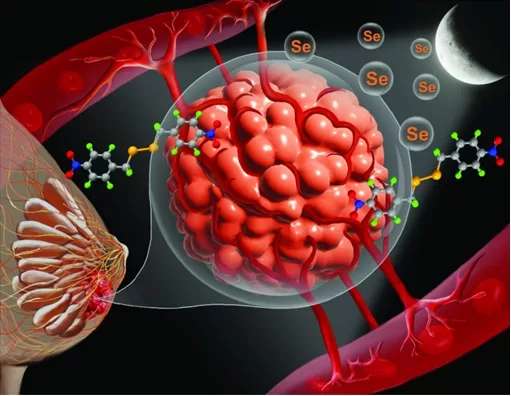
MOHALI, India — Researchers in India have engineered experimental, microscopic nanobots that can navigate through biological fluid toward breast cancer cells under the direction of near-infrared light. Once at the target site, the tiny devices deploy a dual-action attack, using heat and reactive oxygen to destroy localized cancer cells in laboratory and animal models.
The collaborative study—led by scientists at the Institute of Nano Science and Technology (INST) in Mohali and the Bhabha Atomic Research Centre (BARC) in Mumbai—was published on March 4, 2026, in the journal ACS Applied Materials & Interfaces. While the technology represents a notable engineering achievement in the field of nanomedicine, independent oncology experts emphasize that the platform is in its earliest stages and has not yet been tested in humans.
Global Impact of Breast Cancer
Breast cancer remains the most common cancer among women globally, placing a substantial burden on healthcare systems worldwide. According to the World Health Organization (WHO), an estimated 2.4 million women were diagnosed with breast cancer in 2024, and approximately 694,000 succumbed to the disease.
Current standard-of-care treatments—including surgery, chemotherapy, radiotherapy, targeted biological therapies, and immunotherapy—have significantly improved survival rates over recent decades. However, conventional treatments like chemotherapy and systemic radiation can cause widespread side effects because they affect healthy tissues alongside malignant ones. Developing methods to deliver potent therapies strictly to cancer cells remains a primary goal in modern oncology.
How the Light-Guided Nanobots Work
The newly developed nanobot system functions as a fuel-free, light-steered platform. To understand how these microscopic devices work, it helps to imagine a miniature vessel equipped with an optical steering wheel and a dual-purpose therapeutic payload.
+-------------------------------------------------------------------+
|                        NANOBOT STRUCTURE                          |
|                                                                   |
|   [ Upconversion Core ]  --> Responds to 980 nm Near-Infrared Light |
|            +                                                      |
|   [ Polydopamine Shell ] --> Generates Heat (Photothermal)         |
|            +                 Drives Movement (Phototaxis)         |
|   [ Rose Bengal Payload] --> Releases Reactive Oxygen (Photodynamic)|
|            +                                                      |
|   [ Folic Acid Homing  ] --> Binds to Folate Receptors on Tumors  |
+-------------------------------------------------------------------+
1. Light-Driven Navigation
The nanobots are constructed using upconversion nanoparticles coated in polydopamine, a synthetic polymer that efficiently absorbs light and converts it into heat. When targeted by a 980-nanometer near-infrared laser, the polydopamine coating creates a localized temperature difference across the particle. This micro-thermal gradient propels the nanobot directly toward the laser beam—a directional response known as positive phototaxis.
In lab experiments, the nanobots achieved propulsion speeds of roughly $27 \pm 7\text{ \mu m/s}$ (micrometers per second) under a laser intensity of 1,500 milliwatts, allowing operators to actively steer the particles rather than relying purely on passive blood flow.
2. Biological Homing
To help the nanobots home in on target tissue, researchers functionalized their outer surface with folic acid. Many breast cancer cells overexpress folate receptors on their cell membranes, allowing the nanobots to recognize and bind to these specific cells.
3. Dual-Action Destruction
Once positioned at the tumor site, the nanobots deploy a two-pronged attack:
-
Photothermal Therapy (PTT): The polydopamine shell continues to absorb light and generate localized heat, scorching the surrounding tumor cells.
-
Photodynamic Therapy (PDT): The nanobots carry rose bengal, a light-sensitive chemical compound. Upon laser exposure, rose bengal generates reactive oxygen species (ROS)—unstable molecules that disrupt cellular membranes and trigger cell death.
In cell cultures and mouse models bearing 4T1 breast tumors, the combined photothermal and photodynamic approach significantly reduced tumor volume compared to single-treatment methods.
The Role of Near-Infrared Light
Light-activated therapies often encounter a fundamental physical limitation: standard visible and ultraviolet light cannot penetrate deeply into biological tissue without scattering or causing superficial thermal damage.
Light Penetration Comparison in Human Tissue:

UV / Visible Light  |===> (Fails at skin surface / < 2 mm)
Near-Infrared (NIR) |=======> (Penetrates ~1 cm into tissue)
Near-infrared (NIR) light, such as the 980-nanometer wavelength used in this study, falls within an “optical window” where biological tissues absorb less light energy. This allows the laser to penetrate further into tissue without causing excessive surface heating.
However, tissue penetration remains a structural constraint. Data from the National Cancer Institute (NCI) indicates that light used in conventional photodynamic therapy generally cannot pass through more than approximately 1 centimeter of tissue. Consequently, while 980-nanometer light improves access compared to visible light, its ability to reach deep-seated breast tumors or large, dense masses without surgical optical fiber delivery remains an ongoing technical challenge.
Understanding the Preclinical Stage and Future Barriers
While the findings from INST and BARC demonstrate a novel integration of movement, targeting, and multi-modal destruction, independent experts stress that mouse models rarely translate directly to human outcomes without significant modifications.
“Translating nanorobotic oncology from the lab bench to bedside is a multi-step process filled with regulatory and physiological hurdles,” explains Dr. Aris Thorne, a senior nanomedicine researcher not affiliated with the study. “A mouse tumor model is far smaller and less biologically complex than a human breast tumor. Issues regarding how these nanobots behave in human circulation, where they clear, and how the immune system reacts to repeated laser applications must be rigorously analyzed.”
Key limitations and technical barriers currently facing the platform include:
-
Organ Accumulation and Toxicity: Scientists must determine whether synthetic nanoparticles lodge in the liver, spleen, or kidneys over time, and whether polydopamine and upconversion cores cause long-term inflammation.
-
Heterogeneous Receptor Expression: Not all breast cancer subtypes overexpress folate receptors uniformly. Triple-negative breast cancers or tumors with low folate-receptor density may not bind these nanobots effectively.
-
Tumor Hypoxia: Photodynamic therapy relies heavily on local tissue oxygen to generate cancer-killing reactive oxygen species. Deep or poorly vascularized tumor regions often lack sufficient oxygen, which can diminish treatment efficacy.
-
Complex Vascular Delivery: Navigating a nanobot in a dynamic, high-pressure human circulatory system is significantly harder than moving through static media or small rodent capillary beds.
Before human clinical trials can be considered, the platform must undergo extensive preclinical toxicity testing, standardized manufacturing scale-up, and evaluation across diverse cancer subtypes.
What This Means for Patients
For individuals currently undergoing breast cancer treatment or monitoring their health, this development represents a promising direction for future research rather than an immediate treatment option.
Medical authorities advise patients not to delay standard diagnostic procedures, surgical consultations, or prescribed systemic therapies (such as chemotherapy, radiation, or hormone treatment) in anticipation of experimental nanorobotic options. Early detection through routine screening, paired with established, evidence-based medical regimens, remains the single most effective strategy for managing breast cancer today.
References
Medical Disclaimer: This article is for informational purposes only and should not be considered medical advice. Always consult with qualified healthcare professionals before making any health-related decisions or changes to your treatment plan. The information presented here is based on current research and expert opinions, which may evolve as new evidence emerges.


Happy
0 %

Sad
0 %

Excited
0 %

Sleepy
0 %

Angry
0 %

Surprise
0 %