 0
0
 0
0
Read Time:5 Minute, 28 Second
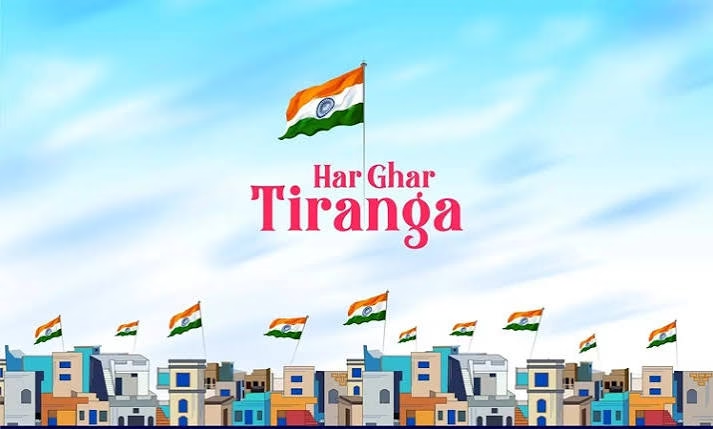
NEW DELHI — In a major public engagement mandate targeting higher education and healthcare networks, the National Medical Commission (NMC) issued an official directive on August 10, 2026, instructing all medical colleges and allied healthcare institutions across India to participate actively in the nationwide Har Ghar Tiranga 2026 campaign. The nine-day national initiative, running from August 9 through August 17, 2026, aims to foster civic unity and national pride across campuses, hospitals, and medical administrative bodies nationwide.
The public notice outlines an actionable roadmap designed to integrate medical professionals, faculty, trainees, and patients into collective patriotic celebrations. While civic engagement has increasingly intersected with medical education policy, this directive formally connects India’s extensive healthcare education infrastructure to one of the country’s largest annual civic movements.
NMC Outlines Six-Point Action Plan for Healthcare Institutions
To ensure structured execution across all recognized undergraduate and postgraduate institutions, the apex regulatory body released a six-point operational framework. The directive calls upon administrative heads to orchestrate campus-wide activities while maintaining seamless clinical services:
-
Flag Hoisting and National Song Ceremonies: Institutions must host formal National Flag hoisting events alongside synchronized group renditions of “Vande Mataram” across college campuses and affiliated clinical facilities.
-
Broad Stakeholder Participation: Medical faculties are instructed to mobilize doctors, nursing officers, administrative staff, resident medical trainees, and visiting patients to join local observances.
-
Hospital-Based Outreach Programs: Medical colleges and teaching hospitals are directed to organize awareness activities within patient waiting areas and outpatient departments (OPDs) to emphasize national solidarity.
-
Digital Integration via Official Portals: Colleges must encourage staff and visitors to participate in the digital drive by uploading a “Selfie with Tiranga” to the official portal (www.harghartiranga.com). The portal dynamically embeds the lyrics of “Vande Mataram” onto uploaded photographs.
-
Exhibition Displays: Healthcare institutions are tasked with setting up the official “Tiranga Exhibition,” curated by the Ministry of Culture, across administrative blocks, library complexes, and hospital hallways where feasible.
-
Digital and Social Media Campaigns: Institutions are mandated to leverage their official websites and social channels to broadcast campaign schedules and community involvement.
Context: The Evolution of Har Ghar Tiranga and the 150th Year of Vande Mataram
The 2026 campaign marks the fifth iteration of the Har Ghar Tiranga movement. Originally launched in 2022 under the broader Azadi Ka Amrit Mahotsav banner, the initiative was officially inaugurated this year on August 6, 2026, by Union Minister of Culture and Tourism Shri Gajendra Singh Shekhawat in New Delhi.
A central element of this year’s national campaign is the commemoration of the 150th anniversary of India’s National Song, “Vande Mataram.” According to Union Ministry of Culture directives, pairing the Tricolour with the national song reinforces historic awareness and civic responsibility as the nation works toward its long-term Viksit Bharat @ 2047 vision.
                     HAR GHAR TIRANGA 2026 AT A GLANCE
┌───────────────────────────┬──────────────────────────────────────────────────┐
│ Observance Dates          │ August 9 – August 17, 2026                       │
├───────────────────────────┼──────────────────────────────────────────────────┤
│ Lead Regulatory Body      │ National Medical Commission (Public Notice)      │
├───────────────────────────┼──────────────────────────────────────────────────┤
│ Key Historical Milestone  │ 150th Anniversary of "Vande Mataram"            │
├───────────────────────────┼──────────────────────────────────────────────────┤
│ Primary Digital Portal    │ www.harghartiranga.com                           │
├───────────────────────────┼──────────────────────────────────────────────────┤
│ Target Demographic        │ Faculty, Medical Students, Hospital Staff, Public│
└───────────────────────────┴──────────────────────────────────────────────────┘
Community Leadership and the Civic Role of Healthcare Institutions
Public health experts and medical educators view the NMC directive as an opportunity to bridge institutional care with broader social cohesion. While medical training focuses rigorously on diagnostic acumen and clinical therapeutics, experts note that medical centers double as foundational social hubs within local communities.
“Healthcare professionals and medical trainees serve not only as clinical care providers but also as trusted community figures,” explained Dr. Rajesh Kumar, a public health specialist and former professor at the All India Institute of Medical Sciences (AIIMS). “When teaching hospitals and academic centers participate in unified national initiatives, it reinforces the principle that public health and societal well-being are intrinsically connected.”
Dr. Kumar emphasized that public-facing healthcare facilities interact with thousands of citizens daily—from outpatient visitors to family caregivers. “Utilizing these spaces for positive civic movement allows health institutions to fulfill a social role that extends beyond routine bedside care,” he added.
State-Level Operations and Logistics Readiness
The NMC’s directive coincides with extensive logistical preparations across multiple state governments preparing for localized distribution and public engagement drives:
-
Nagaland: The State Home Department convened high-level administrative reviews to finalize campaign rollouts, placing an order for 160,000 National Flags (measuring 30 by 20 inches) to be distributed state-wide via the Department of Posts.
-
Maharashtra: In Nagpur, municipal authorities allocated funds from local development reserves to distribute 175,000 Tricolours, focusing distribution efforts on municipal school students and economically vulnerable households.
-
Haryana: State leadership launched comprehensive outreach campaigns covering rural blocks, municipal wards, and academic institutions, distributing flags at no cost to families under the Below Poverty Line (BPL) threshold.
Significance for Medical Education and Professional Development
The inclusion of medical schools in civic observances reflects a growing recognition within global medical education regarding the “hidden curriculum”—the cultural, institutional, and social lessons trainees absorb alongside formal sciences.
                CIVIC ENGAGEMENT IN MEDICAL CURRICULA

  ┌────────────────────────┐      ┌────────────────────────┐
  │   Clinical Training    │      │    Civic Awareness     │
  │ Diagnostic skills,     │  +   │ Community identity,    │
  │ bedside pathology,     │      │ ethics, public trust,  │
  │ treatment protocols    │      │ social responsibility  │
  └───────────┬────────────┘      └───────────┬────────────┘
              │                               │
              └───────────────┬───────────────┘
                              ▼
               ┌─────────────────────────────┐
               │ Well-Rounded Healthcare     │
               │ Practitioner & Civic Leader │
               └─────────────────────────────┘
“Developing competent physicians requires more than mastering anatomy and pharmacology,” said Dr. Priya Sharma, a medical education consultant. “It involves instilling a deep awareness of the social and cultural environments in which patients live. Shared institutional events foster empathy, team cohesion, and a clearer understanding of a physician’s societal duties.”
Medical colleges across the country, including Kalyan Singh Medical College, have already initiated campus rallies, poster displays, and cultural observances aligning with the NMC guidelines.
Public Participation and Digital Engagement
For healthcare professionals, students, and the general public, participation is structured to be both physical and virtual. Visitors to the official portal (harghartiranga.com) can digitally pin flags at their exact geographic locations, post photographs, and download individualized participation certificates.
By embedding health institutions within this national initiative, the NMC aims to leverage the country’s vast medical network—comprising hundreds of teaching hospitals and tens of thousands of trainees—to strengthen public participation and civic connection across urban and rural settings alike.
Medical Disclaimer: This article is for informational purposes only and should not be considered medical advice. Always consult with qualified healthcare professionals before making any health-related decisions or changes to your treatment plan. The information presented here is based on current research and expert opinions, which may evolve as new evidence emerges.
References


Happy
0 %

Sad
0 %

Excited
0 %

Sleepy
0 %

Angry
0 %

Surprise
0 %