 0
0
 0
0
CHICAGO — Researchers have unveiled a groundbreaking artificial intelligence tool that shifts the paradigm of cancer prognosis from looking at the “big picture” of a tumor to scrutinizing its most minute components. Presented this month at the American Association for Cancer Research (AACR) annual conference, the new method, dubbed scSurvival, utilizes machine learning to analyze the unique characteristics of individual cells. By identifying specific cellular “bad actors” that drive disease progression, the tool offers a more granular and accurate prediction of patient survival than traditional methods that treat tumors as uniform masses.
The End of the “Average” Tumor
For decades, oncology has relied on “bulk” sequencing—a method that grinds up a tumor sample and analyzes the average genetic signal of millions of cells. While this has been the gold standard, it possesses a significant flaw: it can mask the “signal in the noise.”
A tumor is not a monolith; it is a complex ecosystem of cancerous cells, healthy tissue, and immune cells. A small, highly aggressive cluster of cells might be responsible for a patient’s relapse, but in a bulk sample, the signals from these few cells are often drowned out by the millions of others.
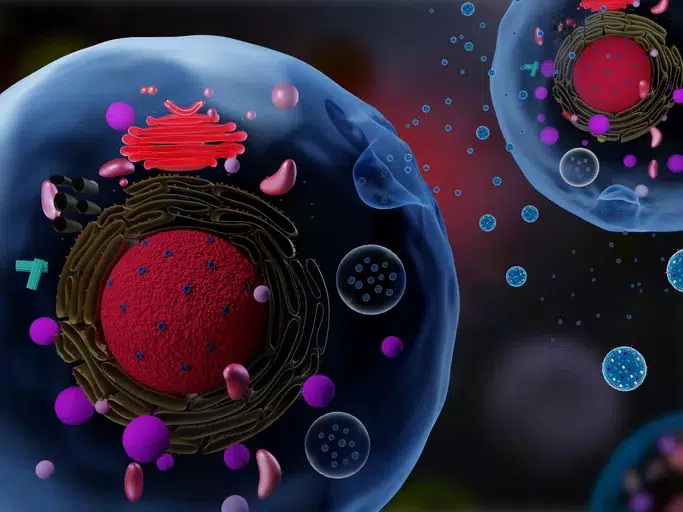
The scSurvival model, developed by researchers at Oregon Health & Science University (OHSU) with support from the National Institutes of Health (NIH), changes this dynamic. Instead of an average, it acts as a “fine-tooth comb,” assigning weight to individual cells based on their specific genetic activity and how strongly that activity links to clinical survival outcomes.
“By taking a fine-tooth comb to single-cell data, scSurvival is able to consider the varying influence that individual cells have on disease progression and survival outcomes,” said Dr. Zheng Xia, the study’s corresponding author and an associate professor of biomedical engineering at OHSU.
Precision Performance: Testing the Model
To validate the tool, the research team applied scSurvival to clinical datasets from more than 150 patients diagnosed with melanoma and liver cancer. The results, according to the data presented at AACR, showed that the AI model significantly outperformed standard histological (microscope-based) and traditional gene-expression analyses.
The tool’s primary breakthrough lies in its ability to identify “cell states”—specific conditions or behaviors of a cell—that dictate how a patient will fare. For example:
-
In Melanoma: The model identified specific immune cell populations that were directly associated with a positive response to immunotherapy.
-
In Liver Cancer: It pinpointed tumor cell clusters that signaled a high risk of early recurrence, even when the rest of the tumor appeared less aggressive.
By linking this deep biological data to real-world clinical reality, scSurvival provides a roadmap for what researchers call “Precision Oncology”—the ability to tailor medical treatment to the individual characteristics of each patient’s disease.
Expert Perspectives: A New Piece of the Puzzle
While the oncology community has reacted with optimism, experts emphasize that this tool is an enhancement to, rather than a replacement for, existing clinical judgment.
“The ability to pinpoint high-risk cell populations at this level of resolution is a significant step forward,” says Dr. Elena Rossi, an independent oncologist not involved in the OHSU study. “However, a patient’s prognosis is a mosaic. It is influenced by a complex interplay of clinical factors, environmental influences, and overall health. Tools like scSurvival are designed to augment our decision-making by giving us a clearer map of the cellular landscape.”
Dr. Rossi notes that for a patient, this could eventually mean the difference between receiving a standard “one-size-fits-all” chemotherapy and a targeted therapy that addresses the specific aggressive cells identified by the AI.
Challenges to Implementation
Despite the promising data, several hurdles remain before scSurvival becomes a staple in local hospitals:
-
Technical Requirements: Single-cell analysis is currently more expensive and labor-intensive than traditional biopsies. It requires specialized equipment and significant computational power.
-
Validation: While the study involved 150 patients, the tool must be tested on thousands of diverse patients across various cancer types to ensure its reliability.
-
Integration: Healthcare systems must find ways to integrate complex AI outputs into a format that is easily digestible for busy clinicians.
What This Means for Patients
For patients and their families, the development of scSurvival signals a shift toward more personalized care. Understanding that a tumor is a “community” of cells allows doctors to better predict who will benefit from specific treatments like immunotherapy and who might need more aggressive intervention.
While not yet available for routine clinical use, the success of this model underscores the rapid pace of AI integration in medicine. As these tools mature, the goal is to move away from statistical averages and toward a future where every treatment plan is as unique as the cells it seeks to treat.
Reference Section
- https://www.earth.com/news/cancer-survival-can-be-predicted-cell-by-cell-not-tumor-by-tumor/
Medical Disclaimer: This article is for informational purposes only and should not be considered medical advice. Always consult with qualified healthcare professionals before making any health-related decisions or changes to your treatment plan. The information presented here is based on current research and expert opinions, which may evolve as new evidence emerges.