 0
0
 0
0
PANAJI, GOA — In a significant shift toward data-driven public health policy, the government of Goa announced on July 15, 2026, the launch of a comprehensive Food, Nutrition, Health, and WASH (Water, Sanitation, and Hygiene) assessment. The massive state-wide study is designed to evaluate dietary diversity among vulnerable populations, measure household food security, and scrutinize infant feeding practices. By establishing a rigorous baseline and comparing it against future endline data, officials aim to pinpoint critical nutritional gaps and determine whether existing safety-net programs are successfully improving health outcomes for pregnant women, new mothers, and infants under two years of age.
Public health strategies have traditionally focused on caloric intake—ensuring people have enough food to eat. However, modern medical consensus emphasizes that what people eat matters just as much as how much they eat. Goa’s new initiative seeks to move beyond basic calorie counting to understand the qualitative realities of daily diets across the state.
Unpacking the Assessment: What the State Will Examine
The assessment will target four distinct groups to capture a complete picture of community health: pregnant women, mothers of children under two, infants and toddlers under 24 months, and village-level community leaders.
To ensure the findings are both statistically robust and contextually deep, researchers will deploy a hybrid methodology combining quantitative surveys with qualitative investigative tools. The study features:
-
Cross-sectional health and diet estimates
-
Baseline-versus-endline comparisons to track progress over time
-
Focus group discussions at the village level
-
Key informant interviews with local healthcare workers and leaders
State officials confirmed that the primary metrics will focus heavily on tracing rates of anemia, general malnutrition, household food insecurity, and infant and young child feeding practices.
According to guidelines established by the World Health Organization (WHO), children aged 6–23 months should consume foods from at least five out of eight recognized food groups within a 24-hour period. Meeting this threshold—known as the Minimum Dietary Diversity indicator—is directly linked to appropriate physical growth and a significantly lower risk of micronutrient deficiencies.
The Critical Science Behind Dietary Diversity
Dietary diversity serves as a highly reliable shorthand for overall diet quality. During the first two years of life—often called the “critical window” or the first 1,000 days—a child’s brain and body undergo rapid, non-repeatable development. A monotonous diet consisting primarily of a single staple grain rarely provides sufficient bioavailable protein, iron, zinc, or vitamin A.
For pregnant and lactating women, nutritional demands spike dramatically. Inadequate micronutrient intake not only endangers the mother’s physiological health, leading to chronic fatigue and severe anemia, but can also trigger fetal growth restriction, low birth weight, and subsequent developmental delays in the infant.
Historical data highlights the persistent nature of these feeding gaps across the Indian subcontinent. A landmark, large-scale analysis utilizing India’s National Family Health Survey (NFHS) data revealed that minimum dietary diversity among infants aged 6–23 months sat at a stark 15.2%, while only 9.2% of children received what is classified as a “minimum acceptable diet.” Furthermore, a recent comprehensive review published in The Lancet Regional Health – Southeast Asia concluded that persistent household food insecurity and substandard dietary diversity remain the primary drivers behind undernutrition among children under the age of five in the region.
The Intersection of Nutrition and WASH
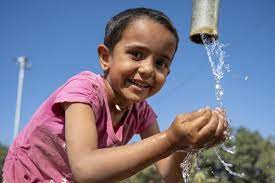
What sets Goa’s upcoming study apart from traditional nutritional surveys is its explicit integration of WASH indicators alongside dietary metrics. Public health experts have long recognized that nutrition does not exist in a vacuum.
[Safe Water + Proper Sanitation] ➔ Lower Infection Rates ➔ Optimal Nutrient Absorption ➔ Healthy Child Growth
When a household lacks clean drinking water or proper sanitation facilities, children experience frequent bouts of subclinical infections and environmental enteropathy—a chronic inflammatory condition of the gut. This inflammation prevents the intestines from properly absorbing nutrients, meaning that even if a child is fed a diverse diet, the body cannot fully utilize it. By measuring water quality and hygiene habits next to dietary logs, Goa can address the root environmental factors holding back child development.
The timing of the study is also vital because nutritional vulnerability is rarely distributed evenly. Past research in neighboring regions underscores how stark these disparities can be:
-
Madhya Pradesh: A baseline survey revealed that over 80% of women and 77% of children consumed fewer than the recommended food groups, with nearly half of all households suffering from food insecurity.
-
Maharashtra: Researchers explicitly mapped a direct correlation between localized household food insecurity, poor dietary diversity, and stunted growth in children.
Goa’s baseline data will allow policymakers to see if nutritional vulnerabilities are heavily concentrated within specific socio-economic brackets, traditional occupations, or distinct geographic pockets, such as rural interior villages versus urban slums.
Expert Perspectives and Public Health Implications
Public health authorities have warmly welcomed the initiative. “A baseline will establish the current situation, and an endline will measure change, helping identify gaps, strengths, and areas for improvement,” stated a senior government official involved in the planning. The official noted that the resulting data will empower the state to verify whether taxpayers’ funds and public interventions are translating into tangible improvements on the ground.
Global health bodies like UNICEF India have consistently maintained that a varied, nutrient-dense diet is the cornerstone of healthy cognitive development and long-term economic productivity. For clinicians, pediatricians, and local Anganwadi (community child care) workers, the data generated by this study could dramatically reshape how frontline medical care is delivered. It will allow for highly tailored nutritional counseling, optimized maternal health services, and refined early childhood feeding interventions.
Methodological Limitations and Cautions
While the study is an important step forward, epidemiologists note that the project carries certain structural limitations common to real-world health assessments.
First, the study will not utilize an experimental control design. Because there is no “control group” of citizens being withheld from government interventions for comparison, it will be statistically difficult to prove that future improvements are caused solely by specific government programs rather than broader economic growth or independent factors. The findings must therefore be viewed as program-monitoring evidence rather than absolute, causal proof.
Second, dietary diversity indicators are brilliant but inherently limited tools. They record the variety of foods eaten, but they do not measure exact portion sizes, total caloric adequacy, seasonal fluctuations in food availability, or whether the food is culturally appropriate for the population.
The Bottom Line for Daily Health
For the average family, the takeaway from modern nutritional science is clear: diversity on the plate is non-negotiable. To safeguard the health of pregnant women and young children, families should strive to move away from heavy reliance on a single staple grain.
| Recommended Food Groups for a Diverse Plate |
| Grains & Tubers: Rice, whole wheat, millets, or sweet potatoes for baseline energy. |
| Legumes & Nuts: Lentils, chickpeas, and beans to provide vital plant-based proteins. |
| Dairy Products: Milk, curd, or paneer to deliver calcium and essential fats. |
| Flesh Foods & Eggs: Eggs, fish, or poultry for highly bioavailable iron and protein. |
| Vitamin A-Rich Produce: Carrots, pumpkins, papayas, and dark leafy greens for immunity and vision. |
While individual adjustments at the family level are critical, systemic issues like inflation and supply chain barriers require structural solutions. If executed well, Goa’s Food, Nutrition, Health, and WASH assessment will provide the exact roadmap required to build those solutions, ensuring that every child in the state gets a fair, healthy start at life.
Reference Section
-
News Source: Goa to launch comprehensive study on dietary diversity among women, kids. Times of India / Economic Times Health. Published July 15, 2026.
Medical Disclaimer: This article is for informational purposes only and should not be considered medical advice. Always consult with qualified healthcare professionals before making any health-related decisions or changes to your treatment plan. The information presented here is based on current research and expert opinions, which may evolve as new evidence emerges.