 0
0
 0
0
GUWAHATI, INDIA — June 18, 2026 — The National Health Mission (NHM), Assam, confirmed on Thursday that the state has recorded 35 laboratory-confirmed cases of Japanese encephalitis (JE) and seven related fatalities since the beginning of 2026. With the high-risk monsoon season rapidly approaching, state health authorities have aggressively scaled up vector surveillance, expanded diagnostic testing, and deployed frontline healthcare teams across vulnerable districts to contain the virus before it reaches its annual peak.
The official announcement from the NHM serves as a vital clarification following a wave of conflicting media reports. Some local outlets mistakenly aggregated data for Japanese encephalitis with figures for Acute Encephalitis Syndrome (AES), inflating the perceived scale of the JE outbreak and sparking unnecessary public panic. State health officials emphasized that clear, separate reporting of these conditions is fundamentally necessary to ensure accurate public understanding and an effective medical response.
The Medical Distinction: Why Separate Reporting is Critical
To understand the actual disease burden in northeastern India, public health officials stress that Japanese encephalitis and Acute Encephalitis Syndrome cannot be used interchangeably.
According to data compiled by the National Centre for Vector Borne Disease Control (NCVBDC) through June 17, 2026, Assam’s verified JE toll stands at 35 cases and seven deaths. Conversely, the much larger figures circulating in recent news cycles—470 cases and 32 deaths—represent the broader clinical umbrella of AES.
“JE is one of the important causes of AES, but the two are not synonymous,” an NHM Assam official stated, explaining that merging the data misrepresents the specific epidemiological footprint of the virus.
       ACUTE ENCEPHALITIS SYNDROME (AES)
  [ Clinical Umbrella: Convulsions, Altered Mental State ]
                        |
       -----------------------------------
       |                                 |
  Other Pathogens                  JAPANESE ENCEPHALITIS (JEV)
  (Bacteria, Toxins,              [ Accounts for 10-15% of AES
   Other Viruses)                    cases in endemic regions ]
Medically, Acute Encephalitis Syndrome is not a single disease, but rather a clinical presentation. It is characterized by an acute onset of fever accompanied by neurological changes such as convulsions, disorientation, tremors, or behavioral shifts. AES can be triggered by a vast array of environmental toxins, metabolic disruptions, bacteria, or distinct viruses.
The Japanese encephalitis virus (JEV), a mosquito-borne flavivirus, is simply one specific pathogen under this broader umbrella. In India’s endemic regions, JEV contributes to roughly 10% to 15% of all reported AES cases. However, because JEV carries a severe case-fatality rate averaging 18% to 30%, misidentifying its precise prevalence can distort risk assessments and misallocate critical vaccines and localized vector-control resources.
Assam’s Disproportionate Burden
The urgency behind the state’s upgraded medical response is underscored by a sobering reality: Assam bears a heavily disproportionate share of India’s overall JE burden. Historical data from the NCVBDC reveals that approximately 62% of all Japanese encephalitis deaths recorded in India since 2018 have occurred within Assam.
| Region | JE Deaths Reported (Since 2018) | Percentage of National Total |
| Assam | 609 | ~62% |
| Rest of India | 376 | ~38% |
| Total National Burden | 985 | 100% |
This heavy concentration highlights Assam’s highly endemic status. While Japanese encephalitis has historically appeared in localized zones across a few southern Indian states, the specific ecology of the northeastern floodplains—characterized by persistent wetlands, heavy seasonal rainfall, and widespread agricultural practices—creates a perennial hotspot for transmission.
Clinical Presentation: Recognizing the Signs
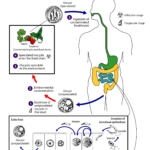
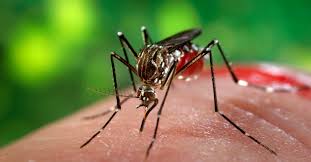
Japanese encephalitis belongs to the Flaviviridae family, making it a close relative of other prominent mosquito-borne threats like dengue, yellow fever, and West Nile viruses. Transmitted to humans primarily through the bite of infected Culex mosquitoes, the virus typically undergoes an incubation period of four to 14 days before symptoms manifest.
Independent medical experts warn that the initial stages of the infection can easily mimic standard seasonal ailments, making early clinical evaluation vital.
“Mild illness may present with fever and headache, while severe disease can begin with high fever, intense headache, vomiting, neck stiffness, confusion, seizures, disorientation, weakness, and even coma,” noted Dr. Zubair Sarkar, a consultant neurologist not involved in the state’s current surveillance report. Dr. Sarkar added that pediatric patients frequently present with prominent gastrointestinal symptoms, such as abdominal pain and vomiting, during the earliest stages of the infection, which can sometimes delay an accurate neurological diagnosis.
Among patients who develop severe neurological symptoms, the prognosis is highly guarded. The World Health Organization (WHO) notes that young children under the age of 10 carry the highest risk of severe illness and permanent neurological damage. Furthermore, up to 30% of those who develop symptomatic encephalitis succumb to the illness, while a significant percentage of survivors suffer permanent neuropsychiatric sequelae, including paralysis, recurrent seizures, or cognitive impairments.
Government Mobilization Ahead of the Peak Season
The transmission of JEV strictly mirrors the life cycle of its vector. In India, transmission escalates sharply during the monsoon and post-monsoon months—typically spanning May through November—when rising water tables expand breeding grounds for Culex mosquitoes. In Assam, the traditional peak window arrives between June and August.
To counter the anticipated uptick in cases, the state health department has initiated a coordinated, multi-departmental strategy.
“These measures include enhancing surveillance, improving case management, ensuring hospital readiness, increasing vaccination efforts, and fostering coordination among various departments,” announced Dr. Abhijit Sarma, Executive Director of NHM Assam.
According to state health logs, proactive measures launched ahead of the season include:
-
Advanced training sessions for nodal medical officers on updated clinical management algorithms.
-
The deployment of dedicated district coordinators to oversee localized responses.
-
The widespread distribution of updated Standard Operating Procedures (SOPs) to rural health centers.
-
The strengthening of critical referral networks to transport patients rapidly from remote villages to tertiary care centers.
On the ground, a vast community health network consisting of Multi-Purpose Workers (MPWs), Malarial Technical Supervisors (MTS), and Accredited Social Health Activists (ASHAs) has been activated. These frontline workers are tasked with conducting active door-to-door fever surveillance and collecting immediate blood samples from symptomatic individuals to ensure early detection.
Frontline Hospital Reality
The strain of the disease is already evident in the state’s leading medical institutions. At the Guwahati Medical College and Hospital (GMCH), clinical admissions for viral encephalitis have begun a steady climb.
Reflecting on the historical trajectory, Dr. Achyut Chandra Baishya, Principal and Chief Superintendent of GMCH, noted that by July 2025, the hospital had logged 44 confirmed JE cases and 10 deaths, drawing patients from heavily impacted districts like Kamrup, Nalbari, and Darrang.
As the 2026 season enters its critical phase, the hospital is already facing a high-acuity patient load. Out of 13 confirmed JE patients admitted to GMCH early this season, six individuals succumbed to the infection in June alone, underscoring the aggressive nature of the virus when treatment is delayed.
Prevention, Long-Term Challenges, and Limitations
Public health experts maintain that while medical surveillance and intensive care save lives, immunization remains the definitive barrier against the virus.
“Prevention remains the most effective defense against Japanese Encephalitis,” Dr. Sarkar reiterated.
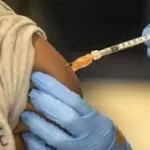
Under India’s Universal Immunization Programme (UIP), the JE vaccine is integrated into the routine childhood immunization schedule across highly endemic districts, requiring a two-dose regimen. For older individuals or rapid community mobilization in high-risk zones, guidelines permit administering the second dose as early as seven days after the first to achieve accelerated immunity.
Beyond immunization, comprehensive prevention relies on breaking the vector cycle and reducing human-vector contact.
       VACCINATION (Two-dose regimen under UIP)
                         +
   MOSQUITO CONTROL (Source reduction, larvicides)
                         +
  PERSONAL PROTECTION (Nets, repellents, long sleeves)
                         +
   ZOONOTIC ISOLATION (Sanitation near pig pens)
                         |
                         v
       [ EFFECTIVE JE DEFENSE SHIELD ]
The introduction of the National Programme for Prevention and Control of JE/AES has successfully expanded pediatric intensive care infrastructure and improved overall clinical survival rates; nationwide data indicates the case fatality rate for combined JE/AES cases dropped from 11% in 2016 to 6% in 2018.
Yet, persistent gaps remain. Despite expanded vaccine distribution, Assam continues to report 30% to 50% of India’s total annual JE cases. Public health experts attribute this persistent transmission to the logistical complexities of maintaining high vaccine coverage among migratory agricultural populations, the challenges of managing vector breeding in massive rice paddies, and the close proximity of residential areas to animal reservoirs, such as wading birds and domestic pigs, which amplify the virus.
To prevent public panic and ensure targeted resource allocation, health authorities conclude that the public and media must rely entirely on verified, disaggregated data. By keeping Japanese Encephalitis and Acute Encephalitis Syndrome distinctly categorized, the state can deploy its medical countermeasures with maximum precision.
Reference Section
- https://morungexpress.com/japanese-encephalitis-causes-seven-deaths-in-assam-surveillance-stepped-up
Medical Disclaimer: This article is for informational purposes only and should not be considered medical advice. Always consult with qualified healthcare professionals before making any health-related decisions or changes to your treatment plan. The information presented here is based on current research and expert opinions, which may evolve as new evidence emerges.