 0
0
 0
0
NEW DELHI — In a major technological advancement for rural healthcare delivery, a landmark study conducted by the Indian Council of Medical Research (ICMR) demonstrates that drone-assisted transport of tuberculosis (TB) sputum samples drastically accelerates diagnosis while virtually eliminating catastrophic out-of-pocket expenses for patients in remote areas.
The findings, presented in a written reply to the Rajya Sabha on August 4, 2026, by Union Minister of State for Health and Family Welfare Smt. Anupriya Patel, highlight a paradigm shift in last-mile healthcare logistics under the National TB Elimination Programme (NTEP).
Conducted in the Yadadri-Bhuvanagiri district of Telangana in collaboration with the All India Institute of Medical Sciences (AIIMS) Bibinagar and the District TB Office, the pilot project evaluated 840 participants across rural communities. The study revealed that integrating medical drones into the diagnostic network slashed the median turnaround time for TB diagnosis from 15 days to just 5 days. Simultaneously, the mean out-of-pocket expenditure (OOPE) borne by patients fell from ₹9,451 to ₹91—a cost reduction exceeding 99%.
Slashed Wait Times and Faster Treatment Initiation
For infectious diseases like tuberculosis, early detection is critical to stopping community transmission. Under standard road transport models, patients living 10 to 30 kilometers from district diagnostic facilities faced lengthy delays. Prior to the drone intervention, over 92% of patients had to wait more than two days after sample submission just to receive test results.
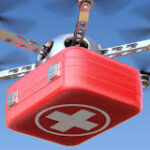
With the deployment of specialized unmanned aerial vehicles (UAVs) under ICMR’s flagship i-DRONE initiative, diagnostic speed increased substantially:
-
76.3% of patients received their diagnostic results by the next day.
-
Only 16.3% experienced delays exceeding 48 hours.
-
The total diagnostic timeline dropped by 66.7%, enabling clinicians to initiate evidence-based treatment regimens weeks earlier than previously possible.
DIAGNOSTIC TIME & PATIENT EXPENDITURE BEFORE VS. AFTER DRONE TRANSPORT

Median Turnaround Time:
  Conventional Road Transport : 15 Days
  Drone-Assisted Transport   : 5 Days (66.7% reduction)

Mean Out-of-Pocket Expenditure (OOPE):
  Conventional Road Transport : ₹9,451
  Drone-Assisted Transport   : ₹91 (99.03% reduction)
How the Aerial Hub-and-Spoke Network Works
The project established a hub-and-spoke logistic framework that bridged long geographical distances without burdening patients. The network connected 11 Primary Health Centres (PHCs), 60 rural sub-centres, and 4 centralized TB Units equipped with advanced rapid molecular diagnostic tools, such as Cartridge-Based Nucleic Acid Amplification Testing (CBNAAT) and TruNat platforms.
[ Village Sub-Centre / PHC ]
           │
           │ (Local Sputum Sample Collection)
           ▼
[ Temperature-Controlled Drone ] ──(Aerial Transit)──► [ Centralized Molecular Lab ]
                                                             (CBNAAT / TruNat Testing)
                                                                         │
[ Instant Digital Result ] ◄──(Electronic Reporting)─────────────────────┘
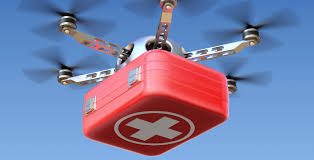
Instead of requiring patients or healthcare workers to navigate difficult road terrain, community members provided sputum samples at their local health clinics. Drones equipped with temperature-regulated payload boxes then transported the biological samples directly to central laboratories within minutes.
Lifting the Economic Burden of TB
Tuberculosis disproportionately affects socioeconomically vulnerable populations. In conventional diagnostic pathways, the hidden financial toll—often referred to as catastrophic health expenditure—can be devastating.
Under the traditional system, a mean expenditure of ₹9,451 accumulated through repeated travel to distant district hospitals, lost daily wages for both patients and accompanying family members, meals, and overnight lodging. By decentralizing sample collection to village sub-centres and handling transport via air, patient out-of-pocket expenses were limited to minimal local transportation costs averaging ₹91.
“Eliminating diagnostic delays and financial drain is essential to ending TB,” notes Dr. Rajesh Kumar, an independent public health specialist not involved in the trial. “When a patient loses weeks of income just to get tested, they delay seeking care. Drones eliminate that barrier, allowing us to find cases early, treat them promptly, and prevent household spread.”
Strategic Alignment with India’s Tuberculosis Goals
India carries approximately 27% of the global TB burden. Under the National Strategic Plan, the country aims to eliminate tuberculosis through its Detect-Treat-Prevent-Build strategy. A key target of NTEP is reaching zero catastrophic costs for TB-affected households.
An untreated individual with active pulmonary TB can infect between 10 and 15 people annually. Slashed diagnostic timelines ensure that individuals carrying Mycobacterium tuberculosis are identified early and placed on Directly Observed Treatment Short-course (DOTS) therapy before secondary transmission occurs.
Operational Challenges and Scalability Considerations
While the results of the i-DRONE study demonstrate strong potential, health systems researchers note several technical and operational hurdles that must be addressed before national scaling:
-
Weather Vulnerabilities: Drone flights can be restricted by heavy monsoon rains, high wind speeds, and extreme temperatures, requiring backup ground transport protocols.
-
Airspace Approvals: Expanding drone corridors requires ongoing regulatory clearance from civil aviation authorities and designated no-fly zone compliance.
-
Cold Chain and Biological Safety: Sputum samples must maintain strict temperature controls during transit to prevent sample degradation or biohazard exposure in the event of forced landings.
-
Infrastructure and Maintenance: Establishing routine drone operations requires dedicated landing pads, battery charging infrastructure, and trained technical staff at rural health hubs.
What This Means for Patients
For individuals living in hard-to-reach, hilly, or underserved rural areas, the expansion of drone-based diagnostic networks transforms care accessibility:
-
Local Access: Patients can visit their nearest sub-centre or primary health facility without traveling long distances to city hospitals.
-
Rapid Results: Instead of waiting weeks, patients receive quality-assured diagnostic results within 24 to 48 hours.
-
Protected Income: Families avoid compounding financial debt from travel costs and missed workdays.
-
Immediate Care: Confirmed cases can begin free anti-TB medication under NTEP immediately, improving cure rates and reducing community spread.
The success of the Telangana pilot opens the door for integrating drone transport across other hard-to-reach regions in India, supporting ongoing public health efforts to achieve a TB-free nation.
Medical Disclaimer: This article is for informational purposes only and should not be considered medical advice. Always consult with qualified healthcare professionals before making any health-related decisions or changes to your treatment plan. The information presented here is based on current research and expert opinions, which may evolve as new evidence emerges.
References
-
Press Information Bureau (PIB), Ministry of Health and Family Welfare, Government of India. (2026, August 4). Update on NTEP: ICMR Study Finds Drone-Assisted TB Sample Transport Reduces Diagnosis Time from 15 Days to 5 Days and Patient Expenditure from ₹9,451 to ₹91. PIB Delhi Release ID: 2294274.