 0
0
 0
0
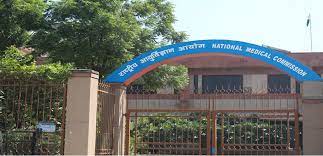
New Delhi, June 6, 2026 — In a significant development for medical education and labor rights within India’s healthcare system, the National Medical Commission (NMC) has informed the Supreme Court that only seven out of the country’s 756 medical colleges have been found in direct violation of mandatory stipend rules for MBBS interns and postgraduate resident doctors. The regulatory body confirmed that penalty proceedings have already been initiated against these defaulting institutions.
The disclosure comes during a prolonged legal battle over unpaid and underpaid stipends affecting a critical segment of India’s nearly 100,000 annual medical graduates who provide frontline care in teaching hospitals nationwide. A Supreme Court bench led by Justice Aravind Kumar and Justice Prasanna B. Varale has been hearing a batch of petitions filed by medical interns and postgraduate residents alleging widespread compliance failures by state and private entities. While the NMC’s latest submission projects a high overall compliance rate, it has simultaneously reignited debate among medical education reform advocates regarding the depth of institutional compliance and the day-to-day financial realities experienced by young doctors.
Tracking the Defaulters: Enforcement and Financial Penalties
According to the official submissions presented to the apex court, out of 756 medical colleges in India, 562 are actively paying stipends to MBBS interns and postgraduate residents. Two institutes currently have no active interns enrolled, rendering the stipend issue temporarily inapplicable to them. The remaining institutions under review narrowed down to seven colleges—comprising four government-run and three private facilities—explicitly identified as failing to pay stipends to their interns, junior residents, or senior residents.
The non-compliant institutions span multiple states and include:
-
Government Medical College (Barmer, Rajasthan)
-
Government Medical College (Ongole, Andhra Pradesh)
-
Pt. B.D. Sharma Post Graduate Institute of Medical Sciences (Rohtak, Haryana)
-
Dumka Medical College (Jharkhand)
-
Akash Institute of Medical Sciences and Research Centre (Karnataka)
-
RKDF Medical College Hospital & Research Centre (Bhopal, Madhya Pradesh)
To address these violations, the NMC has issued formal show-cause notices to these seven colleges, proposing administrative penalties and demanding institutional responses before final regulatory orders are executed. Alongside these proceedings, the regulator has leveraged its financial enforcement powers by imposing a ₹1 crore penalty on each of these seven colleges. This penalty specifically targets their failure to publicly disclose stipend details on their official web portals, which violates explicit transparency directives issued by the commission.
Regulatory Context: The Legal Evolution of Mandatory Stipends
The legal framework governing compensation for training physicians has shifted considerably over recent years, catalyzed by interventions from the judiciary. In September 2023, the Supreme Court delivered a landmark ruling directing the Army College of Medical Sciences in Delhi to pay its interns a monthly stipend of ₹25,000. The court held that the Compulsory Rotating Medical Internship (CRMI) regulations under the NMC are legally binding mandates that “cannot be breached,” firmly establishing that medical internship is a compensated phase of professional training.
Following judicial pressure, the NMC issued a comprehensive public notice in July 2025. This regulation required every medical college—regardless of private or public governance—to transparently publish fee structures and exact stipend amounts for MBBS interns and postgraduate residents on their institutional websites. The rules were reinforced through the Postgraduate Medical Education Regulations (PGMER), 2023, and the Maintenance of Standards of Medical Education Regulations, 2023, effectively making stipend transparency a core requirement for maintaining academic recognition and student admission quotas.
Expert Perspectives: Formal Compliance vs. Lived Reality
While the NMC’s report to the Supreme Court emphasizes a technical majority compliance rate, independent public health experts and trainee advocates suggest that the regulatory data may not fully capture the operational challenges on the ground.
Dr. Sujit Shirsat, a senior health policy researcher and public health professor who is independent of the regulatory body, noted that a narrow focus on absolute non-payment could obscure more nuanced systemic issues.
“The NMC’s current stance highlights a technical narrowing of defaulters, but it does not fully capture the lived reality of interns,” Dr. Shirsat stated. “Many interns across the country receive stipends that are far below local living-wage levels, or they face severe backlogs where payments are delayed until the final months of their service year. Regulatory labels of ‘compliance’ can be misleading if the actual disbursement is irregular or economically insufficient.”
Doctor advocacy groups also point to the fragmented nature of funding mechanisms across different states. Dr. Anjali Sharma, a Delhi-based postgraduate resident and an active member of the Interns’ Welfare Association, explained that stipend distribution often becomes entangled in bureaucratic friction between state departments and individual hospital administrations.
“In several states, the Department of Health may state that funds have been formally allocated, yet individual colleges report that the cash flow has not been received,” Dr. Sharma said. “This administrative gap leaves young doctors in a vulnerable position, sometimes working 100-hour weeks without predictable financial security. While the NMC can issue fines, it cannot directly substitute for a state government’s ongoing budgetary execution.”
Public Health Implications and Quality of Care
The financial security of medical interns and resident doctors extends beyond labor rights; peer-reviewed medical literature consistently links trainee well-being directly to patient safety and healthcare system stability. In the Indian healthcare matrix, interns and residents form the operational backbone of public teaching hospitals, frequently executing first-line emergency screenings, managing high-volume outpatient clinics, and overseeing daily ward operations.
“We know from extensive global literature regarding resident work-hour reforms and clinical environments that over-worked, under-compensated medical trainees experience significantly higher rates of fatigue and clinical burnout,” noted Dr. Ravi Menon, a Kerala-based consultant physician and medical education reform advocate. “When an individual is managing complex clinical loads under intense fatigue and financial stress, it introduces unnecessary variables into patient care and safety protocols.”
Furthermore, systemic disparities in stipend scales influence downstream medical workforce distribution. When stipend payments are irregular or low, prospective medical students from lower socioeconomic backgrounds face heightened barriers to entry. This dynamic risks entrenching disparities regarding who can afford to complete medical training, ultimately impacting the diversity and long-term retention of the public health workforce.
Counterarguments and Systemic Overlap
Defenders of the NMC’s current regulatory trajectory argue that the recent ₹1 crore fines and mandatory website disclosures provide the regulatory body with real enforcement capabilities that did not exist in previous decades. From this perspective, narrowing the list to seven explicitly non-paying institutions indicates that uniform transparency guidelines are beginning to take hold across the wider medical education sector.
However, legal experts and medical activists caution that wealthy private institutions may absorb financial penalties as a cost of business without necessarily correcting underlying compensation structures. Furthermore, historical data suggests a broader historical challenge: an Right to Information (RTI) query filed in 2024 by healthcare activist Dr. K.V. Babu revealed that 33 government and 27 private medical colleges had been flagged for non-payment issues at that time, resulting in show-cause-type notices sent to nearly 200 institutions.
This variance underscores an ongoing structural debate regarding the boundaries of the NMC’s authority versus state sovereignty. While the central regulator sets minimum educational and operational standards, the actual monetary value of stipends in government colleges remains tied to individual state health budgets, creating an uneven compensation landscape across different geographic regions.
Guidance for Medical Students and Families
For current and prospective medical students, the legal proceedings offer a practical roadmap for evaluating prospective training institutions. To ensure compliance and transparency, students and their families are advised to utilize the following steps:
-
Review Mandated Disclosures: Prior to enrollment or matching, confirm that the institution has published its complete, updated stipend-disclosure table on its official website as required by the NMC.
-
Cross-Verify via Peer Networks: Contact local student unions or regional chapters of the Interns’ Welfare Association to verify whether the published stipend figures match actual monthly bank disbursements.
-
Report Discrepancies: If an institution fails to provide accessible data or defaults on regular payments, formal grievances should be filed with the State Medical Council and the NMC’s monitoring cell.
As the Supreme Court continues to oversee the implementation of these regulations, the outcome will likely shape the baseline standards of welfare, equity, and operational safety across India’s medical education infrastructure.
Medical Disclaimer
Medical Disclaimer: This article is for informational purposes only and should not be considered medical advice. Always consult with qualified healthcare professionals before making any health-related decisions or changes to your treatment plan. The information presented here is based on current research and expert opinions, which may evolve as new evidence emerges.
References
- The New Indian Express: Report on NMC submissions to the Supreme Court regarding non-paying institutions, published June 4, 2026