 0
0
 0
0
NEW DELHI — More than seven years after the Union government first informed Parliament that it was consulting states on creating an All India Medical Service (IMS)—a proposed national cadre of doctors modeled after the Indian Administrative Service (IAS) and Indian Police Service (IPS)—the plan remains paralyzed in administrative limbo.
A fresh Right to Information (RTI) reply dated May 26, 2026, has confirmed that the Union Health Ministry is still waiting for responses from several states and Union Territories (UTs). Until those views are collected, the ministry cannot forward the proposal to the Department of Personnel and Training (DoPT) for final consideration. For a nation grappling with severe healthcare delivery disparities, the revelation underscores a profound structural bottleneck: the mechanism meant to fix the country’s public health leadership has itself become stuck in the machinery of federal bureaucracy.
Years of Deliberation, No Decision
The recently disclosed RTI response reveals that despite the IMS proposal being under formal discussion since at least 2015, the government has set no final timeline for its creation. The Health Ministry stated that the proposal is merely “under consideration” while views from the remaining states and UTs are slowly compiled.
The legislative saga began in December 2018, when the Ministry of Health and Family Welfare informed the Lok Sabha that a Cadre Review Committee for the Central Health Service had examined the need for an IMS and recommended consulting states first. Progress in the eight years since has been slow. At the time of the initial parliamentary brief, only six states and two UTs had responded.
While the latest RTI reply indicates that 12 states and UTs have now submitted their stances, a definitive decision remains entirely out of sight. The split among early responders highlights deep ideological divides:
| State/UT | Stance on IMS Proposal |
| Goa, Mizoram, Dadra & Nagar Haveli, Andaman & Nicobar Islands | Supported |
| Kerala, Sikkim | Opposed |
| Andhra Pradesh | Requested a comprehensive framework incorporating global best practices |
Why the IMS Cadre Matters: Addressing a Fragmented Healthcare System
Supporters of the initiative argue that an IMS is urgently required to resolve India’s chronic medical workforce shortages and fragmented public health management. According to 2025 government data, India’s doctor-to-population ratio stands at approximately 1:811. While the government notes that this surpasses the World Health Organization’s (WHO) recommended metric of 1:1,000, the statistic assumes an 80% availability rate and aggregates both traditional allopathic physicians and AYUSH (Ayurveda, Yoga, Naturopathy, Unani, Siddha, and Homeopathy) practitioners. Independent health policy analyses paint a far more critical picture, estimating the ratio is closer to 1:1,511 when counting only active allopathic doctors.
The consequences of this shortfall are acutely felt in rural communities and tertiary medical institutions:
-
Rural Specialist Attrition: As of recent health surveys, there is a staggering 80% shortfall in specialist doctors at Community Health Centres (CHCs) in rural regions, translating to over 17,500 missing specialists, including nearly 4,500 physicians.
-
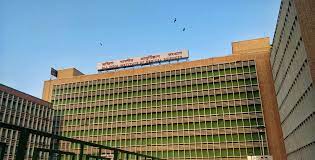
Brain Drain from Premier Institutions: Between 2022 and 2024, 429 doctors resigned from 20 All India Institutes of Medical Sciences (AIIMS) centers across the country. AIIMS Delhi experienced the highest attrition, losing 52 premier clinicians.
-
Faculty Vacancies: Nearly one-third of all academic and clinical faculty positions remain vacant across the 20 AIIMS campuses. AIIMS Delhi alone reports a 35% vacancy rate, with 462 out of 1,306 sanctioned posts left empty.
A senior health policy researcher, commenting anonymously on the parliamentary data, observed:
“The exodus of highly trained doctors from premier institutions at a time when faculty shortages range from 24% to 35% across AIIMS underscores the absolute urgency of improving service conditions, career progression, and administrative autonomy.”
What the IMS Proposal Envisions
The proposed All India Medical Service aims to construct a highly professionalized, unified cadre of medical administrative leaders who would alternate between serving central ministries and state health departments.
Key Objectives of the Proposed Cadre:
-
Equitable Deployment: Facilitating a smoother mechanism to transition medical specialists into underserved or rural geographic regions.
-
Professionalized Administration: Ensuring that complex public health portfolios, epidemiological strategies, and hospital administrations are managed by trained medical professionals rather than generalist bureaucrats.
-
Parity and Retention: Offering pay structures, benefits, and administrative authority on par with IAS officers, thereby incentivizing elite medical talent to remain within the public sector.
The need for centralized coordination gained significant political momentum following the COVID-19 pandemic. The Rashtriya Swayamsevak Sangh (RSS) explicitly endorsed the IMS framework, arguing that a dedicated central cadre would prevent the fractured, uncoordinated pandemic responses that complicated resource distribution between the Centre and states during public health emergencies.
Opposition, Autonomy, and Institutional Friction
Despite its theoretical benefits, the IMS proposal faces significant pushback from various state governments and political analysts who view it as an infringement on India’s federal structure.
Under the Constitution of India, public health and sanitation are explicitly designated as state subjects. Critics argue that introducing a centrally recruited elite cadre could strip state governments of their autonomy over health personnel deployments, local healthcare spending priorities, and regional healthcare policies.
States like Kerala and Sikkim, which possess highly distinct demographic profiles and localized health delivery models, have resisted the move out of concern that a centralized administrative hierarchy would fail to respect regional health priorities. Some public policy experts have also questioned the utility of the reform, maintaining that existing IAS officers are entirely capable of managing health departments, provided they receive better cross-training in health economics.
Decelerating Progress: Committees That Do Not Meet
The administrative inertia surrounding the IMS is further illuminated by an RTI query filed by Dr. Aman Kaushik, an MBBS graduate navigating the postgraduate medical system. The document revealed that the very Cadre Review Committee established in 2015 to oversee this transition has not met a single time since 2019.
Despite multiple official pleas and formal submissions by the Indian Medical Association (IMA) urging the government to resume talks, institutional progress has frozen. In a formal response, Dr. Naveen Aggarwal, Deputy Secretary and First Appellate Authority under the RTI Act, confirmed: “A committee was constituted on the matter in 2015 and no further meeting was held after 2019.”
This lack of movement has renewed pressure from frontline medical organizations. The Federation of Resident Doctors’ Association (FORDA) has repeatedly kept the implementation of the IMS at the top of its national policy agenda.
“The demand for a separate cadre for Health Services in India… is a long-pending one,” FORDA wrote in a memorandum directly to Prime Minister Narendra Modi. Dr. Manish, President of FORDA India, emphasized that modern healthcare crises require specialized leadership. He noted that the lessons of the pandemic prove that physicians from diverse specialties are uniquely qualified to devise effective, long-term epidemiological strategies compared to generalist administrators.
The Road Ahead for Public Health
For India’s 1.4 billion citizens, the continued delay in creating a streamlined medical administrative framework has tangible, day-to-day consequences. Beyond rural shortages, the Central Government Health Scheme (CGHS), which provides care to millions of public servants and retirees, currently faces a 29% shortage of sanctioned allopathic doctor positions.
While India successfully produces roughly 110,000 medical graduates annually, the country lacks the structural administration to distribute, retain, and support this talent equitably. Without a dedicated, unified administrative body, public health experts worry that the country’s response to future epidemics will remain fragmented, localized, and vulnerable to the same coordination breakdowns seen in previous crises.
As the proposal sits stalled in its eighth year of state-level consultations, the Indian Medical Service remains one of the country’s most vital yet elusive administrative reforms. Until the Health Ministry secures consensus from the remaining states, both healthcare professionals and the patients who rely on them will continue to navigate a system divided by geography and slowed by bureaucracy.
Medical Disclaimer
Medical Disclaimer: This article is for informational purposes only and should not be considered medical advice. Always consult with qualified healthcare professionals before making any health-related decisions or changes to your treatment plan. The information presented here is based on current research and expert opinions, which may evolve as new evidence emerges.
References
Government & Statutory Sources
-
Ministry of Health and Family Welfare, Government of India. (December 2018). Lok Sabha written reply on the creation of the All India Medical Service. Sansad.in, Annexure AU2938.
-
Ministry of Health and Family Welfare. (March 28, 2024). RTI Reply regarding Cadre Review Committee proceedings. Issued by Dr. Naveen Aggarwal, Deputy Secretary and First Appellate Authority.
-
Ministry of Health and Family Welfare. (November 19, 2025). Statistical release on India’s active doctor-population dynamics. PIB Press Release Ref: PRID=2197614.
-
Ministry of Health and Family Welfare. (May 26, 2026). RTI Status Report on the All India Medical Service proposal compilation.
-
Government of India. (August 2024). Parliamentary submission on institutional attrition rates and faculty vacancies across 20 AIIMS centers.
Expert & Organizational Interventions
-
Federation of Resident Doctors’ Association (FORDA). (July 2020). Official Memorandum to the Prime Minister’s Office regarding public health administrative reforms. Signed by Dr. Manish, National President, FORDA India.
-
Indian Medical Association (IMA). (2020–2024). Policy position papers and institutional correspondence regarding the revival of the 2015 Cadre Review Committee.
Media and Journalistic Records
-
Times of India. (June 4, 2026). “8 years on, proposal for IAS-like medical cadre still awaiting states’ views.”