 0
0
 0
0
May 8, 2026
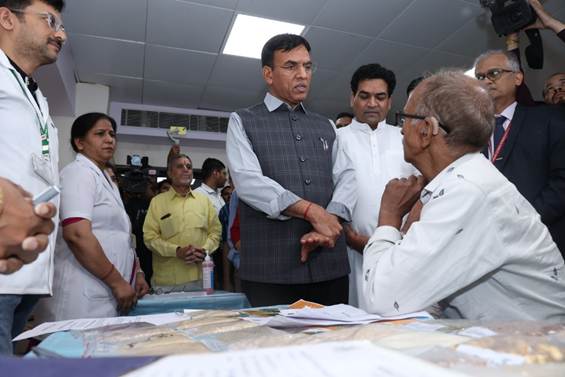
NEW DELHI — In a landmark move for occupational health and national social security, Union Minister of Labour & Employment Dr. Mansukh Mandaviya officially launched a nationwide Annual Health Check-Up Initiative on Thursday. Aimed at workers aged 40 and above, the program promises free, comprehensive medical screenings to millions of individuals across the country. Speaking from the ESIC Medical College & Hospital in Basaidarapur, Delhi, Dr. Mandaviya framed the initiative as a cornerstone of the newly implemented Labour Codes, signaling a shift toward proactive, preventive healthcare for India’s massive labor force.
The launch, which was simultaneously observed at 11 other Employees’ State Insurance Corporation (ESIC) locations nationwide, marks a significant expansion of the government’s safety net. By targeting workers in their fifth decade—a period when the risk of non-communicable diseases (NCDs) like hypertension and diabetes begins to climb sharply—the initiative seeks to catch health issues before they become debilitating or fatal.
Strengthening the “Shram Shakti”: Key Developments
The initiative is more than just a screening program; it is a logistical overhaul of how worker health is managed in India. Key components of the announcement include:
-
Universal Access for the 40+ Workforce: Every worker over the age of 40 covered under the ESIC umbrella is now entitled to a free annual health check-up.
-
Integrated Care Pathway: Screenings are not stand-alone events. Dr. Mandaviya confirmed that any ailments or chronic conditions identified during these check-ups will be treated, and necessary medications provided, through the existing network of ESIC facilities.
-
Inclusion of the “Invisible” Workforce: In a move that Dr. Mandaviya described as a global first, the new Labour Codes extend social security and health coverage to gig and platform workers—those often left out of traditional employment benefits.
-
Widening the Net: Coverage is also being extended to those in hazardous occupations and employees in small establishments with fewer than 10 workers, who were previously ineligible for ESIC benefits.
“Early detection through health screenings can help prevent serious diseases,” Dr. Mandaviya stated during the ceremony. “This day is dedicated to the honor of ‘Shram Shakti’ (Labor Power), ensuring dignity and protection for those who build our nation.”
The Statistical Shift: A Decade of Expansion
The scale of India’s social security expansion over the last ten years provides the backdrop for this health initiative. According to government data highlighted by the Minister:
| Metric | A Decade Ago | Today (2026) |
| Total Social Security Beneficiaries | ~30 Crore (300M) | ~94 Crore (940M) |
| Population Coverage Percentage | 19% | 64% |
| ESIC Beneficiaries | ~7 Crore (70M) | ~15 Crore (150M) |
This growth suggests that more than half of the Indian population now resides within some form of social security framework, a critical factor in mitigating the financial catastrophe often caused by sudden medical emergencies.
Expert Commentary: Why Age 40 Matters
Medical professionals not involved in the government rollout emphasize that the choice of age 40 is scientifically sound. In India, the “epidemiological transition” has seen a rise in lifestyle-related diseases appearing at younger ages compared to Western populations.
“In the Indian context, we see a high prevalence of metabolic syndrome and cardiovascular issues starting in the late 30s and early 40s,” says Dr. Ananya Sharma, a preventative medicine specialist at a leading private hospital in Mumbai. “Annual screenings for blood pressure, blood glucose, and cholesterol can reduce the burden of stroke and heart disease by up to 30% through early intervention. This is particularly vital for manual laborers whose physical health is their only capital.”
Context and Public Health Implications
The initiative arrives as India grapples with a rising tide of NCDs. According to the World Health Organization (WHO), NCDs account for roughly 66% of all deaths in India. For the working class, a chronic illness often means a total loss of income and a descent into poverty.
Beyond health screenings, the Minister highlighted other reforms within the four Labour Codes designed to improve well-being:
-
Gender Parity: Ensuring equal wages for men and women.
-
Maternal Health: Increasing maternity leave from 12 weeks to 26 weeks.
-
Flexibility: Incorporating work-from-home provisions for women where applicable.
By integrating these social protections with physical health checks, the government aims to create a more resilient workforce. The inclusion of gig workers (like delivery partners and ride-share drivers) is particularly notable, as this sector has grown exponentially but remained largely unregulated regarding health benefits.
Limitations and Challenges
While the initiative is ambitious, public health analysts point to potential hurdles:
-
Awareness and Uptake: “The biggest challenge will be ensuring that workers actually take time off to get these checks,” says Rajesh Gupta, a labor rights advocate. “Health literacy remains a barrier. Many workers avoid doctors unless they are in pain.”
-
Infrastructure Strain: With ESIC beneficiaries doubling to 15 crore, the existing hospital infrastructure must be scaled to prevent long wait times and “screening fatigue.”
-
Data Privacy: As millions of workers enter a digital health screening database, robust protections for sensitive medical data will be paramount.
What This Means for You
If you are a worker over 40 covered by ESIC, this initiative allows you to take control of your health without the burden of cost. Health experts recommend preparing for your annual check-up by:
-
Bringing any previous medical records.
-
Disclosing any family history of heart disease or diabetes.
-
Following up on any “borderline” results (such as pre-diabetes) with the lifestyle changes recommended by ESIC doctors.
As India moves toward a more formalized economy, the health of the worker is being recognized not just as a personal matter, but as a vital economic asset.
References
-
Press Information Bureau (PIB) Delhi: “Union Minister Dr. Mansukh Mandaviya Launches Nationwide Annual Health Check-Up Initiative,” Posted May 7, 2026.
Medical Disclaimer: This article is for informational purposes only and should not be considered medical advice. Always consult with qualified healthcare professionals before making any health-related decisions or changes to your treatment plan. The information presented here is based on current research and expert opinions, which may evolve as new evidence emerges.