 0
0
 0
0
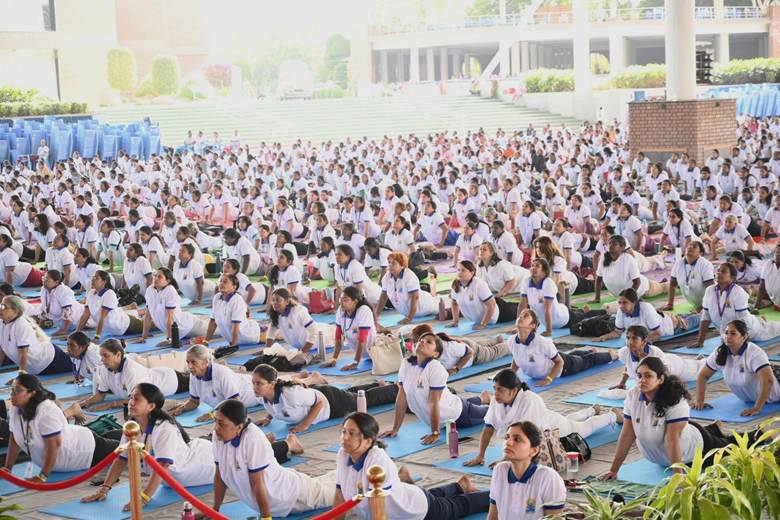
June 1, 2026 | New Delhi — As global life expectancy continues to climb and nations face unprecedented demographic shifts, the upcoming 12th International Day of Yoga (IDY) is positioning this ancient mind-body practice as a critical intervention for modern public health. The 2026 theme, “Yoga for Healthy Ageing,” was officially unveiled in late May by Union Minister of State (Independent Charge) for Ayush and Health, Prataprao Jadhav, during the “Yoga Mahotsav” at the Khajuraho monuments, marking the 25-day countdown to the global event. Observed annually on June 21, this year’s main national celebration will take place in Kolkata, selected for its rich traditional heritage and spiritual consciousness, with the goal of translating mounting scientific evidence into scalable lifestyle solutions for an ageing world.
The Demographic Reality Behind the Theme
The 2026 theme addresses an urgent global necessity. According to data from the World Health Organization (WHO), the population of older adults is growing faster than any other age group. By 2030, an estimated 1 in 6 people worldwide will be aged 60 or over, increasing from 1 billion in 2020 to 1.4 billion. Looking further ahead to 2050, the global population of individuals in this age bracket will double to 2.1 billion, while the number of people aged 80 and older is projected to triple, reaching 426 million.
What makes this shift a major public health challenge is that while absolute life expectancy has increased, the proportion of life spent in good health has remained relatively flat. As a result, additional years of life are frequently compromised by declining physical and mental capacities.
At the biological level, ageing is characterized by the accumulation of molecular and cellular damage over time, which gradually reduces functional capacity and increases vulnerability to chronic conditions like osteoarthritis, chronic obstructive pulmonary disease (COPD), diabetes, depression, and dementia.
“Healthy ageing is not merely about extending lifespan but enhancing ‘healthspan’—the years spent free from chronic disease and disability,” stated Ministry of Ayush officials, defining the philosophical and practical target of this year’s mobilization.
What the Science Says About Yoga and Ageing
The selection of this year’s theme coincides with a sharp increase in clinical research validating yoga’s therapeutic role for older adults. Data from the PubMed Central repository reveals that peer-reviewed publications focusing on “Yoga for healthy ageing” grew from 183 in 2014 to 1,207 by 2025—a more than six-fold rise in scientific literature investigating how structured physical postures (asanas), breathing exercises (pranayama), and meditation impact the physiology of older adults.
Frailty and Longevity Predictors
A landmark systematic review published in the Annals of Internal Medicine evaluated 33 randomized controlled trials involving 2,384 participants over the age of 65. Researchers from the Harvard-affiliated Brigham and Women’s Hospital found that consistent yoga practice significantly improved walking speed and lower-body leg strength, both of which are established clinical indicators of frailty and long-term longevity. Slower gait speed is strongly associated with an increased risk of falls and mortality in older populations, making interventions that preserve mobility highly relevant to geriatric care.
Balance, Fall Prevention, and Mobility
Falls remain a leading cause of accidental injury and loss of independence among older adults. A February 2026 quasi-experimental study published in the journal Geriatrics assessed 64 individuals aged 65 to 85 over a 12-week yoga intervention. The study documented statistically significant improvements in objective balance measures ($p < 0.001$) and functional mobility ($p < 0.001$), alongside a measurable decrease in the participants’ self-reported fear of falling ($p = 0.009$). Additionally, psychological evaluations showed substantial drops in scores for anxiety ($p = 0.0003$) and depression ($p = 0.004$).
These findings are reinforced by a separate clinical trial published in Alternative Therapies in Health and Medicine (September 2025). Tracking 23 participants aged 65 to 74, researchers observed meaningful reductions in fall risks after a relatively brief four-week program consisting of 30-minute yoga sessions held three times per week.
Physical and Mental Health Outcomes
A comprehensive systematic review and meta-analysis published in the Journal of Geriatric Physical Medicine calculated the precise effect sizes of yoga across multiple geriatric health domains, utilizing the Standardized Mean Difference (SMD).
| Health Outcome | Effect Size (SMD) | Statistical Significance |
| Balance Improvement | 0.81 | $p < 0.001$ |
| Muscle Strength | 0.49 | $p = 0.002$ |
| Flexibility | 0.38 | $p = 0.020$ |
| Depressive Symptoms | 0.50 | $p = 0.010$ |
The analysis confirmed strong, positive physical outcomes, though the authors noted that evidence supporting purely cognitive or complex neuropsychiatric benefits requires further high-quality trials to establish definitive proof.
Cellular Ageing Markers
At the microscopic level, research suggests yoga may influence biomarkers linked to systemic inflammation and oxidative stress. A prospective study published in Evidence-Based Complementary and Alternative Medicine monitored 96 healthy individuals completing a 12-week Yoga and Meditation-based Lifestyle Intervention (YMLI).
The data revealed significant decreases in 8-OH2dG (a primary biomarker of oxidative DNA damage), reactive oxygen species (ROS), cortisol, and interleukin-6 (IL-6), a key pro-inflammatory cytokine. Concurrently, researchers measured significant increases in telomerase activity, overall antioxidant capacity, and sirtuin-1—a protein closely tied to cellular regulation and longevity pathways (all changes met the statistical threshold of $p < 0.05$).
Expert Perspectives on Implementation
Medical professionals underscore that implementing mind-body interventions requires framing them as accessible, lifelong habits rather than temporary exercises.
“This theme holds immense relevance today,” Union Minister Prataprao Jadhav noted during the theme’s announcement. “As life expectancy continues to rise, it is vital that we learn the art of ageing gracefully and healthily.”
Independent experts emphasize that benefits can be realized regardless of when a person begins practicing. Dr. Loewenthal, a researcher specializing in mind-body modalities and healthy ageing at Brigham and Women’s Hospital, commented on the clinical data:
“There’s potential for movement-based mind-body practices to be really helpful for promoting healthy aging over the lifespan because they provide physical and cognitive health benefits, but also because they have a spillover effect that can lead to having a healthier lifestyle overall.”
“It may be helpful to get involved in a healthy practice like this at a younger age, but with that said, we still saw clinically meaningful results in an older population,” Dr. Loewenthal added. “It’s never too late to start.”
Improving Accessibility for Older Adults
To address the physical limitations common in older populations, public health initiatives are shifting away from advanced practices toward highly tailored, low-impact protocols. The Ministry of Ayush has introduced an evidence-based clinical framework titled 10 Yoga Protocols for Non-Communicable Diseases (NCDs) and Target Groups, which features a dedicated segment designed entirely for geriatric care.
This protocol focuses heavily on improving joint mobility, respiratory capacity, and emotional stability through gentle movements, structured breathing, and chair-based variations. To ensure long-term engagement beyond the annual June 21 celebrations, public health channels are utilizing digital platforms like “Yoga 365” to provide daily, accessible instructional routines, alongside “Yoga Samavesh”, an outreach initiative designed to bring low-impact wellness programs to socially isolated senior citizens and underserved communities.
The Economic Dimension: The Silver Economy
The public health push for preventative care also intersects with a massive macroeconomic shift known as the “silver economy.” In India alone, the senior-focused market segment—which spans specialized healthcare, assistive devices, rehabilitation, digital health tracking, and elder care services—is valued at approximately Rs 73,000 crore and is expanding rapidly.
By integrating structured yoga programs into senior living communities, rehabilitation centers, and primary care settings, policy planners view the practice as a highly cost-effective, low-infrastructure strategy to mitigate the steep healthcare expenditures associated with chronic disease management and fall-related hospitalizations. This framework directly complements broader government initiatives, such as the Seniorcare Ageing Growth Engine (SAGE), which funds startups developing innovative consumer solutions for older adult populations.
Limitations and a Balanced Scientific Perspective
While the published literature demonstrates clear therapeutic potential, medical experts caution against treating yoga as a universal cure-all. A rigorous look at the data reveals notable caveats:
-
Inconsistent Strength Metrics: The comprehensive Harvard-affiliated review noted that while leg strength and walking speed improved significantly, handgrip strength—a classic objective proxy for overall systemic frailty—showed no measurable improvement following yoga interventions.
-
Equivalency to General Exercise: Data indicates that yoga does not consistently outperform other low-impact physical exercises, such as dedicated stretching routines, walking, or alternative mind-body practices like Tai Chi, when evaluating basic physical mobility.
-
Psychological Inconsistencies: A systematic review examining the neuropsychiatric impacts of ageing concluded that while yoga demonstrates a small-to-medium effect size in reducing active depressive symptoms, the high level of heterogeneity (variation) in study designs makes it impossible to definitively claim that yoga reduces generalized anxiety, mitigates chronic stress, or reverses age-related cognitive decline in older adults.
-
The Compliance Factor: A clinical trial investigating fall prevention discovered that while supervised, group-based yoga classes successfully reduced self-reported falls, instructing older adults to perform unsupervised home exercises yielded no additional preventative benefit compared to simple relaxation techniques. This underlines the critical role of social support and professional supervision in ensuring safety and efficacy.
Ultimately, these limitations indicate that yoga is most effective when utilized as an accessible, complementary component of a broader medical and lifestyle strategy—alongside proper nutrition, conventional medical care, and aerobic exercise—rather than an independent treatment plan.
Practical Takeaways for Daily Health Decisions
For health-conscious readers and individuals looking to optimize their long-term healthspan, the accumulated medical consensus offers several practical guidelines:
-
It is Never Too Late to Begin: Clinical trials consistently demonstrate that older adults who adopt gentle yoga practices well into their 70s and 80s still achieve measurable gains in functional mobility.
-
Prioritize Functional Metrics: When starting a routine, focus on exercises that enhance balance, lower-limb stability, and gait speed, as these directly protect against accidental falls and preserve daily independent living.
-
Acknowledge Mental Health Benefits: Yoga can serve as an effective, non-pharmacological supportive tool for managing sub-clinical depressive symptoms and improving mood stability.
-
Safety First: Older individuals experiencing severe joint degeneration, advanced osteopenia, or cardiovascular conditions should avoid strenuous inversions or deep twists. Utilizing chair-based variations under trained supervision is highly recommended.
-
Consistency Tumps Duration: Short, regular sessions—such as 20 to 30 minutes practiced three times a week—yield far better physical adaptations and cellular biomarkers than long, infrequent sessions.
As nations navigate the UN Decade of Healthy Ageing (2021–2030), the alignment of global research with ancient preventative practices suggests that managing the longevity crisis requires focusing equally on adding years to life, and life to years.
Reference Section
- https://www.ndtv.com/health/international-day-of-yoga-2026-focuses-on-healthy-ageing-through-yoga-amid-rising-longevity-11571658
Medical Disclaimer: This article is for informational purposes only and should not be considered medical advice. Always consult with qualified healthcare professionals before making any health-related decisions or changes to your treatment plan. The information presented here is based on current research and expert opinions, which may evolve as new evidence emerges.