 0
0
 0
0
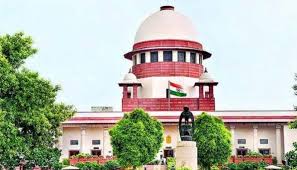
CUTTACK, Odisha — In a landmark ruling with significant structural implications for medical admissions and competitive state reservations across India, the Orissa High Court has dismissed a National Eligibility cum Entrance Test (NEET-UG) aspirant’s petition seeking an MBBS seat under the exclusive State Government School (SGS) quota.
The division bench, consisting of Justices Manash Ranjan Pathak and Sibo Sankar Mishra, established a firm judicial precedent by ruling that a candidate cannot simultaneously leverage qualifications from two separate educational boards to patch together baseline eligibility while maintaining a state-sanctioned reservation preference. The Court definitively declared that an applicant is legally barred from claiming “two privileges at the same time.”
The Core Dispute: The “Dual Privilege” Doctrine
The judicial intervention arose after a candidate who completed their Class 12 examination in 2014 through the state-run Council of Higher Secondary Education (CHSE), Odisha, found themselves ineligible for general medical admission. The candidate had scored 49.66% in Chemistry—narrowly missing the strict 50% aggregate threshold required in Physics, Chemistry, and Biology (PCB) for unreserved candidates under National Medical Commission (NMC) regulations.
To rectify this deficit, the candidate enrolled with the National Institute of Open Schooling (NIOS) in 2022, successfully upgrading their Chemistry mark to 64 out of 100. However, a conflict emerged during the Odisha Joint Entrance Examination (OJEE) counseling session. The candidate attempted to use the improved NIOS certificate to achieve baseline NEET eligibility, while simultaneously relying on their original 2014 state credentials to claim an exclusive seat under the 15% State Government School reservation.
The High Court decisively rejected this blended methodology, clarifying the precise legal limits of specialized education quotas:
“The petitioner’s improvised score in Chemistry from NIOS, even if it is taken into consideration for his minimum eligibility to apply for the medical education by giving benefit of the marks criteria from two different Boards, but the reservation cannot be given, because one cannot avail two privileges at the same time.”
The bench further emphasized that the specialized SGS reservation is conditionally structured. It remains valid only if an applicant presents a single, uniform qualifying certificate from the state board verifying both standard eligibility marks and a continuous enrollment history within the state public school system.
Contextualizing Odisha’s State Government School Quota
To mitigate disparities introduced by highly centralized national entrance examinations like NEET and JEE, Odisha introduced a 15% institutional reservation in December 2020. This “reservation within a reservation” architecture applies horizontally across all vertical demographics, including Scheduled Castes (SC), Scheduled Tribes (ST), Other Backward Classes (OBC), and unreserved groups.
Odisha State Government School (SGS) Quota Requirements:
├── 1. Class X Pass: Board of Secondary Education (BSE), Odisha
└── 2. Class XII Pass: Council of Higher Secondary Education (CHSE), Odisha
       └── Must be from a state government higher secondary school / junior college
The underlying socio-economic objective was to ensure equitable access for students lacking access to expensive private coaching ecosystems. However, the High Court’s ruling confirms that the protective framework cannot be unbundled or combined with external alternative paths to bypass foundational academic benchmarks.
Public Health and Educational Policy Implications
The judgment arrives amidst shrinking infrastructure metrics for medical training within the region. According to OJEE institutional data, available MBBS seats across Odisha were reduced to 1,813 for the 2025–26 academic cycle following an NMC-mandated structural capacity reduction at the DRIEMS Institute of Health Sciences and Hospital, which dropped from 100 seats to 50.
With thousands of applicants vying for fewer than 1,500 public-sector MBBS and BDS vacancies, administrative transparency during the counseling process is vital.
| Metric / Category | Details and Institutional Capacity |
| Total Odisha Medical Seats (2025–26) | 1,813 MBBS/BDS seats (reduced by 50) |
| SGS Reservation Allotment | 15% horizontal reservation across all categories |
| Baseline NMC Eligibility | 50% aggregate in PCB for unreserved candidates |
| State Engineering Quota Seats | Approximately 4,200 seats in government colleges |
Independent observers suggest that maintaining strict regulatory boundaries is critical for long-term confidence in the medical system.
“The court’s decision successfully upholds the structural integrity of localized reservation policies,” stated Dr. Rashmi Malhotra, an education law specialist at the National Law University, Delhi, who was not involved in the litigation. “Reservation guidelines are meticulously calibrated to balance historic or systemic disadvantages. Permitting candidates to cherry-pick credentials across multiple boards to maximize personal advantage undermines institutional parity.”
Limitations, Hardships, and Counterarguments
While the ruling provides clarity for educational administrators, it also highlights the systemic challenges faced by non-traditional or socio-economically vulnerable students who use non-formal schooling options to recover from academic setbacks.
“While this ruling is technically and legally sound, we must remain mindful of its practical impacts on vulnerable students,” noted Dr. Amit Kumar, a social justice advocate focused on rural education initiatives in eastern India. “The National Institute of Open Schooling serves as a vital safety net for individuals who experience systemic disruption or medical hardships. Severing open school credentials from state quota eligibility adds an extra layer of difficulty for individuals attempting to pull themselves up through non-traditional educational pathways.”
The High Court clarified that this ruling does not invalidate open schooling paths for medical careers. Candidates who improve their marks via NIOS retain the full right to compete for general, unreserved medical seats across India, provided they meet the basic NMC criteria. They simply cannot use outside credentials to access specialized state reservations designed for continuous public school enrollment.
Practical Takeaways for Students and Parents
For families navigating the competitive landscape of professional medical admissions, this case offers several crucial lessons:
-
Trajectory Consistency: If targeting state-specific institutional quotas, an applicant’s academic history must remain within the explicit boundaries defined by that state’s legislature.
-
Absolute Qualification Deadlines: Basic eligibility requirements, such as the 50% PCB rule, are strictly enforced at the time of administrative verification.
-
Irreversibility of Counseling Cycles: The Court noted that because the petitioner’s initial request for interim relief was denied in December 2025, long after the OJEE spot rounds concluded in November, retrospective seat allocation is unfeasible.
The ruling underscores that while the legal landscape recognizes diverse educational pathways for baseline career entry, specialized state benefits require strict adherence to a single, continuous educational track.
Medical Disclaimer
This article is for informational purposes only and should not be considered medical advice. Always consult with qualified healthcare professionals before making any health-related decisions or changes to your treatment plan. The information presented here is based on current research and expert opinions, which may evolve as new evidence emerges.
References
- https://medicaldialogues.in/news/education/cannot-avail-2-privileges-at-the-same-time-odisha-hc-junks-mbbs-aspirants-plea-seeking-admission-under-state-govt-school-quota-171688