 0
0
 0
0
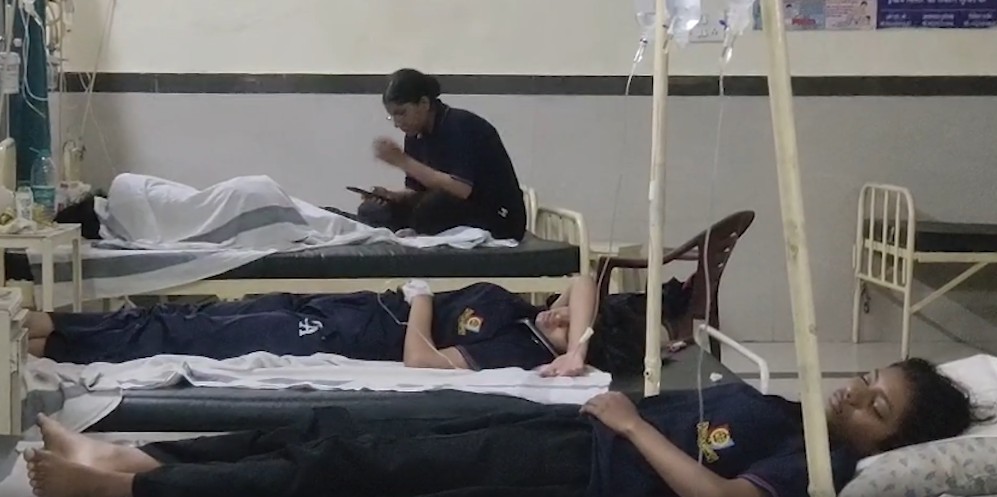
JABALPUR, India — A severe heatwave straining parts of Central India turned critical on Friday when at least 31 National Cadet Corps (NCC) cadets were rushed to the hospital after falling severely ill during an outdoor training camp. The incident, which occurred at the Indian Institute of Information Technology Design and Manufacturing (IIITDM) campus on Dumna Road, highlights the growing public health threat of exertional heat illness as rising seasonal temperatures push young, otherwise healthy individuals to their physical limits.
According to local health officials and initial emergency response reports, the affected cohort includes 15 boys and 16 girls. The cadets began exhibiting classic symptoms of severe heat stress—including acute dizziness, persistent vomiting, diarrhea, profound muscle weakness, and semi-consciousness—following prolonged exposure and physical exertion under a blazing sun.
The emergency triggered a swift evacuation to the Victoria District Hospital in Jabalpur. While hospital administration confirmed that a majority of the youth stabilized after receiving aggressive intravenous fluid resuscitation, several cadets required admission to the Intensive Care Unit (ICU) due to critical fluid depletion and altered mental states.
When Heat Becomes a Medical Emergency
The Jabalpur incident serves as a stark reminder that heatstroke is a true medical emergency rather than a severe case of feeling overheated. According to the World Health Organization (WHO), severe heatwaves are expanding in frequency, duration, and intensity globally, causing an alarming spike in ambient vulnerability.
Data from the U.S. Centers for Disease Control and Prevention (CDC) warns that exertional heatstroke can cause an individual’s core body temperature to surge to 41°C (106°F) or higher within just 10 to 15 minutes. When the body’s thermoregulatory mechanisms fail, cellular damage begins rapidly. Without immediate medical intervention, this state carries a high case-fatality rate and can cause permanent neurological disability or multi-organ failure.
While global metrics frequently emphasize that individuals over the age of 65 face the sharpest rise in heat-related mortality—with WHO documenting an approximate 85% increase in deaths for this demographic between the periods of 2000–2004 and 2017–2021—younger demographics engaged in high-exertion tasks are increasingly filling emergency departments.
Spotting the Signs Before Collapse
Medical experts emphasize that heat illnesses exist on a spectrum, beginning with mild heat cramps, progressing to heat exhaustion, and culminating in life-threatening heatstroke. The symptoms observed in the Jabalpur cadets align directly with established clinical criteria for severe heat-related insult.
The CDC outlines several warning signs that demand immediate intervention:
-
Altered Mental Status: Confusion, slurred speech, irritation, or delirium.
-
Physical Distress: Nausea, vomiting, severe headache, and profound dizziness.
-
Systemic Failure: Seizures, loss of consciousness, or a rapid, bounding pulse.
“The progression from heat exhaustion to heatstroke can occur with frightening speed, especially during intense physical activity,” explains Dr. Anita Sharma, an independent public health consultant and former emergency medicine physician who was not involved in treating the cadets. “By the time an individual experiences neurological symptoms like confusion or semi-consciousness, their internal cooling systems have completely collapsed. It is a race against the clock.”
The Golden Hour: Immediate and Aggressive Cooling
When treating suspected exertional heatstroke, clinical consensus mandates that cooling must begin immediately, even before emergency transportation arrives.
According to guidelines from the Mayo Clinic, cold-water immersion is the gold standard for treating exertional heatstroke. Submerging the individual up to the neck in an ice bath forces rapid heat transfer away from core organs. If a full tub is unavailable, first responders must move the individual to a shaded area, strip down outer layers of clothing, and aggressively apply ice packs or cold, wet cloths to high-vascular zones: the neck, armpits, and groin.
Clinical Insight: “You cannot afford to ‘watch and wait’ in a shaded room hoping the person wakes up,” says Dr. Sharma. “Every minute the core body temperature remains elevated directly correlates with an increased risk of permanent brain and kidney injury.”
Public Health Context and the “Dual-Factor” Challenge
The vulnerability of outdoor workers, athletes, and military or youth cadets stems from a physiological double-jeopardy: their internal metabolisms generate substantial heat via muscle contraction while high environmental temperatures prevent that heat from dissipating into the surrounding air.
However, investigators in the Jabalpur case are examining alternative contributing variables. Initial field reports noted that some cadets experienced gastrointestinal distress, raising the possibility of concurrent food poisoning from the camp’s mess facilities.
Public health officials caution that overlapping diagnoses are common in summer outbreaks. Severe dehydration can compromise gastrointestinal blood flow, mimicking or worsening symptoms of foodborne illnesses, while acute gastroenteritis leaves an individual profoundly depleted of the fluids needed to sweat and cool down. Laboratory evaluations and clinical cultures remain ongoing to definitively isolate whether a dual threat of heat and contaminated rations caused the cluster.
Adapting Institutional Protocols for the New Normal
The broader takeaway for schools, sports leagues, and training camps across India is clear: heat preparedness must evolve from a passive checklist into an active operational protocol. The National Disaster Management Authority (NDMA) provides clear temperature thresholds to trigger regional heatwave warnings, yet local institutions often fail to alter rigorous physical schedules despite these advisories.
To protect participants, outdoor organizations should integrate structured safety mandates into daily planning:
| Preventive Metric | Operational Standard |
| Wet Bulb Globe Temperature (WBGT) | Utilize specialized monitoring devices to assess heat, humidity, and direct solar load—not just ambient temperature. |
| Mandatory Hydration Intervals | Enforce scheduled fluid breaks every 15–20 minutes, moving away from relying on an individual’s perception of thirst. |
| Schedule Modification | Shift high-exertion drills strictly to early morning hours or post-sunset intervals, completely avoiding peak UV hours. |
| Acclimatization Periods | Gradually increase outdoor exposure over 7 to 14 days to allow the human body to adapt its sweat rate and blood volume. |
As climate realities continue to shift baseline summer temperatures upward, public health planning must treat extreme heat as a predictable and preventable hazard. For institutions tasked with safeguarding youth, modifying training schedules in the face of extreme weather warnings is no longer a matter of convenience—it is a critical requirement for saving lives.
References
-
Field Data: Local correspondent and Indo-Asian News Service (IANS) incident reporting, Jabalpur, Madhya Pradesh, dated May 22, 2026.
Medical Disclaimer
Medical Disclaimer: This article is for informational purposes only and should not be considered medical advice. Always consult with qualified healthcare professionals before making any health-related decisions or changes to your treatment plan. The information presented here is based on current research and expert opinions, which may evolve as new evidence emerges.