 0
0
 0
0
Breastfeeding for a sustainable start in life: strengthen what works
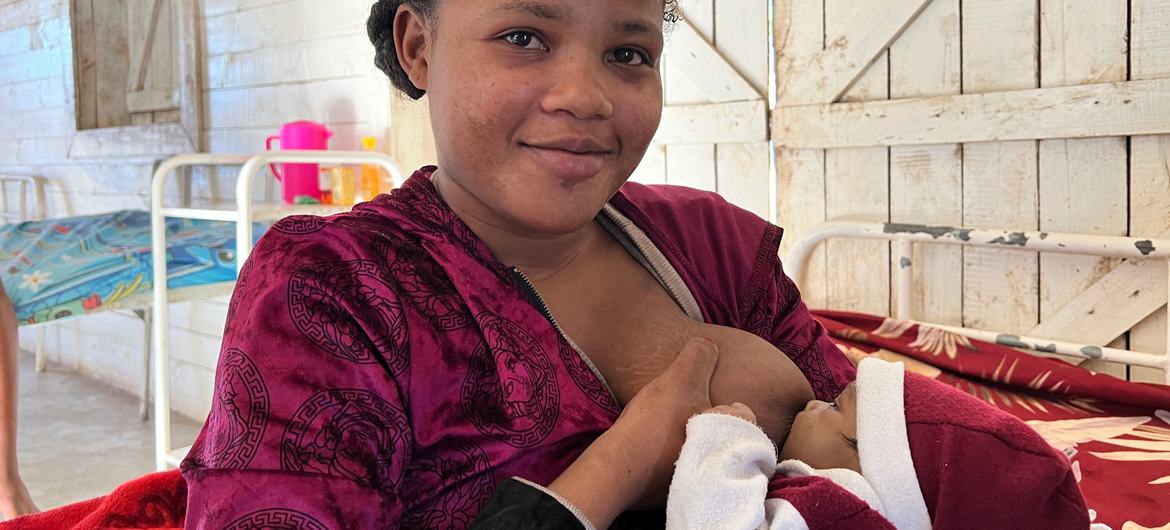
The 2026 theme for the World Breastfeeding Week is “Breastfeeding for a sustainable start in life: strengthen what works,” focuses on tracking progress, evaluating impact, and scaling proven approaches that improve breastfeeding outcomes. It calls on governments, health systems, workplaces, communities, civil society organizations, and families to build on successful experiences and strengthen the “Warm Chain of Support” for breastfeeding.
The interventions are proven. The economic returns are exceptional. The remaining challenge is not knowing what works – it is investing at sufficient scale.
We know what works
Workplace Breastfeeding Support
Workplace breastfeeding support policies and programmes are associated with significantly higher rates of exclusive breastfeeding.
Key facts
- Every infant and child has the right to good nutrition according to the “Convention on the Rights of the Child”.
- Undernutrition is associated with 45% of child deaths.
- Globally in 2022, 149 million children under 5 were estimated to be stunted (too short for age), 45 million were estimated to be wasted (too thin for height), and 37 million were overweight or obese.
- About 44% of infants 0–6 months old are exclusively breastfed.
- Few children receive nutritionally adequate and safe complementary foods; in many countries less than a fourth of infants 6–23 months of age meet the criteria of dietary diversity and feeding frequency that are appropriate for their age.
- Over 820 000 children’s lives could be saved every year among children under 5 years, if all children 0–23 months were optimally breastfed. Breastfeeding improves IQ, school attendance, and is associated with higher income in adult life. (1)
- Improving child development and reducing health costs through breastfeeding results in economic gains for individual families as well as at the national level.
Optimal breastfeeding is so critical that it could save the lives of over 820 000 children under the age of 5 years each year.
WHO and UNICEF recommend:
- early initiation of breastfeeding within 1 hour of birth;
- exclusive breastfeeding for the first 6 months of life; and
- introduction of nutritionally-adequate and safe complementary (solid) foods at 6 months together with continued breastfeeding up to 2 years of age or beyond.
However, many infants and children do not receive optimal feeding. For example, only about 44% of infants aged 0–6 months worldwide were exclusively breastfed over the period of 2015-2020.
Recommendations have been refined to also address the needs for infants born to HIV-infected mothers. Antiretroviral drugs now allow these children to exclusively breastfeed until they are 6 months old and continue breastfeeding until at least 12 months of age with a significantly reduced risk of HIV transmission.
Breastfeeding
Exclusive breastfeeding for 6 months has many benefits for the infant and mother. Chief among these is protection against gastrointestinal infections which is observed not only in developing but also industrialized countries. Early initiation of breastfeeding, within 1 hour of birth, protects the newborn from acquiring infections and reduces newborn mortality. The risk of mortality due to diarrhoea and other infections can increase in infants who are either partially breastfed or not breastfed at all.
Breast-milk is also an important source of energy and nutrients in children aged 6–23 months. It can provide half or more of a child’s energy needs between the ages of 6 and 12 months, and one third of energy needs between 12 and 24 months. Breast milk is also a critical source of energy and nutrients during illness, and reduces mortality among children who are malnourished.
Children and adolescents who were breastfed as babies are less likely to be overweight or obese. Additionally, they perform better on intelligence tests and have higher school attendance. Breastfeeding is associated with higher income in adult life. Improving child development and reducing health costs results in economic gains for individual families as well as at the national level.(1)
Longer durations of breastfeeding also contribute to the health and well-being of mothers: it reduces the risk of ovarian and breast cancer and helps space pregnancies–exclusive breastfeeding of babies under 6 months has a hormonal effect which often induces a lack of menstruation. This is a natural (though not fail-safe) method of birth control known as the Lactation Amenorrhoea Method.
Mothers and families need to be supported for their children to be optimally breastfed. Actions that help protect, promote and support breastfeeding include:
- adoption of policies such as the International Labour Organization’s “Maternity Protection Convention 183” and “Recommendation No. 191”, which complements “Convention No. 183” by suggesting a longer duration of leave and higher benefits;
- adoption of the “International Code of Marketing of Breast-milk Substitutes” and subsequent relevant World Health Assembly resolutions;
- implementation of the “Ten Steps to Successful Breastfeeding” specified in the Baby-Friendly Hospital Initiative, including:
- skin-to-skin contact between mother and baby immediately after birth and initiation of breastfeeding within the first hour of life;
- breastfeeding on demand (that is, as often as the child wants, day and night);
- rooming-in (allowing mothers and infants to remain together 24 hours a day);
- not giving babies additional food or drink, even water, unless medically necessary;
- provision of supportive health services with infant and young child feeding counselling during all contacts with caregivers and young children, such as during antenatal and postnatal care, well-child and sick child visits, and immunization; and
- community support, including mother support groups and community-based health promotion and education activities.
Breastfeeding practices are highly responsive to supportive interventions, and the prevalence of exclusive and continued breastfeeding can be improved over the course of a few years.
Complementary feeding
Around the age of 6 months, an infant’s need for energy and nutrients starts to exceed what is provided by breast milk, and complementary foods are necessary to meet those needs. An infant of this age is also developmentally ready for other foods. If complementary foods are not introduced around the age of 6 months, or if they are given inappropriately, an infant’s growth may falter. Guiding principles for appropriate complementary feeding are:
- continue frequent, on-demand breastfeeding until 2 years of age or beyond;
- practise responsive feeding (for example, feed infants directly and assist older children. Feed slowly and patiently, encourage them to eat but do not force them, talk to the child and maintain eye contact);
- practise good hygiene and proper food handling;
- start at 6 months with small amounts of food and increase gradually as the child gets older;
- gradually increase food consistency and variety;
- increase the number of times that the child is fed: 2–3 meals per day for infants 6–8 months of age and 3–4 meals per day for infants 9–23 months of age, with 1–2 additional snacks as required;
- use fortified complementary foods or vitamin-mineral supplements as needed; and
- during illness, increase fluid intake including more breastfeeding, and offer soft, favourite foods.
Feeding in exceptionally difficult circumstances
Families and children in difficult circumstances require special attention and practical support. Wherever possible, mothers and babies should remain together and get the support they need to exercise the most appropriate feeding option available. Breastfeeding remains the preferred mode of infant feeding in almost all difficult situations, for instance:
- low-birth-weight or premature infants;
- mothers living with HIV in settings where mortality due to diarrhoea, pneumonia and malnutrition remain prevalent;
- adolescent mothers;
- infants and young children who are malnourished; and
- families suffering the consequences of complex emergencies.
HIV and infant feeding
Breastfeeding, and especially early and exclusive breastfeeding, is one of the most significant ways to improve infant survival rates. While HIV can pass from a mother to her child during pregnancy, labour or delivery, and also through breast-milk, the evidence on HIV and infant feeding shows that giving antiretroviral treatment (ART) to mothers living with HIV significantly reduces the risk of transmission through breastfeeding and also improves her health.
WHO now recommends that all people living with HIV, including pregnant women and lactating mothers living with HIV, take ART for life from when they first learn their infection status.
Mothers living in settings where morbidity and mortality due to diarrhoea, pneumonia and malnutrition are prevalent and national health authorities endorse breastfeeding should exclusively breastfeed their babies for 6 months, then introduce appropriate complementary foods and continue breastfeeding up to at least the child’s first birthday.
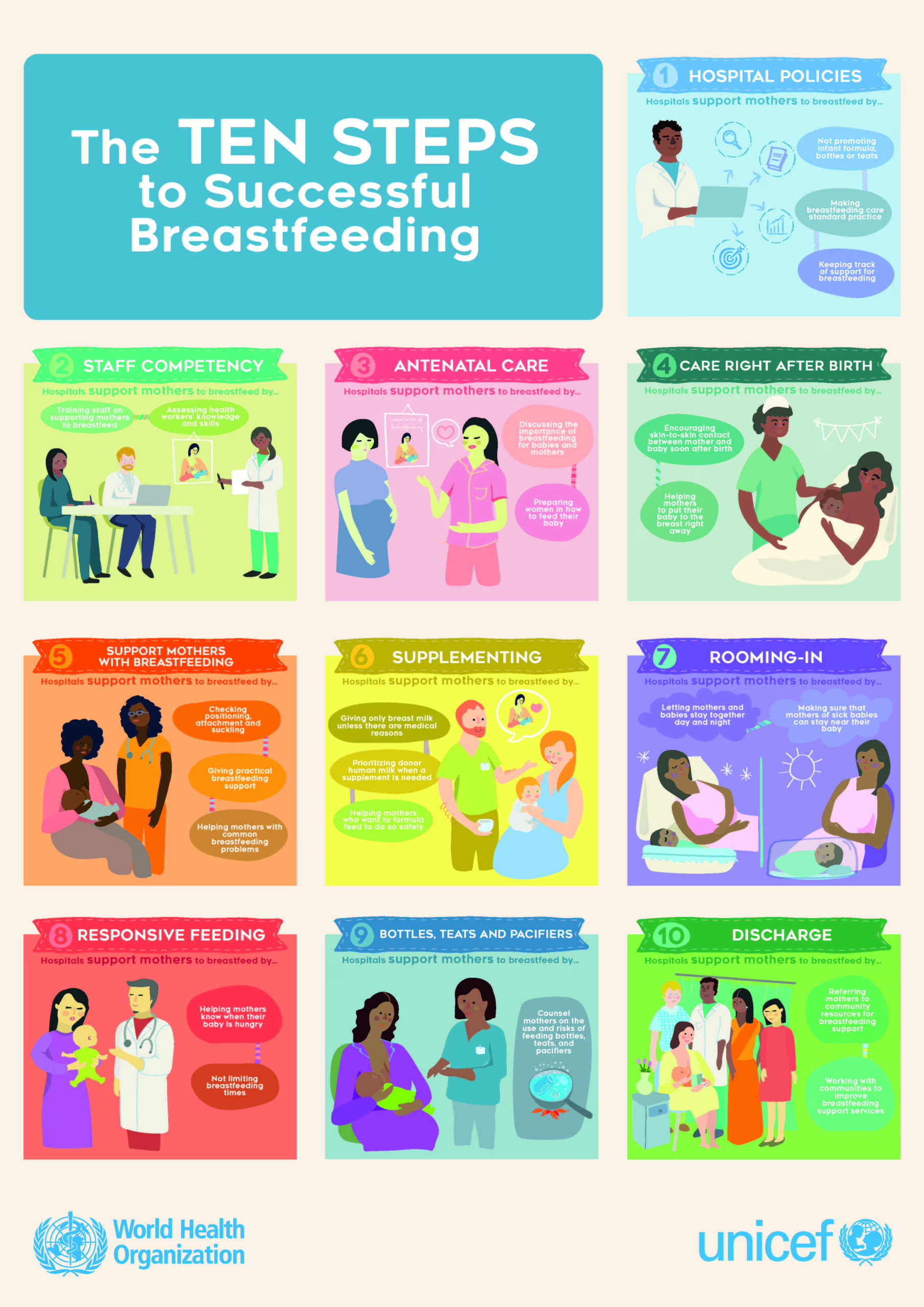
Ten steps to successful breastfeeding
WHO and UNICEF launched the Baby-friendly Hospital Initiative (BFHI) in 1991 to help motivate facilities providing maternity and newborn services worldwide to implement the Ten Steps to Successful Breastfeeding. The Ten Steps summarize a package of policies and procedures that facilities providing maternity and newborn services should implement to support breastfeeding. In 2018, WHO revised the Ten Steps based on the 2017 guideline on protecting, promoting and supporting breastfeeding in facilities that provide maternity and newborn services.
WHO has called upon all facilities providing maternity and newborn services worldwide to implement the Ten Steps. The implementation guidance for BFHI focuses on integrating the programme across healthcare systems to facilitate universal coverage and ensure sustainability over time. The guidance outlines nine key national responsibilities to scale up implementation of the Ten Steps.
Critical management procedures:
1a. Comply fully with the International Code of Marketing of Breast-milk Substitutes and relevant World Health Assembly resolutions.
1b. Have a written infant feeding policy that is routinely communicated to staff and parents.
1c. Establish ongoing monitoring and data-management systems.
2. Ensure that staff have sufficient knowledge, competence and skills to support breastfeeding.
Key clinical practices:
3. Discuss the importance and management of breastfeeding with pregnant women and their families.
4. Facilitate immediate and uninterrupted skin-to-skin contact and support mothers to initiate breastfeeding as soon as possible after birth.
5. Support mothers to initiate and maintain breastfeeding and manage common difficulties.
6. Do not provide breastfed newborns any food or fluids other than breast milk, unless medically indicated.
7. Enable mothers and their infants to remain together and to practise rooming-in 24 hours a day.
8. Support mothers to recognize and respond to their infants’ cues for feeding.
9. Counsel mothers on the use and risks of feeding bottles, teats and pacifiers.
10. Coordinate discharge so that parents and their infants have timely access to ongoing support and care.
There is substantial evidence that implementing the Ten Steps significantly improves breastfeeding rates. A systematic review of 58 studies on maternity and newborn care published in 2016 demonstrated clearly that adherence to the Ten Steps impacts early initiation of breastfeeding immediately after birth, exclusive breastfeeding and total duration of breastfeeding.