 0
0
 0
0
WASHINGTON — Confirmed U.S. measles cases have reached 2,318 so far in 2026, eclipsing last year’s entire annual total of 2,289 infections with five months remaining in the year. According to updated surveillance data published on July 24 by the Centers for Disease Control and Prevention (CDC), the current surge represents the nation’s highest annual measles count since 1991. The rapid rise is being driven primarily by falling routine childhood vaccination rates and widespread outbreaks across multiple jurisdictions.
Escalating Outbreaks Across the Country
CDC surveillance shows that 2,302 of this year’s cases were reported across 45 states and jurisdictions, while 16 cases were identified among international travelers. Public health authorities have documented 35 new distinct outbreaks in 2026 alone. Crucially, 93% of all confirmed cases this year—2,153 out of 2,318—are directly tied to outbreaks, indicating sustained local transmission rather than isolated importations.
| Key Surveillance Metric | 2025 (Full Year) | 2026 (To Date) |
| Total Confirmed Cases | 2,289 | 2,318 |
| Reporting Jurisdictions | 48 states | 45 states & jurisdictions |
| Outbreak-Associated Cases | ~88% | 93% (2,153 cases) |
| Hospitalization Rate | 11% | 7% (~150+ hospitalizations) |
The demographics of the outbreak reveal that children and teenagers aged 19 and younger account for the vast majority of infections. CDC figures show that roughly 93% of infected individuals were completely unvaccinated or had an unknown vaccination status, while 3% had received one dose and 4% had received the recommended two doses of the Measles, Mumps, and Rubella (MMR) vaccine.
While 2025 set a previous modern record, 2026 has already surpassed it. Epidemiologists note that the last time the country experienced a higher case count was in 1991, when 9,643 cases were confirmed.
Why Measles Spreads So Rapidly
Measles is one of the most contagious biological agents known to science. The virus spreads through airborne respiratory droplets when an infected person breathes, coughs, or sneezes.
Airborne Persistence: The measles virus can remain suspended in the air and infectious in an enclosed space for up to two hours after an infected individual has left the area.
If an susceptible person is exposed to the virus, there is an estimated 90% chance they will become infected.
Measles Transmission Chain
[Infected Individual] ──(Cough/Sneeze)──> [Airborne Droplets (Persist 2 hrs)]
                                                    │
                                                    ▼
                                    [90% Infection Risk for Unvaccinated]
The Clinical Course and Risks
Measles is frequently mischaracterized as a simple skin rash, but it is a systemic infection with potentially severe medical complications.
-
Early Symptoms (Days 1–4): High fever, cough, coryza (runny nose), and conjunctivitis (red, watery eyes).
-
Koplik Spots: Tiny white spots inside the mouth that appear shortly before the generalized rash.
-
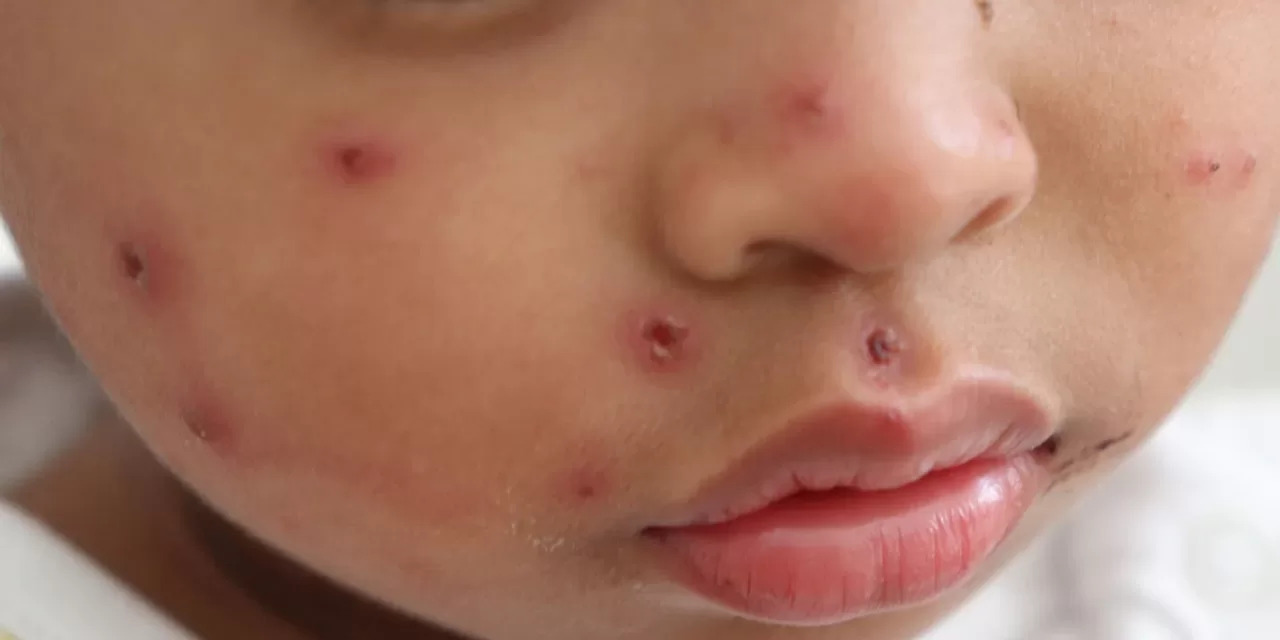
Maculopapular Rash: A red, blotchy rash that starts at the hairline and spreads downward over the face, trunk, and extremities.
-
Complications: Common complications include ear infections and severe diarrhea. More critical complications include pneumonia (the most common cause of death from measles in young children) and acute encephalitis (brain inflammation, which can cause permanent neurological damage or deafness).
So far in 2026, at least 151 hospitalizations have been recorded nationwide, particularly among infants under age 5. No deaths have been reported in the latest CDC dataset.
Erosion of Community Protection
The primary driver behind the multi-year surge is a decline in MMR coverage. To achieve community immunity (or herd immunity)—the threshold where enough of a population is immune to prevent sustained disease transmission—measles requires approximately 95% vaccination coverage.
According to CDC data, national MMR coverage among U.S. kindergartners for the 2024–2025 school year remained at 92.5%. While a 2.5% drop may sound small, in public health terms it creates localized “pockets of susceptibility” where the virus can enter and spread rapidly.
Herd Immunity Threshold (95%)
[███████████████████████████████████████████████░░░] 92.5% Current Coverage
                                                 ▲
                                         Coverage Gap (2.5%)
Infectious disease specialists emphasize that vaccine efficacy itself remains exceptionally robust. Two doses of the MMR vaccine are approximately 97% effective at preventing measles, while a single dose provides about 93% protection. Breakthrough infections in fully vaccinated individuals remain rare (4% of cases) and generally result in milder clinical illness.
Expert Perspectives and Public Health Concerns
Medical professionals outside federal agencies stress that this milestone represents an ongoing public health crisis driven by preventable gaps in immunization.
Dr. Eleanor Vance, an infectious disease epidemiologist not involved in the CDC report, noted that the high case numbers reflect systemic challenges:
“Measles is an unforgiving diagnostic marker for community health. It finds every unvaccinated person in a room. Seeing over 2,300 cases in seven months tells us that routine childhood vaccination systems are struggling to regain the ground lost over the past few years, exacerbated by vaccine hesitancy and misinformation.”
Public health researchers warn that if continuous transmission of the same viral strain persists in the U.S. for 12 consecutive months, the nation risks losing its official “measles elimination status,” a milestone originally achieved in 2000.
Limitations of Current Data
While CDC weekly tallies provide the most comprehensive national snapshot, public health researchers emphasize several epidemiological limitations:
-
Underreporting: Official figures rely on confirmed cases reported by state and local health departments. Individuals with mild symptoms who do not seek medical care, or those misdiagnosed with other viral rashes, are not captured.
-
Reporting Delays: Differences in laboratory processing times and state surveillance workflows mean local totals may lag behind real-time transmission rates.
-
Local Granularity: National numbers do not capture hyper-local dynamics, such as school-specific exemption rates, population movement, or regional access to healthcare, which dictate how fast an outbreak grows.
What Healthcare Providers and Readers Should Do
Public health agencies urge individuals and families to focus on verified preventive measures rather than panic.
-
Verify Immunization Status: Adults and parents should check medical records to ensure all family members have received the age-appropriate MMR doses (typically given at 12–15 months and 4–6 years of age).
-
Pre-Travel Planning: Individuals traveling internationally or to domestic areas experiencing active outbreaks should confirm their immunity status prior to departure.
-
Recognize Early Symptoms: If fever, cough, and red eyes develop following known exposure, stay home and contact a healthcare professional by phone before visiting a clinic, allowing staff to implement airborne isolation protocols.
Medical Disclaimer: This article is for informational purposes only and should not be considered medical advice. Always consult with qualified healthcare professionals before making any health-related decisions or changes to your treatment plan. The information presented here is based on current research and expert opinions, which may evolve as new evidence emerges.
References
- The Guardian. “US surpasses 2025’s record number of measles infections as cases climb.” Published July 24, 2026.