 0
0
 0
0
AHMEDABAD, India — On the solemn one-year anniversary of the devastating Air India flight AI171 crash that claimed 260 lives, the Gujarat state government announced a major ₹547 crore redevelopment plan to transform the tragedy’s epicenter into a state-of-the-art healthcare and medical education complex. The landmark project, unveiled Friday by Gujarat Health Minister Praful Pansheriya, will feature a highly specialized Paraplegia and Spine Hospital, a comprehensive rehabilitation center, and a dedicated physiotherapy college at the Meghaninagar crash site.
The initiative aims to address a severe shortage of specialized spinal care in western India while rebuilding critical medical infrastructure destroyed in the 2025 aviation disaster.
Reclaiming a Site of National Tragedy
On June 12, 2025, an Air India Boeing 787 Dreamliner crashed shortly after takeoff from Sardar Vallabhbhai Patel International Airport. The aircraft struck several buildings within the New Mental Campus, including the B.J. Medical College and nearby hostel complexes, claiming 241 lives onboard and 19 on the ground.
AI171 CRASH IMPACT (JUNE 12, 2025)
├── Total Casualties: 260 lives lost
├── Structural Damage: "Atulyam 1 to 4" hostel blocks declared unsafe
└── Displaced: 92 medical students evacuated post-disaster
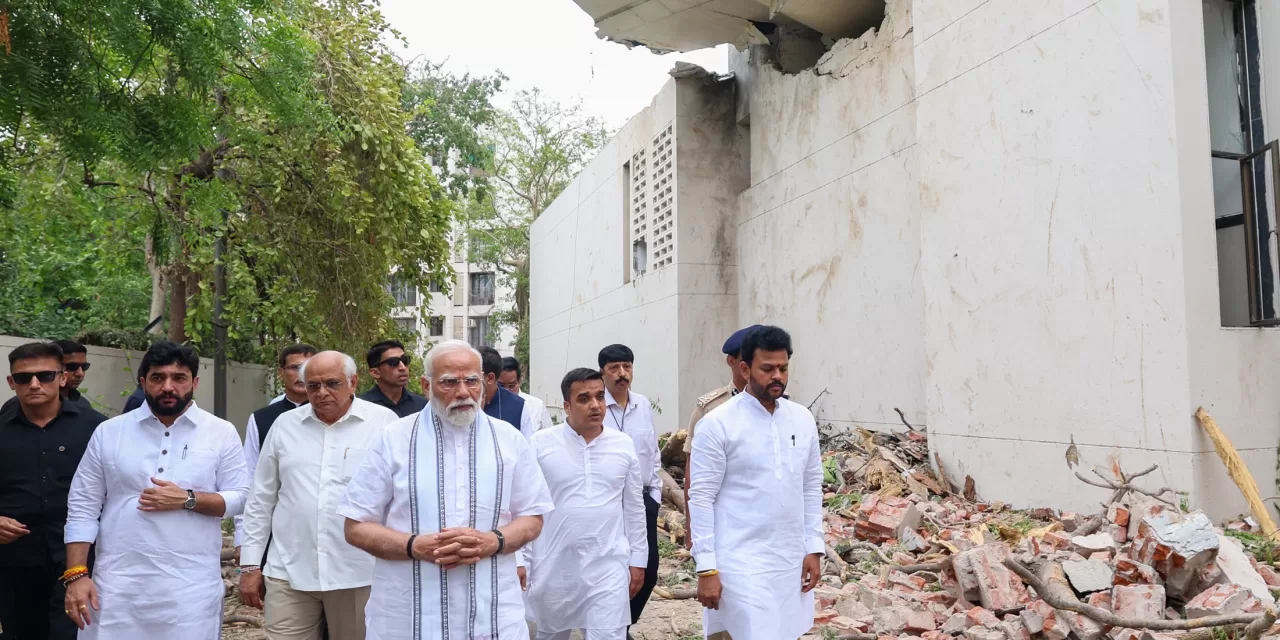
A subsequent structural audit declared the heavily damaged hostel blocks unsafe, necessitating their demolition. Rather than merely replacing the lost student housing, the government opted for a comprehensive overhaul of the 25,000-square-meter site.
Minister Pansheriya conceptualized the dual-purpose project as two distinct zones: a “Health Temple” focusing on clinical excellence and patient care, and an “Education Temple” dedicated to expanding medical training.
The Scale of the ₹547 Crore Medical Hub
The redevelopment splits funding across clinical services, advanced diagnostics, and academic infrastructure. Tata Airlines has contributed ₹53.12 crore toward the student housing portion of the project, with the remaining balance funded through state budgetary allocations.
| Facility | Allocated Budget | Architectural & Operational Highlights |
| Paraplegia & Spine Hospital Zone | ₹295 crore | 500-bed capacity, integrated physiotherapy college, specialized rehabilitation units. |
| Postgraduate Hostels | ₹192 crore | 8 new upgraded blocks (G+7 floors) featuring 510 units for married PG students. |
| Food & Drugs Laboratory | ₹50 crore | G+7 facility built to strict NABL national accreditation standards (3,100 sq. meters). |
| Undergraduate Housing & Dining | ₹10 crore | Expanded modern canteen and mess facilities designed to accommodate 800 students. |
Addressing India’s Invisible Crisis: Spinal Cord Injuries
The establishment of a dedicated spine hospital targets a profound public health vacuum. Data from the World Health Organization (WHO) indicates that between 250,000 and 500,000 individuals sustain spinal cord injuries (SCIs) globally each year.
In India, the reality is particularly stark: an estimated 1.5 million people live with permanent spinal injuries, with roughly 20,000 catastrophic new cases added annually.
A landmark 10-year epidemiological study conducted by the Indian Spinal Injuries Centre (ISIC) analyzed data from 1,537 patients to identify the primary drivers of these life-altering conditions:
-
Road Traffic Accidents (RTAs): 44.0%
-
Falls from Heights: 38.3%
-
Other Causes (including violence): 17.7%
“The addition of a specialized spine hospital in Gujarat will provide highly focused care for individuals with paraplegia (paralysis affecting the lower half of the body),” explained Dr. Rajesh Kumar, a senior orthopedic surgeon at Civil Hospital Ahmedabad, who is not involved in the government project. “Right now, patients in western India face immense barriers to accessing long-term, comprehensive rehabilitation.”
The Science of Timing: Why Early Rehabilitation Matters
For individuals surviving spinal trauma, the path to recovering mobility or independence depends heavily on rapid, intensive therapy.
A clinical study published in the Asian Spine Journal demonstrated that individuals with paraplegia who began targeted rehabilitation within six weeks of their injury achieved vastly superior functional and psychological outcomes compared to those with delayed interventions. Early therapy was directly linked to higher rates of eventual community reintegration and successful return to employment.
Advanced neurological and physical rehabilitation limits secondary medical complications, such as muscle atrophy (loss of muscle tissue) and pressure ulcers. Clinical tracking data from spinal rehabilitation centers reveals the clear, measurable benefits of structured long-term therapy protocols:
PATIENT IMPROVEMENT RATES FOLLOWING STRUCTURED REHABILITATION
[███████████████████████████████████] 78% Improved Balance
[██████████████████████████████] 65% Spasticity Reduction
[██████████████████████████] 58% Respiratory Optimization
Public Health Implications and Academic Continuity
Public health experts view the integration of a teaching infrastructure directly alongside a specialized hospital as a critical victory for sustainable healthcare.
Dr. Anjali Mehta, a public health specialist at the All India Institute of Medical Sciences (AIIMS), who is not affiliated with the project, highlighted its long-term systemic benefits.
“This layout ensures that the next generation of physical therapists and physicians receive immediate, hands-on training in cutting-edge spinal cord rehabilitation,” Dr. Mehta noted. “We aren’t just building a facility; we are actively populating a sustainable pipeline of highly skilled practitioners.”
Project Caveats and Ethical Considerations
Despite the clear medical utility, the redevelopment plan faces notable localized friction. Several families of the victims of flight AI171 have formally petitioned the Ministry of Civil Aviation, questioning whether converting a mass casualty site into a bustling medical and residential campus is appropriate, with some advocating for a dedicated memorial space instead.
Furthermore, public health analysts caution against viewing a single facility as a universal cure for a systemic national deficit. While a ₹547 crore investment significantly upgrades local capabilities, a solitary state hospital can only absorb a fraction of India’s 20,000 annual new spinal injury cases. The ultimate success of the institution will depend on its ability to maintain high quality-of-care standards under heavy patient volumes.
Addressing these concerns, Health Minister Pansheriya emphasized the government’s respectful intent during his anniversary address:
“First of all, I pay heartfelt tribute to all the departed souls and offer my condolences to their family members. The entire site where the plane crash took place belongs to the government. After detailed discussions, we have decided to construct two temples at that site—temples of health and education—ensuring this ground serves to save and better human lives.”
Timeline Moving Forward
The state government has announced an accelerated construction timeline to quickly restore the student housing capacity lost in the disaster. Tenders for the upgraded G+7 hostel complexes are slated for completion within weeks, with student housing projected to open within a year. The specialized medical facilities and the Food & Drugs laboratory will follow in phases.
Ultimately, the project represents a determined effort to reshape a landscape of profound loss into a sanctuary of long-term healing and scientific learning.
Medical Disclaimer
This article is for informational purposes only and should not be considered medical advice. Always consult with qualified healthcare professionals before making any health-related decisions or changes to your treatment plan. The information presented here is based on current research and expert opinions, which may evolve as new evidence emerges.
References
- https://www.ndtv.com/health/gujarat-plans-spine-hospital-and-medical-education-facilities-at-ahmedabad-crash-site-11626675