 0
0
 0
0
NEW DELHI — A quiet public health crisis is unfolding across India’s urban landscapes, and its primary targets are young adults. Medical professionals across the nation report a sharp, unprecedented surge in individuals in their 20s and 30s presenting with clinically high blood pressure. According to a landmark report published on July 11, 2026, by the Deccan Herald, this shifting demographic has alarmed public health experts. The primary concern is not merely the rising volume of cases, but the insidious nature of the condition: an overwhelming majority of these young adults exhibit absolutely no symptoms, leaving millions completely unaware that they are living with a silent risk factor for catastrophic cardiovascular disease.
The Modern Drivers: Hidden Salt, Sitting, and Stress
For decades, hypertension—chronically elevated blood pressure—was perceived primarily as an ailment of older age, an inevitable milestone of aging. However, contemporary data reveals that the fast-paced, highly demanding modern Indian lifestyle is actively accelerating this biological clock.
Epidemiological data shows that India’s younger population is spending significantly more time in sedentary routines, relying heavily on outsourced meals, and consuming vast quantities of processed and packaged foods. These convenience items are frequently laden with hidden sodium, a primary physiological driver of arterial fluid retention and elevated blood pressure.
This issue is not entirely new, but its visibility has reached a critical tipping point. Peer-reviewed literature, including the historic Screening India’s Twin Epidemic (SITE) study, previously identified a hypertension prevalence of roughly 12% among individuals under the age of 40. Over the past decade, that baseline has expanded dramatically, particularly within intense corporate environments. For instance, specialized workplace cohorts focusing on young Information Technology (IT) professionals in India revealed that an astonishing 31% were hypertensive, while an additional 45.7% were classified as prehypertensive.
The primary lifestyle catalysts driving this shift include:
-
Chronic Workplace Stress: Unrelenting professional deadlines and high-pressure work environments trigger prolonged cortisol and adrenaline release, which constricts blood vessels.
-
Severe Sleep Deprivation: Irregular shift work and screen time disrupt circadian rhythms, preventing the natural “dipping” of blood pressure that occurs during deep sleep.
-
Substance Use: Escalating rates of smoking and frequent alcohol consumption among young urbanites cause acute and chronic spikes in vascular resistance.
-
Obesity and Inactivity: The pairing of calorie-dense diets with minimal physical movement alters metabolic function, putting immense structural strain on the circulatory system.
Redefining the Thresholds: The Numbers Game
Part of the reason hypertension is capturing headlines today is that international medical guidelines have become progressively more proactive in defining cardiovascular risk.
Under the stringent guidelines established by the American College of Cardiology (ACC) and the American Heart Association (AHA), hypertension is formally diagnosed at 130/80 mm Hg or higher. Conversely, many traditional global frameworks and local practices still utilize the classic 140/90 mm Hg diagnostic cutoff.
For the average individual, this discrepancy carries profound practical consequences. A young adult who feels perfectly healthy and considers their blood pressure reading to be merely “borderline” may already be classified in a definitive medical risk category. This requires immediate clinical follow-up, particularly if the individual presents with co-morbidities such as obesity, diabetes, chronic kidney disease, or a strong maternal or paternal family history of early heart attacks.
The Public Health Toll of an Untreated Epidemic
The World Health Organization (WHO) characterizes hypertension as a persistent, systemic medical condition that quietly degrades the structural integrity of the human body. When left unmanaged, the continuous mechanical pressure permanently damages blood vessels feeding the heart, brain, kidneys, and eyes.
The scale of this challenge in India is staggering. The WHO estimates that approximately 220 million people in India currently live with hypertension. Even more concerning is the management gap: only 12% of these individuals have their blood pressure successfully controlled within safe parameters.
India's Hypertension Landscape (WHO Estimates)
Total Affected:   [████████████████████████████████████████] 220 Million
Controlled (12%): [████] 26.4 Million
If this epidemiological shift into younger age brackets continues unchecked, the long-term societal and economic toll will be severe. Developing chronic cardiovascular and renal complications during early, prime working years threatens to place an overwhelming burden on India’s healthcare infrastructure and families alike.
Clinical Perspectives: Essential vs. Secondary Causes
Independent medical experts emphasize that the overwhelming majority of cases diagnosed in young adults fall under the category of essential hypertension. This means the elevated readings are not caused by an underlying organ defect, but rather by a complex web of environmental habits, metabolic changes, and genetic predispositions.
However, physicians warn against making assumptions. When diagnosing a patient in their early 20s, healthcare providers must perform a thorough differential diagnosis to rule out secondary hypertension. These are elevated readings directly caused by an identifiable, distinct medical condition, such as:
-
Renal Artery Stenosis or Chronic Kidney Disease: Narrowing of the arteries that deliver blood to the kidneys.
-
Endocrine Disorders: Conditions like pheochromocytoma or Cushing’s syndrome, which cause hormone overproduction.
-
Medication-Induced Hypertension: Underlying elevation triggered by certain over-the-counter drugs, oral contraceptives, or stimulants.
Limitations in Current Data
While the upward trend is undeniable, senior epidemiologists urge a balanced interpretation of the data. The majority of clinical studies evaluating young-adult hypertension in India are observational studies. By design, observational research can establish a strong correlation (an association) between processed food or stress and high blood pressure, but it cannot definitively prove direct cause-and-effect in isolation.
Furthermore, a single elevated blood pressure reading obtained during a high-stress moment or an rushed doctor’s visit does not equal a diagnosis of chronic hypertension. A definitive clinical diagnosis requires standardized, repeated measurements captured on separate occasions, or verified via ambulatory blood pressure monitoring (ABPM) over a 24-hour cycle.
Actionable Steps: What You Can Do
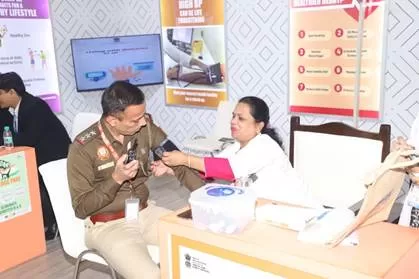
For health-conscious consumers, the overarching takeaway from modern medical consensus is simple: do not wait for physical symptoms to appear. Because hypertension is overwhelmingly asymptomatic until a major vascular event occurs, proactive screening is your primary line of defense.
If you are a young adult living in an urban environment—particularly if you balance a high-stress career, struggle with regular exercise, or have a family history of heart disease—incorporate these evidence-based habits into your routine:
-
Schedule Regular Screenings: Check your blood pressure at least once a year using a validated, properly calibrated upper-arm cuff.
-
Audit Your Sodium Intake: Actively read food labels. Minimize the consumption of highly processed snacks, instant noodles, pickles, and commercial sauces containing hidden salt.
-
Prioritize Movement: Aim for the WHO-recommended minimum of 150 minutes of moderate-intensity aerobic exercise (such as brisk walking, cycling, or swimming) every week.
-
Protect Your Sleep: Establish a structured sleep schedule, aiming for 7–8 hours of restful sleep per night to allow your cardiovascular system time to recover.
Reference Section
Study & Institutional Citations
- https://www.deccanherald.com/health/hypertension-among-young-indians-is-increasing-heres-whats-driving-it-4070235
Medical Disclaimer
Medical Disclaimer: This article is for informational purposes only and should not be considered medical advice. Always consult with qualified healthcare professionals before making any health-related decisions or changes to your treatment plan. The information presented here is based on current research and expert opinions, which may evolve as new evidence emerges.