 0
0
 0
0
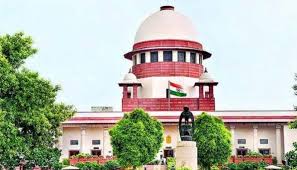
NEW DELHI — In a move that could reshape the immediate future of advanced medical care and education across India, the Supreme Court of India has intervened in a high-stakes standoff over elite medical training. The apex court has directed the State Government of Tamil Nadu to immediately notify federal authorities of 151 vacant super-specialty medical seats.
The order, passed on May 29, 2026, in the case of Tamilvani & Ors. vs. State of Tamil Nadu & Ors., seeks to rescue these highly coveted positions from going entirely to waste during a critical academic cycle. However, the directive has triggered a high-stakes legal chess match, forcing the Medical Counselling Committee (MCC) to abruptly pause Round-2 of the National Eligibility cum Entrance Test for Super-Specialty (NEET-SS) counselling. As the state government mounts a legal counter-offensive, the future of 151 doctor-trainees—and the long-term pipeline of the country’s specialized healthcare workforce—hangs in the balance.
The Legal Logjam: Why the Court Intervened
The current crisis stems from a systemic conflict between state-level seat retention and the national pool. Super-specialty seats—which train post-graduate doctors to earn Doctorate of Medicine (DM) and Master of Chirurgiae (M.Ch) degrees—represent the absolute pinnacle of clinical qualification in India.
According to an official notice issued by the Directorate General of Health Services (DGHS) and the MCC, the Supreme Court disposed of a writ petition by ordering Tamil Nadu to surrender 151 unfilled super-specialty seats back to the federal pool so they can be distributed via the All-India merit list. The court’s intent was pragmatic: ensure that premier training positions do not sit empty in a country severely starved for advanced medical experts.
However, the legal machinery ground to a halt almost immediately. By June 5, 2026, the State of Tamil Nadu officially informed the MCC that it had filed a review petition to contest the order, hoping to retain control of the seats under its own state quota. Caught between a mandatory supreme directive and an active state challenge, the MCC took the drastic step of pausing the ongoing Round-2 counselling phase to explore its legal remedies.
Anatomy of an Emptiness: What 151 Seats Actually Cost Public Health
To a casual observer, a dispute over 151 administrative slots might seem like bureaucratic white noise. But in the ecosystem of advanced medicine, 151 super-specialty seats represent an astronomical volume of healthcare capacity.
When a single DM or M.Ch position remains vacant, the loss is compounding:
-
Lost Institutional Capacity: Teaching hospitals lose a highly capable resident doctor who would otherwise provide round-the-clock, high-level patient care under senior faculty supervision.
-
The Specialization Deficit: India faces a profound, lopsided distribution of advanced clinical specialists. Super-specialties encompass life-saving fields such as cardiology (heart care), neurology (brain disorders), surgical oncology (cancer surgery), and nephrology (kidney care).
Data from the World Health Organization (WHO) repeatedly highlights that while India has made strides in its core doctor-to-population ratio, the scarcity of sub-specialists in non-metropolitan areas remains a severe bottleneck. Every unallocated seat means one fewer specialist entering the medical registry three years down the line.
Voices from the Frontline: Frustration and Fractured Careers
For the young doctors who have spent years preparing for the grueling NEET-SS exam, the administrative pause is a source of acute anxiety.
“We are living in limbo,” says Dr. Rohan Krishnan, an aspirant who has been tracking the counselling updates. “Many of us have paused our practices, resigned from junior residency positions, or held off on major life decisions waiting for the Round-2 allotments. Every day of delay pushes back our training and adds financial stress.”
The medical community online has erupted with criticism, with many candidates pointing out that a prolonged delay threatens the “timely completion” of the academic calendar, a parameter heavily guarded by the National Medical Commission (NMC). Conversely, local state representatives in Tamil Nadu argue that the state has heavily invested infrastructure funds into these medical colleges and that the seats should naturally benefit the local state quota ecosystem first.
Limitations, Counterarguments, and Open Questions
The primary counterargument for state-level resistance relies on the concept of regional healthcare equity. State authorities often argue that local doctors are more likely to stay and serve within the state’s rural or public healthcare systems after graduation, whereas all-India candidates frequently migrate back to their home states or corporate setups upon completing their degrees.
Furthermore, the legal finality of this situation remains entirely open. Because Tamil Nadu has actively sought a judicial review of the May 29 order, the ultimate seat matrix is volatile. The MCC’s counselling schedule will almost certainly require complete recalibration depending on how the Supreme Court responds to the state’s review application. If the court holds firm, a wave of new choices will open up for top-rankers nationwide; if the state prevails, the pool shrinks instantly.
What This Means for Everyday Health-Conscious Consumers
For the general public, this legal battle serves as a stark reminder of how deeply medical education policy influences the quality of bedside care. The availability of a neurologist when a family member suffers a stroke, or a pediatric cardiologist for a newborn with a heart defect, is dictated directly by whether these clinical slots are successfully utilized or left vacant due to administrative friction.
While the immediate outcome will not alter hospital operations today, it serves as an architectural blueprint for the safety net available to Indian patients tomorrow. For now, candidates and healthcare observers alike must watch the official DGHS portal as the legal system decides whether these 151 vital spots will be utilized or lost to red tape.
Reference Section
- https://medicaldialogues.in/news/education/medical-admissions/neet-ss-counselling-2025-supreme-court-directs-tamil-nadu-to-surrender-151-vacant-seats-to-aiq-172927
Medical Disclaimer
Medical Disclaimer: This article is for informational purposes only and should not be considered medical advice. Always consult with qualified healthcare professionals before making any health-related decisions or changes to your treatment plan. The information presented here is based on current research and expert opinions, which may evolve as new evidence emerges.