 0
0
 0
0
In the global battle against infectious diseases, the focus is often on the next breakthrough vaccine or a more potent antibiotic. However, a growing body of evidence suggests that the most powerful weapon against one of the world’s oldest killers, tuberculosis (TB), may not be found in a pharmacy, but on a dinner plate.
New data and expert analyses indicate that addressing undernutrition—a condition affecting nearly 800 million people globally—could prevent as many as 2.3 million new cases of TB every year. This revelation shifts the paradigm of TB control from a purely pharmaceutical challenge to a broader public health and socioeconomic mission. As the World Health Organization (WHO) intensifies its “End TB Strategy,” the integration of food security and nutritional support is emerging as a non-negotiable pillar of success.
The “Syndemic”: How Hunger and TB Fuel Each Other
The relationship between undernutrition and TB is what scientists call “bidirectional,” meaning they feed into each other in a devastating cycle. Undernutrition, specifically a low Body Mass Index (BMI), weakens the body’s immune defenses, making it significantly easier for the Mycobacterium tuberculosis bacterium to take hold and progress from a latent (dormant) infection to an active, life-threatening disease.
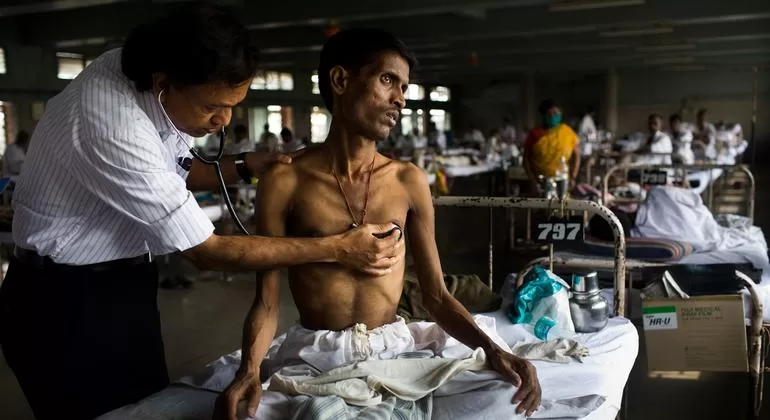
Once a person develops active TB, the disease itself causes “wasting”—a rapid loss of weight and appetite—which further depletes the body’s nutritional stores. This creates a lethal feedback loop: the hungrier the body, the stronger the TB; the stronger the TB, the hungrier the body becomes.
“Undernutrition is arguably the most important modifiable risk factor for TB globally,” says Dr. Anita Gupta, a public health specialist. “We have spent decades focusing on the bacteria, but we have neglected the soil in which that bacteria grows. If the body is starved, the immune system simply cannot mount the defense necessary to stay healthy, regardless of how many pills we provide.”
The Evidence: 2.3 Million Preventable Cases
The scale of this connection was recently quantified in a landmark systematic review published in the Cochrane Database of Systematic Reviews. Analyzing 51 cohort studies involving more than 27 million participants, researchers concluded that undernutrition probably doubles the risk of developing active TB.
Key Statistical Findings:
-
Global Impact: In 2022, undernutrition contributed to approximately 2.2 million new TB cases.
-
Risk Multiplication: Individuals with a low BMI are roughly twice as likely to develop active disease compared to those with adequate nutrition.
-
The Potential: Eliminating undernutrition could reduce the global TB burden by over 20%, a figure that rivals the impact of smoking cessation or HIV control in certain regions.
Beyond the Pharmacy: Clinical Necessity
For healthcare professionals, these findings suggest that nutritional assessment should be as standard as a chest X-ray. When a patient is diagnosed with TB, their caloric and protein intake should be evaluated immediately.
Current research suggests that nutritional supplementation—providing energy-dense food or supplements—can improve recovery rates and reduce mortality. However, the benefits extend beyond the individual. By strengthening the immune systems of vulnerable populations before they get sick, communities can build a “nutritional shield” that slows the transmission of the bacteria.
“We must move beyond treating only the bacterial infection,” explains Dr. Gupta. “Nutritional status is a cornerstone of recovery. Without addressing the underlying hunger, our pharmacological interventions often face unnecessary hurdles in achieving long-term cure rates.”
Structural Hurdles and the “Dual Burden”
Despite the clear evidence, implementing a nutrition-first TB strategy is fraught with challenges. Most global health systems operate in “silos.” Infectious disease clinics rarely have the budget or infrastructure to provide food, while food security programs are often disconnected from medical surveillance.
Furthermore, many low- and middle-income countries face a “dual burden of disease.” While they struggle with undernutrition and infectious diseases like TB, they are also seeing a rise in obesity and diabetes—another significant risk factor for TB. This complexity requires a sophisticated, multi-sectoral approach that involves:
-
Policy Reform: Aligning agricultural policies with public health goals.
-
Integration: Embedding nutritional screening into primary care and TB clinics.
-
Economic Support: Poverty reduction initiatives that ensure the most vulnerable can afford nutrient-dense foods.
What This Means for You: Protecting the “Immune Shield”
While much of the TB-undernutrition crisis is concentrated in resource-poor settings, the biological lesson applies to everyone. A resilient immune system depends on a consistent intake of micronutrients and protein.
For the general public, maintaining a healthy BMI and a balanced diet is a foundational step in preventing a wide range of infectious diseases. While a good diet is not a “cure” for TB—which still requires rigorous antibiotic treatment—it is a critical layer of protection. If you or a loved one are managing a chronic condition that affects appetite or weight, consulting a healthcare provider or a registered dietitian is essential to ensure your “immune shield” remains intact.
Medical Disclaimer
This article is for informational purposes only and should not be considered medical advice. Always consult with qualified healthcare professionals before making any health-related decisions or changes to your treatment plan. The information presented here is based on current research and expert opinions, which may evolve as new evidence emerges.
References
- https://www.ptinews.com/story/national/eliminating-undernutrition-could-prevent-up-to-2-3-million-tb-cases-globally-study/3656850