 0
0
 0
0
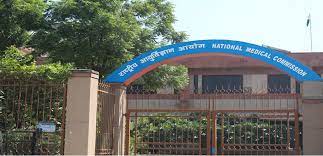
NEW DELHI — In a stinging critique of the administrative health of India’s healthcare oversight, a Parliamentary Standing Committee has flagged a severe staffing crisis within the National Medical Commission (NMC). The panel warned that a “hollowed-out” regulator—currently operating with zero sanctioned whole-time members in its autonomous boards—threatens to undermine the quality of medical education and patient safety across the nation.
The report, presented to Parliament and recently highlighted by Medical Dialogues, reveals that while India has aggressively expanded its medical seat capacity to record highs, the body responsible for policing those standards is struggling to keep its own offices filled.
A Regulatory Vacuum: The Key Findings
The Department-related Parliamentary Standing Committee on Health and Family Welfare expressed “serious concern” over the sheer volume of vacancies at the NMC. According to the report, the vacancy list is not merely a matter of a few administrative gaps but a systemic absence of leadership:
-
Zero for Eight: All eight sanctioned posts for whole-time members across the four autonomous boards remain vacant.
-
Leadership Gaps: There are 17 vacant statutory posts and 36 vacant encadred posts.
-
The “Outsourced” Regulator: The panel found the NMC is heavily reliant on 236 contractual and outsourced staff, including consultants and data entry operators, to manage core functions.
“The dependence on temporary staff reduces accountability and weakens institutional continuity,” the panel noted, urging the Union Health Ministry to initiate a “time-bound recruitment drive” to restore the commission’s sanctioned strength.
Why This Matters for Public Health
The NMC was established under the National Medical Commission Act, 2019, replacing the embattled Medical Council of India (MCI). Its mandate is massive: it oversees undergraduate and postgraduate education, conducts inspections of medical colleges, maintains the Indian Medical Register, and enforces ethical standards for millions of physicians.
The Act created four autonomous boards—Undergraduate Medical Education, Postgraduate Medical Education, Medical Assessment and Rating, and Ethics and Medical Registration—designed to operate with expert, full-time leadership.
The Quality vs. Quantity Mismatch
India’s medical landscape has seen unprecedented growth. Current government data shows:
-
818 recognized medical colleges
-
128,976 MBBS seats
-
85,020 postgraduate seats
“We are essentially building a high-speed train while the control room is empty,” says Dr. Anita Sharma, a veteran medical educator not involved in the report. “Expansion is vital for India’s doctor-patient ratio, but without a fully staffed regulator to conduct rigorous, unbiased inspections, we risk a dilution of standards that could take decades to fix.”
The “Hollow” Regulator: Expert Perspectives
Health policy experts warn that the implications of these vacancies extend far beyond “administrative housekeeping.” When whole-time member posts are empty, decision-making often falls to ad-hoc committees or temporary staff who may lack the long-term institutional memory required for complex policy shifts.
For the general public, the stakes are high. The World Health Organization (WHO) has long maintained that a skilled health workforce requires robust regulation to ensure universal health coverage. If the “Medical Assessment and Rating Board” lacks leadership, the scrutiny of new colleges—many of them private institutions—may become a “tick-box” exercise rather than a qualitative audit.
“Medical regulation is, at its core, a function of patient safety,” explains a public health analyst. “If the regulator cannot properly oversee how a doctor is trained, the patient is the one who eventually pays the price in the form of uneven care quality.”
Context and Counter-Arguments
While the parliamentary panel’s report is damning, the Health Ministry and the NMC have previously noted that appointments to high-level statutory bodies involve rigorous vetting and legal procedures that can cause delays.
Furthermore, some supporters of the current administration argue that the transition from the MCI to the NMC was a gargantuan task and that the use of consultants allows the commission to tap into specialized expertise without the “red tape” of permanent bureaucracy. However, the standing committee countered this by stating that core regulatory functions should not be left to those without long-term accountability to the state.
What This Means for You
For the average citizen, a “staffing gap” at a Delhi-based commission might seem distant. However, it affects the healthcare ecosystem in three tangible ways:
-
Student Security: For aspiring doctors and their families, the NMC’s ability to monitor colleges ensures that the degrees students work for—and often pay heavily for—remain globally recognized and locally credible.
-
Physician Accountability: The Ethics and Medical Registration Board is responsible for handling complaints against doctors. Vacancies here can lead to backlogs in justice for patients who have suffered from medical negligence.
-
Future Care: As India strives to meet WHO benchmarks for health workforce density, the “quality” of the new crop of doctors depends entirely on the “rigor” of their examiners.
The Road Ahead
The parliamentary panel has called for an urgent, time-bound roadmap to fill these vacancies. As the 172nd Report makes clear, the NMC’s “transparency and flexibility”—the very goals of the 2019 Act—depend on a stable, permanent, and expert leadership.
As India continues its journey toward becoming a global hub for medical education and “heal-in-India” medical tourism, the world will be watching to see if its regulator is as robust as the institutions it oversees.
References
-
Parliamentary Report: 172nd Report of the Department-related Parliamentary Standing Committee on Health and Family Welfare (2026), as cited in Medical Dialogues.
-
Primary News Source: Medical Dialogues. “NMC regulatory architecture suffers amid vacancies, zero whole-time members: Parliamentary panel calls for time-bound recruitment.” April 13, 2026.
Medical Disclaimer: This article is for informational purposes only and should not be considered medical advice. Always consult with qualified healthcare professionals before making any health-related decisions or changes to your treatment plan. The information presented here is based on current research and expert opinions, which may evolve as new evidence emerges.