 0
0
 0
0
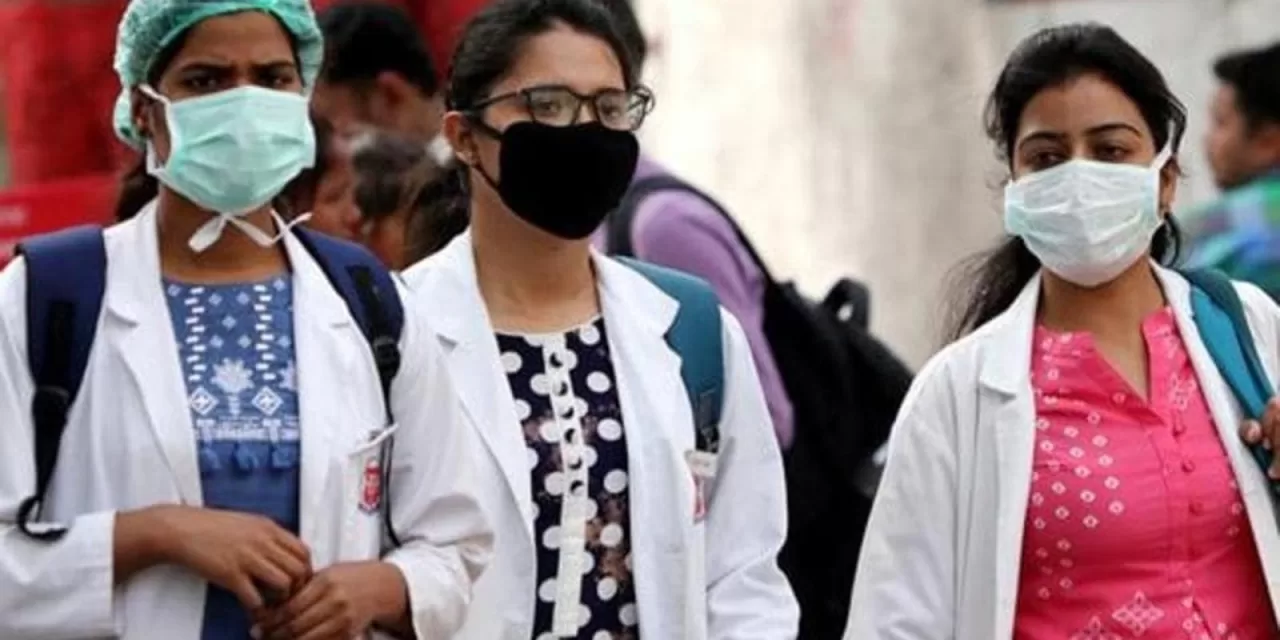
HYDERABAD, Telangana — Junior doctors and medical student representatives in Telangana are formally urging state and national medical authorities to restructure the final-year medical licensing examinations. The Telangana Junior Doctors Association (T-JUDA) has submitted a formal representation to the Kaloji Narayana Rao University of Health Sciences (KNRUHS), requesting that the university approach the National Medical Commission (NMC) to split the final MBBS Part II (Phase IV) examinations into two distinct phases. Student advocate bodies warn that the current consolidated examination model places an “extraordinary academic and psychological burden” on learners, escalating risks for severe burnout and mental health crises among future healthcare professionals.
The Proponents’ Argument: Decompressing a 12-Subject Marathon
Under the existing framework mandated by KNRUHS, final-year medical students face a high-stakes assessment schedule condensed into a single block. The regular examination timetable requires the 2022–23 batch to sit for a gauntlet of theory papers covering 12 subjects under the Phase IV curriculum. This includes intensive testing in Ear, Nose, and Throat (ENT) and Ophthalmology alongside major clinical disciplines—General Medicine, General Surgery, Pediatrics, and Obstetrics & Gynecology (OB-GYN). The core clinical subjects alone require upwards of 210 teaching hours each, demanding a volume of simultaneous revision that T-JUDA labels as practically unmanageable.
To alleviate this pressure, T-JUDA has proposed a phased alternative:
-
Phase 1 (Autumn): Conduct separate university examinations for ENT and Ophthalmology.
-
Phase 2 (Spring): Convene the core clinical subject examinations (General Medicine, General Surgery, Pediatrics, and OB-GYN) several months later.
Medical student representatives emphasize that recent cohorts have endured examination schedules stretching up to six weeks. During this period, students must concurrently manage commuting, active ward duties, high-volume reading material, and practical clinical examinations (vivas) without adequate intervals for cognitive rest or revision. Advocates, many of whom are interns and recent graduates who navigated the same system, argue that splitting the schedule provides a necessary buffer against acute sleep deprivation and mental exhaustion.
The Weight of Medical Training on Mental Health
The push for structural curriculum changes arrives amidst growing public health concerns regarding the psychological well-being of medical trainees in India. Data from the medical community consistently highlights that the rigorous path of medical education carries an inherent toll.
A comprehensive narrative review published in the Indian Journal of Psychiatry revealed that Indian medical students experience disproportionately higher rates of stress, anxiety, and depression compared to age-matched peers in non-medical fields. Investigators identified heavy academic workloads, immediate exam-related pressures, and grueling clinical posting hours as the primary drivers of psychological morbidity.
Furthermore, a cross-sectional study conducted at a South Indian medical college found that over 50% of surveyed medical students reported moderate-to-severe stress throughout the academic year. Notably, these stress levels peaked during examination periods and intensive clinical rotations, validating student assertions that high-density testing periods act as acute psychological stressors.
How the Current Exam Pattern Exists: The NExT Disconnect
The highly consolidated final-year exam block was originally introduced to align with the NMC’s Competency-Based Medical Education (CBME) curriculum. The foundational objective was to standardize national assessments and prepare students for the long-proposed National Exit Test (NExT)—a unified examination intended to serve as both a final MBBS licensing exam and a postgraduate entrance test. The design grouped Phase IV subjects into a single summative assessment block to mirror the comprehensive competencies that NExT aimed to evaluate.
However, the national implementation of NExT has faced repeated administrative deferrals. The NMC clarified that NExT would not be rolled out immediately, opting instead to conduct national mock tests and pilot programs over the coming years to refine the infrastructure. While the conceptualized NExT framework relies on a distinct two-step division—Step 1 focusing on theory and Step 2 on practical, clinical skills—the deferred rollout leaves current batches, including Telangana’s 2022–23 cohort, bound to the massive, unified local university examination pattern without the national systemic structures that initially justified it.
Adding to student frustrations is a perceived systemic inconsistency across different batches. The NMC’s revised curriculum for incoming medical batches has already decoupled ENT and Ophthalmology from the final-year curriculum, shifting their primary assessment back to Phase III. Consequently, the 2022–23 batch is left in a transitional bottleneck: they must clear these subjects alongside the core final-year clinical disciplines in a single block, even though the original rationale for the consolidation no longer applies to their cohort.
Expert Perspectives: Rote Memorization vs. Deep Competency
Medical educators note that the structure of high-stakes testing directly influences the quality of medical training. Dr. Sandeep Khanna, a seasoned teaching faculty member at a private medical college in Hyderabad and a past university examiner, suggests that high-density testing windows can inadvertently compromise educational depth.
“When students are forced to prepare for 10 to 12 distinct medical subjects simultaneously, they often pivot from deep, competency-based comprehension to surface-level memorization and pattern-based revision,” Dr. Khanna observed. “They study to pass the immediate paper rather than digesting the clinical nuances.”
Dr. Khanna notes that distributed, phased assessments allow students to better synthesize clinical exposure with theory:
“In core areas like General Medicine and General Surgery, real-world case exposure is vital. If a student has the cognitive breathing room to revisit a case after a clinical posting before facing an examination, it reinforces long-term clinical reasoning. When everything is compressed into a multi-week marathon, that critical educational feedback loop breaks down.”
Conversely, university administrative bodies point out significant structural hurdles to altering schedules. Senior exam-committee professors, speaking on the condition of anonymity, caution that splitting final exams introduces substantial logistical friction. State-level health universities operate with a fixed pool of certified external examiners per medical specialty. Spreading assessments across multiple distinct blocks throughout the academic year increases the administrative burden on already overstretched faculty and disrupts academic calendars across affiliated institutions.
Public Health Implications and Workforce Resilience
The debate over evaluation schedules extends beyond campus welfare; it impacts long-term public health infrastructure. The quality of undergraduate medical assessment directly shapes the clinical readiness and resilience of the oncoming healthcare workforce.
A landmark report by the World Health Organization (WHO) on health-workforce education underscored that medical assessment systems should ideally mirror real-world clinical practice, utilize continuous feedback loops, and avoid rigid, “high-stakes” single-event examinations that foster acute anxiety and superficial learning. Restructuring the final MBBS block into distributed summative evaluations aligns closely with these international recommendations.
Furthermore, mitigating chronic stress during undergraduate training is crucial for sustaining the long-term professional workforce. A systematic review published in JAMA Internal Medicine demonstrated that institutional interventions aimed at optimizing medical student workloads and reducing exam-related stress were directly associated with lower rates of student burnout and depression. Crucially, reduced burnout scores among trainees correlate with improved clinical performance, sharper diagnostic accuracy, and better patient-safety outcomes during subsequent residency and practice. Designing balanced assessment schedules may therefore serve as a preventive public health measure, protecting both the physician’s well-being and patient care standards.
Limitations of the Phased Model
Despite the potential psychological benefits, medical education analysts emphasize that a phased examination model is not a flawless remedy. Critics warn that splitting the final MBBS Part II block could inadvertently delay graduation timelines, particularly for students who must clear supplementary or backlog papers from the first phase before progressing.
Additionally, operating an un-synchronized, two-phase examination pattern for one specific transitional batch while maintaining standard regulations for older or newer cohorts risks creating administrative inconsistencies within university examination cells.
There is also a relative scarcity of localized, large-scale empirical evidence demonstrating that simply altering university exam dates directly translates into superior clinical practice down the line. While clinical psychology literature confirms that spaced-testing and distributed practice improve knowledge retention in controlled classroom and residency environments, these findings have not been extensively mapped across large-scale, university-wide MBBS exit formats in India. Experts recommend that if KNRUHS or regional universities pilot a phased evaluation model, the transition should be paired with rigorous, longitudinal data collection tracking student stress metrics, academic performance, and subsequent clinical ratings during their internship phases.
What This Means for Communities and Families
For current medical students across Telangana, the adoption of T-JUDA’s proposal would mean a structural shift in their daily study dynamics. A segmented examination window would allow students to compartmentalize their revision—mastering ENT and Ophthalmology first before dedicating concentrated energy to the complex clinical triage of medicine, surgery, and OB-GYN.
This structural relief extends to the families of medical students. Guardians frequently report witnessing severe sleep deprivation, acute anxiety spikes, and isolated personal relationships within the household during the traditional six-week MBBS examination period. A phased schedule, while still highly demanding, could smooth out these intense academic spikes into predictable, manageable study-and-rest cycles.
For prospective medical applicants and their families looking at admissions in Telangana, these developments underscore that evaluation methodologies remain in a state of active evolution. As the NMC continues to fine-tune the CBME framework and prepare for eventual national licensing overhauls, students entering the medical stream must remain adaptable and closely monitor official KNRUHS and NMC portals for updated regulatory compliance directives.
As of late May 2026, KNRUHS administration has not issued a formal public decision regarding the modification of the final MBBS Part II examination timeline for the 2022–23 batch. The medical community continues to watch the university’s notification portal for a definitive response to the junior doctors’ representation.
Medical Disclaimer
This article is for informational purposes only and should not be considered medical advice. Always consult with qualified healthcare professionals before making any health-related decisions or changes to your treatment plan. The information presented here is based on current research and expert opinions, which may evolve as new evidence emerges.
References
- https://medicaldialogues.in/news/education/no-next-yet-why-one-combined-exam-telangana-doctors-urge-knruhs-nmc-to-split-mbbs-exam-into-2-phases-171202