 0
0
 0
0
Published: July 28, 2026
AMARAVATI, Andhra Pradesh — In an ambitious effort to shift the paradigm of public medicine from reactive treatment to proactive prevention, Andhra Pradesh Chief Minister N. Chandrababu Naidu officially launched the pilot phase of “Sanjeevani” on July 26, 2026. The tech-enabled public health initiative integrates artificial intelligence (AI), mobile diagnostics, and centralized digital records to establish a unified ecosystem for the state’s 56 million residents. By linking primary health centers, rural clinics, and major tertiary hospitals into a single operational framework, the state aims to catch chronic non-communicable diseases (NCDs) long before symptoms manifest.
From Reactive Care to Predictive Prevention
For decades, public health delivery across developing economies has suffered from a structural flaw: patients generally seek care only after a disease has progressed to an advanced stage. This reactive model drives up treatment costs, strains hospital infrastructure, and contributes to poor long-term outcomes.
Project Sanjeevani attempts to invert this dynamic through three core pillars:
-
Preventive Health: Broad-spectrum mass screening to detect risk factors early.
-
Predictive Analytics: Aggregating patient data to flag disease patterns across specific demographics.
-
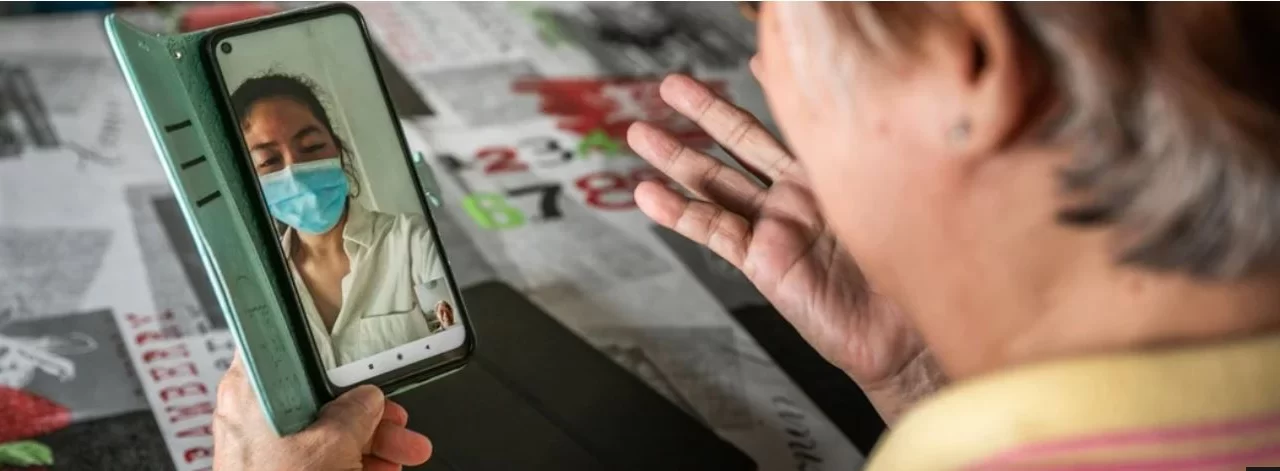
Curative Synchronization: Connecting diagnostics, teleconsultations, and electronic prescriptions into a seamless continuum.
Under the framework, every citizen is assigned a unique digital health ID linked to the national Ayushman Bharat Health Account (ABHA). This system consolidates personal medical histories, laboratory reports, previous prescriptions, and risk indicators into an instantly accessible profile.
                                  [ Citizen ABHA Health ID ]
                                              │
                      ┌───────────────────────┼───────────────────────┐
                      ▼                       ▼                       ▼
            [ Doorstep Diagnostics ]   [ Real-Time Data ]     [ AI Consultations ]
             74 tests via 104 units    PHCs & major centers    Doctor-on-demand
                      │                       │                       │
                      └───────────────────────┼───────────────────────┘
                                              ▼
                                [ Unified Digital Platform ]
Key Features and Field Performance
To overcome traditional geographic barriers to healthcare, the government approved ₹162 crore (approximately $19.5 million) to deploy 904 mobile medical units equipped for doorstep diagnostics. These units offer 74 distinct medical tests, delivering results directly to residents’ mobile devices via secure messaging applications within 48 hours.
The state has set a target to screen 5.64 million individuals over the next 12 months, focusing primarily on non-communicable conditions like Type 2 diabetes, hypertension, and cardiovascular disease. Early metrics from the initial pilot in Kuppam and surrounding areas in Chittoor district demonstrate significant initial scale:
| Metric | Pilot Output (Kuppam / Chittoor) |
| Comprehensive Health Accounts Created | 1,051,000+ |
| Scheduled Appointments | 362,000 |
| Completed Consultations | 248,000 |
| Medications Distributed | 1,470,000+ |
| Laboratory Tests Processed | 31,555+ |
The initiative is backed by technical partnerships with philanthropic and technical organizations, including the Tata Trusts and the Bill & Melinda Gates Foundation, which are providing expertise in data architecture and machine learning integration. State budgetary support for healthcare reached ₹19,305 crore this fiscal year, supported by a ₹2,601 crore grant from the 15th Finance Commission.
Public Health Implications and Financial Relief
According to data from India’s National Health Accounts, out-of-pocket medical expenditure accounts for approximately 48% of total health spending in the country. Catastrophic health events remain a primary driver of household debt and poverty. By catching conditions early at the primary care level, Sanjeevani could sharply reduce the need for high-cost emergency hospitalizations.
“Digital health records combined with AI-driven analytics can help identify high-risk populations, track disease trends, and enable targeted interventions before conditions become severe,” noted Dr. K. Srinath Reddy, a public health specialist and former director of the Public Health Foundation of India. “If implemented effectively, Sanjeevani could serve as a model for other states aiming to operationalize digital health at scale.”
Furthermore, by standardizing electronic health records, the initiative integrates directly with the central government’s Ayushman Bharat Digital Mission (ABDM), aiding the broader push toward a interoperable national health grid.
Implementation Challenges and Critical Perspectives
While public health advocates have welcomed the project’s preventive focus, health policy experts emphasize that technology alone cannot replace fundamental health infrastructure.
                  ┌──────────────────────────────────────────────┐
                  │          Implementation Challenges           │
                  └──────────────────────┬───────────────────────┘
                                         │
         ┌───────────────────┬───────────┴───────┬───────────────────┐
         ▼                   ▼                   ▼                   ▼
  [ Data Security ]  [ Digital Literacy ]  [ Connectivity ]  [ Infrastructure ]
  Needs strict DADP  Assistance needed     Network gaps in   Doctor shortages &
  Act compliance     for rural populations remote areas      supply chain issues
-
Data Privacy and Security: Centralizing sensitive medical records creates potential cyber-vulnerabilities. Ensuring end-to-end encryption, strict user authentication, and full compliance with India’s Digital Personal Data Protection (DPDP) Act remains critical.
-
Digital Literacy: A significant portion of rural and elderly residents may struggle to navigate digital platforms, requiring community health workers (ASHAs) to act as intermediaries.
-
Network Infrastructure: Real-time data synchronization depends on stable internet connectivity and reliable power, both of which face intermittent disruption in remote regions.
-
Systemic Health Capacity: A digital alert identifying a high-risk patient is only effective if a qualified clinician, necessary pharmaceuticals, and referral channels are available to act on it.
“Technology alone cannot fix systemic issues like doctor shortages, inadequate primary care infrastructure, or supply chain bottlenecks,” explained Dr. Anjali Sharma, a health policy researcher at the Centre for Policy Research. “Sanjeevani must be part of a broader strategy that strengthens human resources, drug availability, and referral systems.”
Looking Ahead: The Roadmap to Statewide Expansion
For residents across Andhra Pradesh, the system promises faster access to remote consultations, reduced repetition of diagnostic tests, and earlier warnings for silent chronic conditions.
“We are working with the goal of achieving a healthy Andhra Pradesh, and ‘Sanjeevani’ follows predictive, preventive, and curative means for protecting public health,” Chief Minister Naidu stated during the rollout event.
The government plans a full statewide rollout by mid-August 2026, aiming to integrate nearly 49.6 million ABHA IDs and 120 million individual medical records into the AI platform. As the project expands, public health researchers will be closely monitoring whether digital-first prevention can successfully reduce hospital admission rates and ease the financial burden of chronic disease on families.
Medical Disclaimer
This article is for informational purposes only and should not be considered medical advice. Always consult with qualified healthcare professionals before making any health-related decisions or changes to your treatment plan. The information presented here is based on current research and expert opinions, which may evolve as new evidence emerges.
References
-
Economic Times Health. “CM Naidu launches Sanjeevani pilot project, unveils tech-driven healthcare vision for Andhra.” July 24, 2026. https://health.economictimes.indiatimes.com