 0
0
 0
0
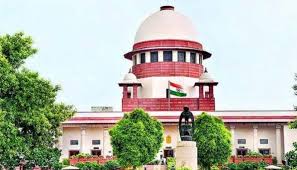
NEW DELHI — In a move that has sent shockwaves through the medical community, India’s Supreme Court has demanded a formal explanation from the National Board of Examinations in Medical Sciences (NBEMS) regarding a drastic reduction in qualifying cutoffs for the NEET PG 2025 exam. On February 6, 2026, a bench led by Justices Pamidighantam Sri Narasimha and Alok Aradhe signaled deep skepticism over the decision to lower eligibility bars—in some cases to sub-zero scores—to fill over 18,000 vacant postgraduate seats. The Court emphasized that it must be satisfied that no “devious reason” underlies a policy change that critics argue prioritizes institutional revenue over the caliber of India’s future specialists.
The Controversy: Quality vs. Quantity
The National Eligibility cum Entrance Test for Postgraduates (NEET PG) is the gatekeeper for specialized medical education in India, governing access to over 52,000 seats across MD, MS, and Diploma programs. Traditionally, the exam maintains rigorous benchmarks to ensure that only candidates with a solid foundational knowledge proceed to high-stakes specialties like neurosurgery or cardiology.
However, following the second round of counseling for the 2025-26 academic year, the Ministry of Health and NBEMS faced a dilemma: 18,000 seats remained empty. Most of these vacancies are in non-clinical branches like anatomy or biochemistry, or in high-cost private institutions.
In response, the NBEMS issued a notice on January 13, 2026, slashing the qualifying percentiles to unprecedented lows. Most notably, the cutoff for reserved categories was dropped to the 0th percentile, effectively meaning a candidate could qualify with a score as low as -40 out of 800.
The Shift in Standards
| Category | Original Percentile (Marks) | Revised Percentile (Marks) | Total Drop |
| General / EWS | 50th (276) | 7th (103) | -173 Marks |
| General-PwBD | 45th (255) | 5th (90) | -165 Marks |
| SC / ST / OBC | 40th (235) | 0th (-40) | -275 Marks |
Legal and Ethical Challenges
The Supreme Court’s intervention stems from a Public Interest Litigation (PIL) filed by the United Doctors Front, led by President Dr. Lakshya Mittal. Senior Advocate Gopal Sankaranarayanan, representing the petitioners, argued that the move is a blatant violation of the National Medical Commission (NMC) Act.
The crux of the legal argument is simple: the rules allow for a reduction in cutoffs only if there are insufficient qualified candidates to fill available seats. However, with 1.28 lakh candidates already qualifying under the original 50th percentile for only 52,000 seats, the “scarcity” argument appears mathematically flawed.
“Our conscience has to be satisfied that there is no devious reason,” the Supreme Court bench remarked during the hearing. The Court expressed concern that such a drastic reduction might be designed to benefit private medical colleges—where seats often cost crores of rupees—rather than serving the public interest.
Expert Perspectives: A House Divided
The medical fraternity remains largely united in its opposition to the “zero-percentile” logic.
“Diluting standards without data-driven justification risks compromising future healthcare quality and erodes public trust,” stated Dr. Devaunshi Kaul, President of the Federation of Resident Doctors’ Association (FORDA). “We are essentially saying that someone who scored negative marks is fit to become a specialist surgeon. This is a direct threat to patient safety.”
Conversely, some officials within the NMC argue that the move is a pragmatic attempt to prevent “national resource wastage.” They contend that since every candidate is already a qualified MBBS doctor, the NEET PG rank is merely a tool for seat allotment, not a measure of basic competency.
Dr. Suneela Garg, a renowned public health expert not involved in the litigation, offers a middle-ground perspective: “While empty seats represent wasted infrastructure, postgraduate training demands extreme rigor. Marginal relaxations are common, but dropping to the 7th or 0th percentile is an extreme that requires robust transparency to justify.”
Public Health Implications
The ripples of this decision extend far beyond the walls of medical colleges. For the general public, the quality of specialist care hangs in the balance.
Potential Benefits:
-
Filling the Specialist Gap: Thousands of seats in rural areas and essential non-clinical sectors (like Microbiology and Pathology) could be filled, potentially strengthening the diagnostic backbone of the country.
-
Resource Optimization: Preventing the vacancy of 18,000 seats ensures that government-funded infrastructure and faculty are fully utilized.
Potential Risks:
-
Dilution of Competency: Critics warn that lower entry barriers could lead to a decline in the quality of specialists. If the “gate” is left wide open, the rigor of the subsequent three-year training may not be enough to compensate for a lack of foundational knowledge.
-
Global Reputation: Indian medical graduates are currently respected worldwide. Massive standard dilutions could lead to international bodies questioning the validity of Indian postgraduate degrees.
-
Commercialization: If the move primarily helps wealthy students with low scores buy seats in expensive private colleges, it undermines the principle of meritocracy and equity in healthcare.
The Path Forward
While the Supreme Court has allowed counseling for the third round to proceed to avoid further delays in the academic calendar, the NBEMS and the Union Government are now under a legal microscope. They must submit affidavits detailing the exact rationale behind these specific numbers.
Advice for Stakeholders
-
For Aspiring Doctors: Continue to focus on merit-based ranks. While more candidates are now “eligible,” the actual allotment still follows the merit list. Ensure all biometric verifications are completed as required.
-
For Patients and the Public: Be aware that the quality of healthcare is a systemic issue. Advocacy for maintaining high medical standards through organizations like the Indian Medical Association (IMA) remains crucial for long-term safety.
-
For Institutions: Use the filled vacancies to bolster research and clinical output, ensuring that even those entering through relaxed criteria are held to the highest possible training standards during their residency.
The final verdict, expected later this month, will likely redefine the balance between educational accessibility and the uncompromising standards required for the practice of medicine.
Medical Disclaimer
Medical Disclaimer: This article is for informational purposes only and should not be considered medical advice. Always consult with qualified healthcare professionals before making any health-related decisions or changes to your treatment plan. The information presented here is based on current research and expert opinions, which may evolve as new evidence emerges.
References
-
Medical Dialogues. (2026, February 6). Must be no ‘devious reason’: Supreme Court directs NBE to explain NEET PG 2025 reduced cutoff. Link