 0
0
 0
0
SRINAGAR — In a move set to reshape the healthcare landscape of Northern India, Jammu and Kashmir Chief Minister Omar Abdullah announced a sweeping expansion of medical education during the Union Territory’s budget presentation on February 6, 2026. The initiative introduces 548 new academic seats across various medical disciplines and confirms that the highly anticipated AIIMS Kashmir in Awantipora will begin operations by June 2026.
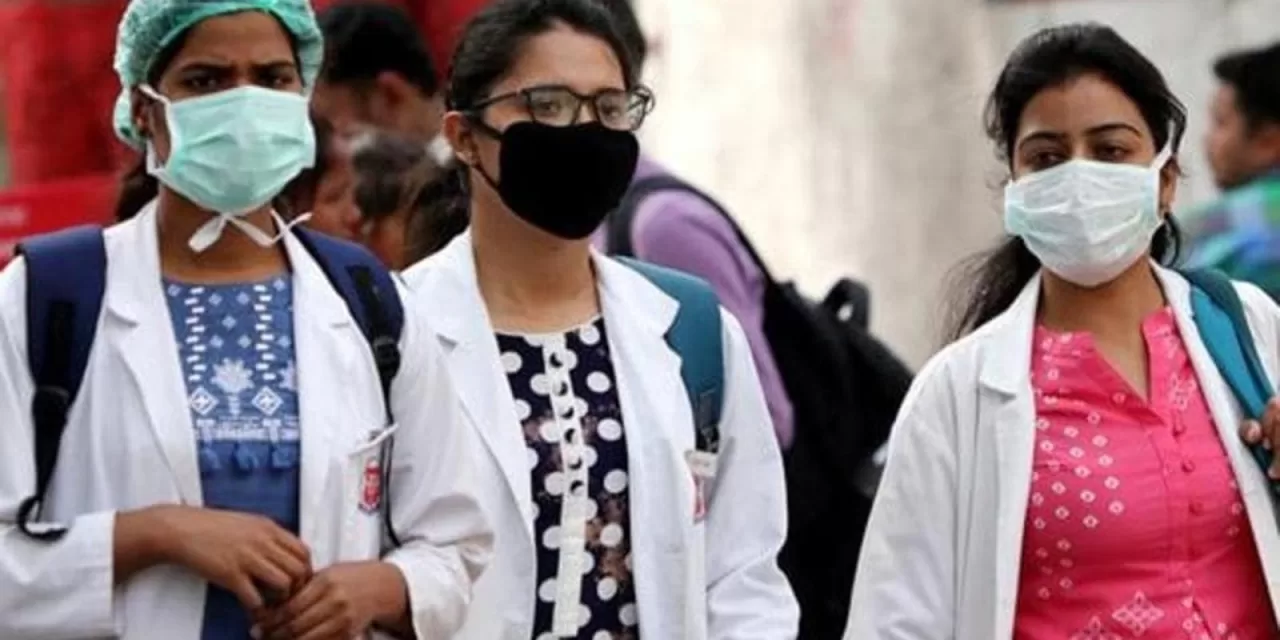
This strategic surge in training capacity is designed to dismantle the persistent “doctor-to-patient” imbalance in the region and provide residents with access to super-specialty care that previously required arduous travel to New Delhi or beyond.
Expanding the Pipeline: The Numbers Behind the Growth
The 2026 expansion targets several tiers of medical expertise, ensuring a holistic boost to the workforce. The 548 new seats are categorized as follows:
-
340 MBBS seats (Undergraduate)
-
128 Postgraduate Medical seats (MD/MS)
-
34 Postgraduate Ayurveda seats
-
46 Diplomate of National Board (DNB) seats
This development builds upon a momentum started in late 2025, when the National Medical Commission (NMC) approved 190 MBBS seats across five government colleges. Since 2014, the total number of MBBS seats in the UT has climbed from a modest 500 to a robust 1,725.
“These additions are not just numbers on a ledger; they represent a future where we produce more local doctors,” says Dr. Syed Abid Rashid Shah, Secretary of Health and Medical Education in J&K. “By training our youth within the UT, we reduce the ‘brain drain’ and create a workforce more likely to serve in our rural and underserved districts.”
AIIMS Kashmir: A New Era of Super-Specialty Care
While the seat increase addresses the quantity of doctors, the operationalization of AIIMS Kashmir addresses the quality of specialized care. Modeled after the success of AIIMS Jammu—which treated over 260,000 patients in its inaugural year—the Awantipora facility is on a strict timeline:
-
March–April 2026: Launch of Outpatient Department (OPD) services.
-
June–July 2026: Commencement of Inpatient (IPD) services and the first batch of MBBS classes.
-
December 2026: Full operational capacity, including specialized wings for oncology, cardiology, and neurology.
Dr. S. Mohanty, Executive Director of AIIMS Kashmir, noted during a recent progress review that the phased rollout is essential to ensure that integrated services meet the high clinical standards expected of the AIIMS brand.
Addressing the “Rural Vacuum”
The urgency of this expansion is underscored by stark statistics. As of early 2026, Jammu and Kashmir faces nearly 10,000 vacant posts in public health facilities. The doctor-to-population ratio currently stands at 1:4,840, significantly wider than the national average and far from the World Health Organization’s recommended 1:1,000.
In rural pockets, the shortage is even more acute. A 2020-21 report highlighted a deficit of 577 doctors at Primary Health Centers (PHCs) and 127 specialists at Community Health Centers (CHCs).
By increasing postgraduate and DNB seats, the government aims to fill “specialist gaps” in critical fields like radiology, anesthesia, and psychiatry—areas where the Doctors Association Kashmir (DAK) has long reported severe shortages.
A National Context: Successes and Stumbling Blocks
India has seen a massive national expansion of medical education, growing from 83,275 MBBS seats in 2020 to 115,900 in 2025. However, J&K’s initiative comes at a time when the national medical landscape is facing a “demand-supply paradox.”
Despite having 2.4 million NEET aspirants, over 2,800 MBBS seats went vacant nationwide last year. Experts attribute this to the exorbitant costs of private medical education and an uneven distribution of colleges. By focusing on government medical colleges, J&K is attempting to make medical education more equitable and accessible to students from diverse socio-economic backgrounds.
Expert Commentary and Counterarguments
While the medical community has largely welcomed the move, some independent voices urge caution regarding the speed of expansion.
“Increasing seats is an investment in resilience,” notes an analysis from Health Voice, “but numbers alone don’t heal patients. The challenge lies in faculty recruitment. We cannot let the quality of education be diluted by a lack of experienced professors to mentor these new students.”
Furthermore, the DAK has pointed out that while Jammu has seen steady growth, parts of the Kashmir division still lag in consultant-to-population ratios. There are also calls for “bonded service” policies, ensuring that graduates from these subsidized seats serve a mandatory period in rural areas to balance the geographic distribution of healthcare.
The Public Health Bottom Line
For the 14 million residents of Jammu and Kashmir, the implications of this budget are practical and profound:
-
Reduced Referrals: Patients with complex conditions like cancer or heart disease will no longer be forced to travel to Delhi, reducing the financial and emotional burden on families.
-
Maternal and Infant Health: A higher density of doctors in rural blocks is expected to lower maternal mortality rates by providing quicker interventions during birth complications.
-
Traditional Medicine Integration: The addition of Ayurveda seats aligns with the national “One Health” initiative, offering patients a choice between specialized modern medicine and traditional wellness systems.
Looking Ahead
As J&K positions itself as an emerging medical hub, the success of this 548-seat expansion will depend on the government’s ability to fill existing vacancies and maintain infrastructure standards. If the June 2026 launch of AIIMS Kashmir holds to its schedule, it may serve as the “anchor institution” needed to stabilize the region’s healthcare system for decades to come.
Medical Disclaimer: This article is for informational purposes only and should not be considered medical advice. Always consult with qualified healthcare professionals before making any health-related decisions or changes to your treatment plan. The information presented here is based on current research and expert opinions, which may evolve as new evidence emerges.
References
-
Medical Dialogues. (2026, Feb 6). JnK to add 340 MBBS, 128 PG medical, 34 Ayurveda, 46 DNB seats, AIIMS Kashmir to open by June 2026. * Rising Kashmir. (2025, Sep 8). AIIMS Awantipora to be operational by end of 2026: CM. * PIB. (2025, Nov 19). Massive healthcare push positions J&K as emerging medical hub. * India Today. (2025, Sep 3). Medical Commission approves 190 new MBBS seats in 5 government colleges of J&K. * Times of India. (2025, Aug 6). Thousands of medical seats are going vacant: What’s really wrong with MBBS admissions?