 0
0
 0
0
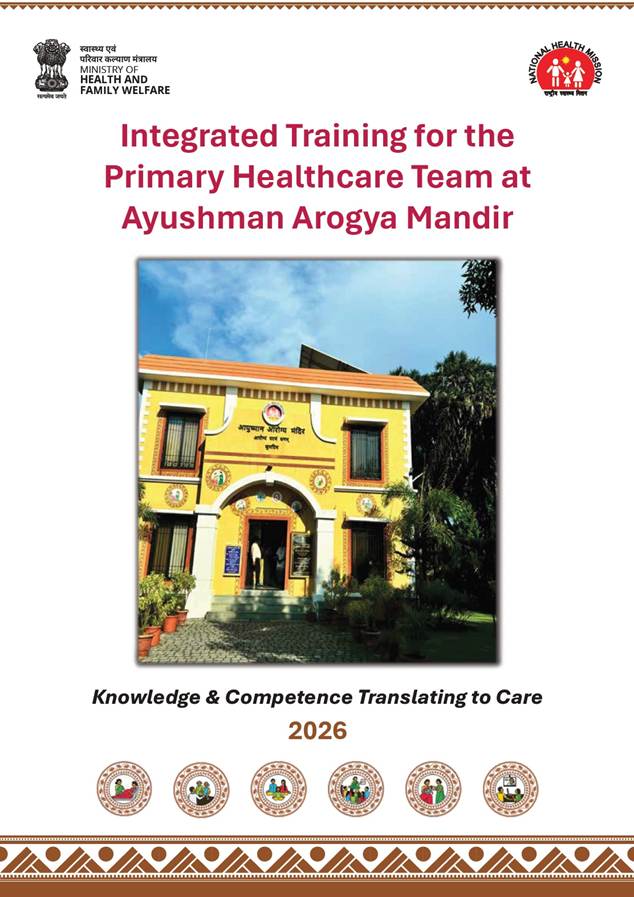
NEW DELHI – In a move signaled to redefine the landscape of rural and community medicine, the Union Ministry of Health and Family Welfare has launched a landmark initiative: the Integrated Training for Primary Healthcare Teams. Announced by Union Health Minister Shri Jagat Prakash Nadda during the 10th National Summit on “Innovation and Inclusivity,” the program marks a transition from fragmented, program-specific training to a unified, competency-driven framework designed to bolster India’s frontline medical workforce.
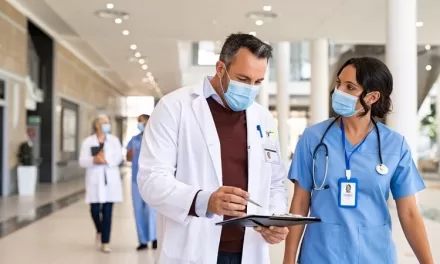
The initiative aims to standardize the skills of millions of healthcare workers, including Community Health Officers (CHOs), Auxiliary Nurse Midwives (ANMs), and Accredited Social Health Activists (ASHAs). By integrating various medical protocols into a single pedagogical stream, the government intends to ensure that the “last mile” of Indian society receives care that is not only accessible but clinically superior and empathetic.
From Fragmentation to Integration: A New Era for Ayushman Arogya Mandirs
For decades, India’s primary healthcare workers were often trained in “silos”—attending separate sessions for maternal health, TB control, or non-communicable diseases. While effective for specific programs, this approach often left providers struggling to manage patients with multiple, overlapping health needs.
The new Integrated Training Model changes this trajectory. It utilizes a structured framework to equip teams at Ayushman Arogya Mandirs (AAMs)—formerly known as Health and Wellness Centres—with a comprehensive toolkit.
“The shift toward an integrated model is essential for the evolution of our primary health system,” says Dr. Arvinder Singh, a public health policy expert (not involved in the initiative’s drafting). “When a frontline worker can screen for hypertension while simultaneously advising on maternal nutrition and early cancer detection, the efficiency of the entire system multiplies.”
Empowering ‘Nari Shakti’ at the Frontlines
Perhaps the most significant demographic impact of this initiative lies in its gender focus. Women constitute over 70% of India’s primary healthcare workforce. By providing advanced, competency-based training, the initiative directly aligns with the national vision of Nari Shakti (Women Power).
The program leverages digital infrastructure, specifically the iGOT Karmayogi platform, to provide continuous learning. This allows ASHAs and ANMs—many of whom balance domestic responsibilities with community service—to upgrade their skills via mobile technology, making professional development more accessible than ever before.
Key Statistics of the Primary Workforce:
-
Total Representation: Women make up >70% of the frontline health cadre.
-
Scale: Millions of ASHAs and ANMs serve as the first point of contact for over 1.4 billion people.
-
Goal: 100% competency-based certification for all primary health teams by 2030.
Clinical Implications and Public Health Impact
The Union Health Ministry emphasizes that this is more than just an educational reform; it is a strategic maneuver to reduce the burden on tertiary hospitals like AIIMS.
By strengthening the “gatekeeper” function of primary care, the government hopes to:
-
Improve Early Detection: Better-trained teams can identify non-communicable diseases (NCDs) like diabetes and hypertension before they require expensive hospitalizations.
-
Enhance Trust: A confident, knowledgeable worker builds greater rapport with the community, increasing the uptake of vaccines and institutional births.
-
Drive Viksit Bharat @2047: A healthy population is a prerequisite for India’s goal of becoming a developed nation by its centenary of independence.
“True progress is people-centric,” Prime Minister Narendra Modi stated regarding the vision. “Access must be assured to the last person at the last mile.”
Challenges and the Road Ahead
While the framework is robust, independent health observers note potential hurdles. “The success of integrated training depends heavily on the quality of the digital infrastructure in remote areas,” notes a report from the Observer Research Foundation (ORF). Furthermore, the transition from classroom-based learning to a competency-driven model requires rigorous assessment to ensure that “training” actually translates into “clinical skill.”
To address this, the ministry has integrated Jan Arogya Samitis (People’s Health Committees) to provide community-level feedback, ensuring that the healthcare delivered meets the actual needs of the local population.
What This Means for You
For the average citizen, this reform suggests that a visit to a local Ayushman Arogya Mandir will soon feel more professionalized. Instead of being referred to a distant city hospital for basic diagnostic follow-ups, patients can expect their local CHO or ANM to have the skills to manage a wider array of health concerns directly within the village or neighborhood.
As India moves toward the Sustainable Development Goals (SDGs), the integration of its frontline forces represents a significant step in ensuring that “Universal Health Coverage” is a reality rather than just a policy slogan.
Reference Section
Sources and Citations:
-
Government of India: Press Information Bureau (PIB) Delhi. “Union Health Ministry Launches Integrated Training for Primary Healthcare Teams.” Posted 08 May 2026.
Medical Disclaimer: This article is for informational purposes only and should not be considered medical advice. Always consult with qualified healthcare professionals before making any health-related decisions or changes to your treatment plan. The information presented here is based on current research and expert opinions, which may evolve as new evidence emerges.