 0
0
 0
0
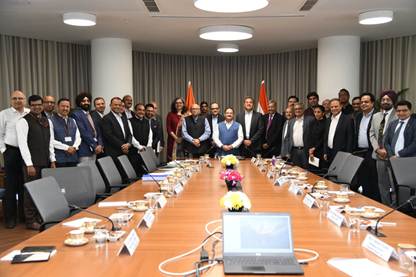
NEW DELHI – In a high-stakes meeting at Kartavya Bhawan on April 23, 2026, Union Minister of Chemicals & Fertilizers, Shri J.P. Nadda, met with 25 top industry leaders to finalize a strategic growth roadmap for India’s chemicals and petrochemicals sector. While the primary objective is to scale the industry to $1.5 trillion by 2047, the aggressive expansion has sparked a parallel debate among public health experts regarding the long-term medical and environmental implications for the Indian population.
The meeting, attended by CEOs from giants such as Reliance Industries, Tata Chemicals, and UPL Group, focused on navigating the West Asian crisis and diversifying supply chains. However, as the government pushes for “Atmanirbhar Bharat” (Self-Reliant India), medical professionals are calling for a “health-first” approach to industrialization.
The Trillion-Dollar Ambition
The chemicals and petrochemicals sector is currently valued at approximately $220 billion, serving as the backbone for essential industries including pharmaceuticals, nutraceuticals, and agriculture. The government’s roadmap is ambitious:
-
Target 2040: $1 trillion valuation.
-
Target 2047: Over $1.5 trillion valuation.
To achieve this, the Union Budget 2026–27 recently introduced a new scheme to establish three dedicated Chemical Parks with an initial allocation of ₹600 crore. These parks aim to utilize a “plug-and-play” model, which Minister Nadda suggests will provide a level playing field and mitigate external risks like those currently seen in West Asian trade routes.
Public Health: The Hidden Cost of Growth?
While the economic benefits are clear, the medical community remains cautious. The chemicals produced in these hubs—ranging from basic polymers to complex agrochemicals—are essential but potentially hazardous.
“As we scale up manufacturing, we must simultaneously scale our occupational health infrastructure,” says Dr. Arpit Sharma, an environmental health specialist not involved in the government proceedings. “The petrochemical industry historically carries risks of respiratory disorders, dermal allergies, and long-term exposure to volatile organic compounds (VOCs).”
Research published in MDPI Processes (2025) highlights that 43% of industrial accidents in this sector are related to fire or explosions, but the “silent” health risks—such as cumulative worker fatigue and exposure to toxic leakage—account for significant long-term morbidity. Experts argue that the growth roadmap must include mandatory “Health Impact Assessments” (HIAs) alongside economic projections.
Balancing Resilience and Safety
Minister Nadda invited industry suggestions to bolster resilience, particularly in light of global supply chain disruptions. He emphasized that the government would work “hand-in-hand” with industry leaders. However, public health advocates suggest this partnership should extend to the Ministry of Health.
| Sector Sub-category | Key Health/Environmental Consideration |
| Agrochemicals | Pesticide toxicity and groundwater contamination. |
| Petrochemicals | Respiratory impact of ethylene and benzene exposure. |
| Specialty Chemicals | Handling of endocrine disruptors and carcinogenic dyes. |
Potential Limitations and Counterarguments
The industry argues that modern “Green Chemistry” and Carbon Capture, Utilization, and Storage (CCUS) technologies—supported in the 2026 Budget—will mitigate these risks. Industry leaders at the meeting pointed out that domestic manufacturing reduces the carbon footprint associated with long-range shipping and ensures that chemicals are produced under India’s increasingly stringent environmental regulations.
Conversely, environmental groups point to the “cluster effect.” While Chemical Parks concentrate infrastructure, they also concentrate pollutants. Ensuring that the shared environmental compliance facilities (SECF) mentioned in the 2026 Budget are actually robust enough to handle $1 trillion worth of output is a primary concern for local communities living near proposed sites.
What This Means for You
For the average consumer, the growth of this sector means more affordable access to domestically produced medicines, fertilizers, and consumer goods. However, it also necessitates a higher level of public health literacy.
“The expansion of the chemical sector is a double-edged sword,” notes Dr. Sharma. “It brings economic prosperity, but also increases the prevalence of industrial chemicals in our ecosystem. Transparency in how these companies manage waste and worker safety is non-negotiable for public trust.”
As India marches toward its Viksit Bharat 2047 goal, the success of the chemicals sector will likely be measured not just by its contribution to the GDP, but by its ability to grow without compromising the biological health of its citizens.
Medical Disclaimer: This article is for informational purposes only and should not be considered medical advice. Always consult with qualified healthcare professionals before making any health-related decisions or changes to your treatment plan. The information presented here is based on current research and expert opinions, which may evolve as new evidence emerges.
References
Official Sources & Studies:
-
Press Information Bureau (PIB). (2026, April 23). Union Minister J.P. Nadda Meets with Industry Leaders to Chart Growth Roadmap for Chemicals & Petrochemicals Sector. [PRID: 2255014].