 0
0
 0
0
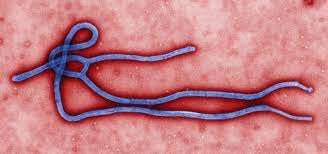
BUNIA, DEMOCRATIC REPUBLIC OF THE CONGO — A major Ebola outbreak centered in the northeastern Democratic Republic of Congo (DRC) is spreading far faster than official metrics indicate. First declared in mid-May 2026 and driven by the rare Bundibugyo virus species, the epidemic has severely outpaced local surveillance. World Health Organization (WHO) officials issued a stark warning this week, stating that true case numbers are likely two to four times higher than government tallies suggest, with a staggering number of new infections occurring entirely outside known contact lists.
The Detection Gap: Unseen Transmission Chains
Official government data currently place the number of confirmed infections at approximately 1,792, with 625 recorded deaths. However, sophisticated statistical modeling and test-positivity analyses conducted by the WHO and partner agencies reveal a profound “detection gap.”
In an interview with Reuters, WHO Emergencies Director Chikwe Ihekweazu highlighted a deeply concerning epidemiological trend in Ituri province, the current epicenter of the crisis. Around the city of Bunia, roughly 80% of newly confirmed patients have no established epidemiological link to existing case lists. When four out of five new patients cannot be traced back to an active case, it indicates that the virus is circulating silently and unchecked within the community.
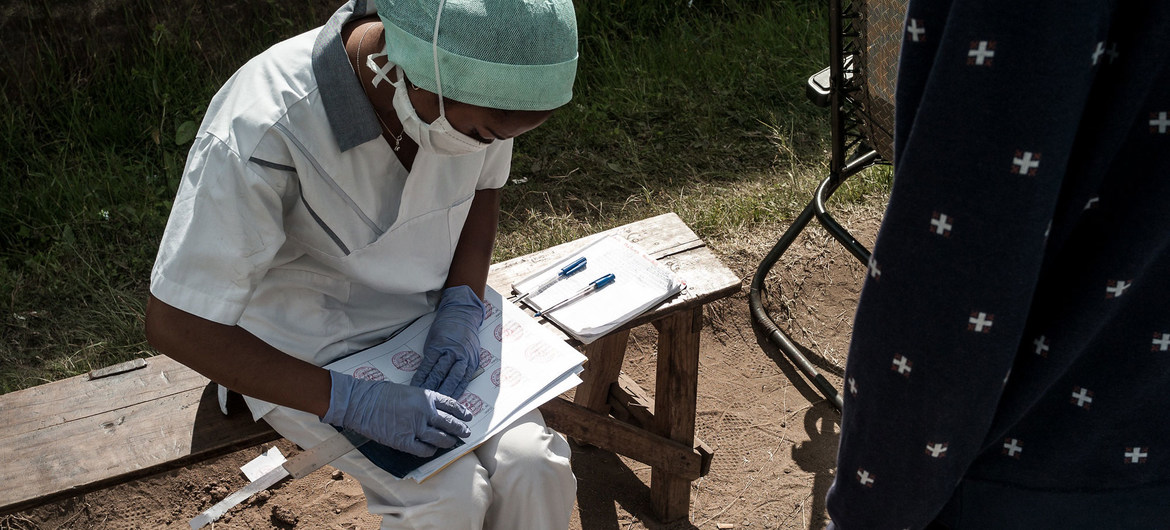
The primary driver behind this disparity is a severe lag in frontline surveillance. Contact tracing teams are struggling to keep up with the virus’s geographic advance, a crisis compounded by severely limited laboratory and diagnostic capacity in remote, conflict-affected zones.
The Bundibugyo Challenge: No Vaccines, No Therapeutics
Compounding the containment crisis is the specific pathogen responsible for the outbreak. Unlike the historic 2014–2016 West African epidemic or the 2018–2019 outbreak in eastern DRC—which were caused by the Zaire Ebola virus—this current emergency involves the Bundibugyo species.
Ebola Species Comparison & Medical Countermeasures:
┌───────────────────┬──────────────────────────────────────────┐
│ Zaire Species     │ Licensed Vaccines & Direct Therapeutics  │
├───────────────────┼──────────────────────────────────────────┤
│ Bundibugyo Species│ NO Licensed Vaccines                     │
│ (Current Outbreak)│ NO Strain-Specific Therapeutics          │
└───────────────────┴──────────────────────────────────────────┘
Because there are currently no licensed vaccines or widely available strain-specific therapeutics for the Bundibugyo species, public health teams cannot rely on the ring-vaccination strategies that successfully halted previous outbreaks. Instead, containment hinges entirely on traditional, resource-intensive public health fundamentals: early detection, rapid isolation, strict infection control, and aggressive supportive care.
Expert Perspectives: Mapping the Blind Spots
Independent health authorities and international epidemiological experts view the current data with growing alarm.
“When a large proportion of new cases cannot be linked to known contacts, it shows surveillance blind spots and suggests community transmission is more widespread than reported,” stated Dr. Olivier le Polain, Head of Epidemiology and Analytics at the WHO, during a recent briefing.
Dr. le Polain underscored that the only path forward is an immediate, aggressive expansion of decentralized testing and community-led surveillance.
Independent humanitarian organizations on the ground echo these concerns. Frontline responders from the International Rescue Committee (IRC) have warned that the virus likely spread silently for weeks before it was formally detected in May. Responders note that entrenched regional insecurity, widespread civilian displacement, and high population mobility across northeastern DRC are creating a logistical perfect storm, rendering traditional contact tracing nearly impossible in certain sectors.
Context: A Complex Emergency
Northeastern DRC is one of the most complex humanitarian environments in the world. The provinces currently affected by Ebola have endured decades of protracted conflict, leading to fractured health infrastructures and deep-seated community mistrust of external interventions.
Public health responses here are rarely just medical; they are deeply entangled with security realities. When health workers cannot safely enter a village due to active conflict, surveillance lapses, allowing the virus to establish new chains of transmission. Furthermore, because global experience with the Bundibugyo species is relatively limited compared to the Zaire strain, clinical protocols must continually adapt to evolving field data.
Public Health and Global Implications
The public health implications of undetected transmission are severe. With the virus moving faster than the data, there is an escalated risk of Ebola crossing provincial borders or spilling into neighboring East African countries.
To prevent further amplification, the WHO is prioritizing three critical pillars:
-
Decentralizing Laboratory Testing: Deploying mobile testing units closer to remote communities to cut down diagnostic turnaround times.
-
Strengthening Infection Prevention and Control (IPC): Intensive training within local clinics to prevent health facilities from becoming amplification points for the virus.
-
Intensifying Community Engagement: Partnering directly with local leaders, elders, and traditional healers to rebuild trust, reduce stigma, and ensure that suspected cases are brought forward for isolation and care early.
Balancing the Data: Limitations and Uncertainties
While modeling estimates suggest a much larger outbreak, public health data analysts emphasize that these figures represent statistical probabilities rather than definitive headcounts. Estimates of under-ascertainment rely on mathematical assumptions regarding test-positivity rates and reporting completeness—variables that fluctuate daily based on security and resource availability.
There is a parallel effort underway that provides a glimmer of hope: as field laboratories slowly come online and security corridors open, the gap between modeled numbers and confirmed cases may narrow. The trajectory of the epidemic will ultimately depend on whether logistics, security, and community trust can be scaled fast enough to match the virus’s speed.
What This Means for the Public
For the general public and health-conscious consumers globally, this outbreak serves as a stark reminder of the fragile nature of global health security. It underscores the critical need for sustained international investment in rapid diagnostics, flexible surveillance networks, and community-centered response frameworks.
For individuals residing in or traveling through the affected regions of the DRC, health authorities advise strict adherence to official national and international travel advisories. The public is urged to avoid close contact with anyone exhibiting symptoms consistent with viral hemorrhagic fever (such as sudden fever, intense weakness, muscle pain, and unexplained bleeding) and to seek medical evaluation immediately at designated health facilities if symptoms arise.
References
-
Reuters. (2026, July 10). “Congo: Ebola outbreak still spreading largely undetected, WHO official says.” (Reported by Clement Bonnerot).
Medical Disclaimer: This article is for informational purposes only and should not be considered medical advice. Always consult with qualified healthcare professionals before making any health-related decisions or changes to your treatment plan. The information presented here is based on current research and expert opinions, which may evolve as new evidence emerges.