 0
0
 0
0
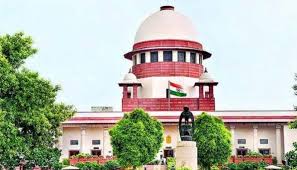
NEW DELHI — In a historic judgment that fundamentally rewapes emergency healthcare access across India, the Supreme Court has declared that the right to trauma care is an integral component of the fundamental right to life under Article 21 of the Constitution.
A bench comprising Justices J. K. Maheshwari and A. S. Chandurkar delivered the sweeping interim order while hearing a public interest petition filed by the SaveLIFE Foundation, a Delhi-based road safety organization. Seeking to transform trauma care into a justiciable right (a right that can be legally enforced in a court of law), the petition successfully pushed the apex court to mandate a centralized, uniform framework.
The Court issued nine comprehensive directives requiring all states and Union Territories (UTs) to operationalize a unified emergency helpline, establish Good Samaritan protections, and create a coordinated national trauma registry within the next three to four months.
The Scale of India’s Crisis: Why This Ruling Matters
The Supreme Court’s intervention arrives at a critical juncture. According to data from the Ministry of Road Transport and Highways (MoRTH) presented to Parliament, road accident fatalities in India climbed to an all-time high of 1,77,177 deaths, averaging 485 deaths daily.
A comprehensive review published in Trauma Surgery & Acute Care Open highlights a deeply disproportionate geographic burden: while highways constitute just 5% of India’s road network, they account for 55% of all road traffic injuries and 60% of all mortalities. Furthermore, epidemiological studies indicate that up to 70% of road traffic fatalities involve traumatic brain injuries (TBIs).
| Metric | Statistic | Data Source |
| Annual Road Accident Deaths | 1,77,177 | MoRTH / Parliament |
| Daily Road Deaths | 485 | MoRTH |
| Trauma Fatality Rate | 9.5 per 100,000 population | Trauma Surgery & Acute Care Open |
| Trauma-Related Disability | 1,212 DALYs per 100,000 | World Health Organization (WHO) |
What are DALYs? Disability-Adjusted Life Years (DALYs) measure the overall burden of disease, representing the number of years lost due to ill-health, disability, or early death.
Geographically, the crisis is led by Uttar Pradesh, which recorded the highest number of fatalities, followed by Tamil Nadu, Maharashtra, Madhya Pradesh, Karnataka, and Rajasthan.
6 Directives Reshaping the Emergency Ecosystem
To address these fragmented statistics, the Court passed nine comprehensive interim directions aimed at restructuring the national trauma infrastructure. The primary directives include:
-
Universal Emergency Number (112): All states and UTs must fully integrate existing emergency, police, and medical lines (including 100, 101, 108, 102, 1033, and 1091) into the single universal emergency number 112 within three months.
-
Good Samaritan Redressal Systems: To safeguard individuals who step forward to help accident victims, states must set up physical and digital grievance systems within three months. This implements Section 134A of the Motor Vehicles Act, 2019, ensuring that helpers cannot be harassed, held civilly or criminally liable, or forced to disclose their identity.
-
Standardized Medical Rescue Protocols: The Union Ministry of Health and Family Welfare (MoHFW) alongside MoRTH must notify a standardized medical rescue protocol for trauma cases within three months, with states operationalizing it three months thereafter.
-
Ambulance Standardization: Public and private ambulances must achieve full Automotive Industry Standard-125 (AIS-125) compliance, featuring mandatory GPS tracking integrated into the 112 helpline.
-
National Trauma Registry: MoHFW has eight weeks to issue a standardized data format for trauma registries. States must establish local registries and link them to a coordinated national registry within four months to track patient outcomes and systemic weak points.
-
Cashless Treatment via PM RAHAT: States are given three months to fully operationalize the PM RAHAT (Road Accident Victim Hospitalisation and Assured Treatment) scheme. The program mandates up to ₹1.5 lakh in cashless treatment coverage for seven days from the date of the accident, covering immediate stabilization treatment for up to 48 hours in life-threatening situations.
Expert Commentary: Bridging Prehospital Gaps
Medical experts emphasize that while the legal mandates are groundbreaking, the physical reality of emergency care requires immediate course correction.
A national survey submitted to NITI Aayog revealed a stark disconnect in prehospital care: while 91% of hospitals surveyed possessed in-house ambulances, trained paramedics were present in only 34% of them.
“The current situation is fragmented,” says Dr. Sanjeev Bhoi, an emergency medicine specialist at AIIMS New Delhi and co-author of a major 2025 national trauma review. “We need a nationwide triage policy, standardized care protocols, world-class ambulance services augmented with effective paramedics, and a robust prehospital notification system.”
Dr. Mahesh Chand Misra, senior trauma surgeon and former director of AIIMS New Delhi, echoes this sentiment: “Trauma care in India has made significant progress in the past two decades, but a coordinated and concerted effort has sometimes been lacking. This Supreme Court direction provides the centralized framework we’ve needed.”
Regional Blueprints for Success
The Supreme Court’s order points to regional frameworks that prove coordinated trauma networks save lives. The chief example is the Tamil Nadu Accident and Emergency Care Initiative (TAEI). Launched in 2017, TAEI linked 38 government medical colleges and 20 district hospitals into an integrated, regionalized trauma grid. Publicly available data shows a substantial decrease in preventable mortality following its rollout.
Similarly, Delhi boasts a significantly lower fatality rate of 1.2 per 10,000 vehicles compared to the national average of 5.2. Data from the Apex Level 1 Trauma Center suggests that centralized infrastructure and localized access to neurotrauma care yield survival outcomes comparable to developed nations.
Looming Implementation Obstacles
Despite the legal victory, health policy analysts note several systemic bottlenecks that could hinder rapid implementation:
-
Constitutional Division: Health is primarily classified as a “State subject” under India’s federal structure, meaning the execution of central mandates relies heavily on individual state budgets and administrative willingness.
-
Severe Workforce Deficits: The national trauma review highlights a stark personnel shortage across the country. For a population of 1.38 billion, India operates with approximately 1,800 neurosurgeons, 2,500 neurologists, and 200 palliative care physicians.
-
The Unregulated Private Sector: A large portion of emergency admissions occur in private medical facilities, which remain unevenly regulated and occasionally under-equipped for complex polytrauma triage.
-
Economic Vulnerability: Medical emergencies remain a leading driver of poverty in India. Roughly 49.3% of injury-affected households suffer catastrophic health expenditures, with 17.8% falling below the poverty line due to out-of-pocket medical costs.
Dr. Krishnan Raghavendran, a trauma surgeon at the University of Michigan and co-author of the 2025 trauma status review, notes that structural oversight is the missing link. “Currently, no organization oversees trauma center designation, accreditation, and verification. India could develop its own verification organization building on principles from the American College of Surgeons Committee on Trauma,” he notes.
What This Means for Your Daily Health Decisions
For health-conscious citizens and travelers, the Supreme Court’s mandate introduces several immediate shifts in emergency handling:
-
One Number to Remember: You no longer need to scramble for specific numbers during an accident; dialing 112 will route you directly to integrated emergency medical services.
-
Confidence to Help: Fear of police harassment or legal liability has historically deterred bystanders. The formalized Good Samaritan grievance systems mean you can legally assist an injured person and immediately leave the hospital or scene without being forced to give personal data.
-
No Upfront Costs for Critical Care: The PM RAHAT implementation eliminates the dangerous delay where private hospitals demand upfront cash before treating an unconscious victim. Immediate, cashless stabilization up to ₹1.5 lakh is a guaranteed right for the first week of trauma care.
The Supreme Court will reconvene in four months to review compliance reports from State Chief Secretaries. Whether this constitutional ruling transforms into an effective shield for ordinary citizens depends heavily on the speed of implementation, infrastructure spending, and local accountability over the coming months.
Medical Disclaimer
Medical Disclaimer: This article is for informational purposes only and should not be considered medical advice. Always consult with qualified healthcare professionals before making any health-related decisions or changes to your treatment plan. The information presented here is based on current research and expert opinions, which may evolve as new evidence emerges.
References
- https://medicaldialogues.in/news/health/sc-issues-interim-directions-for-robust-uniform-trauma-care-framework-171605