 0
0
 0
0
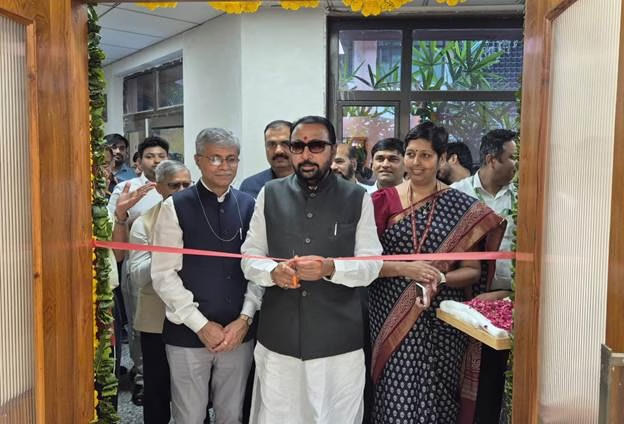
NEW DELHI — In a direct effort to counter the growing epidemic of workplace-induced lifestyle diseases and ultra-processed food consumption, the Ministry of Ayush has inaugurated Prakriti Café at Ayush Bhawan in New Delhi. Launched on July 22, 2026, by Shri Prataprao Jadhav, Union Minister of State (Independent Charge) for Ayush and Minister of State for Health & Family Welfare, the initiative establishes a government-backed cafeteria model centered on traditional, nutrient-dense culinary principles known as Ayush Ahaar.
The launching of Prakriti Café represents a broader shift in public health strategy: shifting preventive health out of clinical settings and directly into daily workplace routines.
The Shift from Desk Snacks to Mindful Nutrition
Workplace cafeterias have long been dominated by high-glycemic snacks, refined sugars, and deep-fried foods. However, public health data highlights an urgent need for change. According to the Indian Council of Medical Research (ICMR) and World Health Organization (WHO) reports, non-communicable diseases (NCDs)—including type 2 diabetes, hypertension, and cardiovascular disease—account for over 60% of all deaths in India. Sedentary office environments combined with easy access to calorie-dense, nutrient-poor foods significantly exacerbate these metabolic risks.
Speaking at the inauguration, Union Minister Shri Prataprao Jadhav emphasized the role of daily food choices in mitigating these rising health statistics.
“Prakriti Café is a reflection of our vision of promoting wellness not only through healthcare, but also through healthy everyday choices,” Jadhav stated. “Food is an integral part of our overall well-being, and nutritious food in itself can be a form of nourishment and support for good health. Today, our dietary habits are changing, and the growing culture of junk food is adversely affecting health… Prakriti Café will provide a space where people can experience the values of healthy living in their daily lives.”
Vaidya Rajesh Kotecha, Secretary of the Ministry of Ayush, noted that the cafe aims to translate ancient dietary guidelines into practical, modern habits. “The idea behind Prakriti Café is to bring the principles of Ayush closer to everyday life,” Kotecha explained, stressing that long-term metabolic health relies on simple, consistent choices rather than restrictive short-term diets.
What’s on the Menu? The Science Behind Traditional Foods
The menu at Prakriti Café deviates from standard cafeteria fare, featuring dishes rooted in India’s traditional knowledge systems while aligning with modern nutritional science:
-
Whole Grains and Millets: Offerings like Little Millet Vegetable Upma and Millet Dhokla replace refined wheat flour (maida) with complex carbohydrates. Millets possess a low glycemic index (GI), causing a slower, steady rise in blood glucose levels compared to refined grains, which aids in insulin sensitivity and weight management.
-
Plant-Based Protein and Fiber: Items such as Beetroot and Oats Cutlets, Oats Poha, Khandvi, and Kosambari (a fresh lentil and cucumber salad) deliver essential dietary fiber and micronutrients. Fiber slows digestion, enhances satiety, and fosters a healthy gut microbiome—an essential component of immune and metabolic function.
-
Unrefined Sweeteners: Sweets like Makhana Kheer (foxnut pudding) are prepared using jaggery instead of refined white sugar. While jaggery remains a caloric carbohydrate, it retains trace minerals like iron, potassium, and magnesium that are stripped during white sugar refining.
-
Functional Hydration: Traditional beverages including fresh coconut water and herbal infusions—such as Tulsi-Ginger Tea—replace sugar-sweetened sodas and energy drinks. Botanical ingredients like Tulsi (holy basil) contain polyphenols and adaptogenic compounds that help modulate physiological stress responses.
Public Health Implications: The Workplace Environment as a Clinical Intervention
Epidemiological research consistently demonstrates that the food environment surrounding an individual heavily dictates their eating behavior. Occupational health studies indicate that providing nutritious, affordable workplace meals leads to measurable reductions in workplace absenteeism, improved cognitive focus, and lower long-term health insurance claims.
Independent public health nutritionists view the institutional rollout of Ayush Ahaar as a welcome intervention in urban health management.
“When working adults spend 8 to 10 hours a day in an office, their immediate food ecosystem dictates their metabolic health,” notes Dr. Sunita Sharma, a senior public health nutritionist in Delhi who was not involved in the Ministry’s launch. “Replacing ultra-processed foods with whole-grain, fiber-rich alternatives like millets and legumes helps prevent post-meal glycemic spikes. Over time, reducing these daily blood sugar spikes is one of the most effective ways to prevent insulin resistance and metabolic syndrome.”
Limitations and Critical Nuance
While the initiative marks a progressive step in preventive health, medical experts caution that traditional workplace dining is part of a larger lifestyle ecosystem rather than a standalone cure for chronic disease.
Key Considerations for Consumers & Health Systems:
-
Caloric Balance Still Matters: Traditional ingredients like jaggery, foxnuts (makhana), and whole grains carry distinct health benefits over refined foods, but they still contain calories. Portion control remains essential, particularly for individuals managing pre-existing type 2 diabetes or obesity.
-
Scalability Beyond Government Sector: A primary challenge facing Ayush Ahaar initiatives is commercial scalability. To create a broader public health impact, similar affordable, high-nutrition models must be adopted by private corporations, public universities, and commercial food vendors.
-
Need for Clinical Outcome Tracking: While the nutritional benefits of whole grains and herbal teas are well-documented, longitudinal studies tracking the specific long-term health metrics (e.g., HbA1c levels, lipid profiles, body mass index) of employees utilizing workplace wellness cafes will be necessary to quantify the total impact of these interventions.
Practical Takeaways for Everyday Health
You do not need access to a specialized cafe to apply the principles of Ayush Ahaar to your daily routine:
-
Swap Refined Grains: Replace white rice or refined wheat with whole millets (such as sorghum, pearl millet, or little millet) at least two to three times a week to boost fiber intake.
-
Prioritize Fiber First: Begin meals with raw or lightly dressed vegetable salads (Kosambari) to blunt the glycemic impact of subsequent carbohydrate courses.
-
Rethink Workplace Beverages: Replace afternoon sugary coffees or sodas with herbal teas infused with ginger, holy basil, or cinnamon to maintain hydration without added sugars.
Medical Disclaimer
This article is for informational purposes only and should not be considered medical advice. Always consult with qualified healthcare professionals before making any health-related decisions or changes to your treatment plan. The information presented here is based on current research and expert opinions, which may evolve as new evidence emerges.
Reference Section
Government & Institutional Press Releases
-
Press Information Bureau (PIB), Government of India. (2026, July 22). Union Minister Shri Prataprao Jadhav Inaugurated Prakriti Café at Ayush Bhawan. Ministry of Ayush, Delhi.