 0
0
 0
0
ATLANTA — A growing number of Americans are developing a dangerous allergy to red meat after being bitten by ticks—a condition known as alpha-gal syndrome (AGS). This emerging tick-borne condition triggers severe allergic reactions, including life-threatening anaphylaxis, hours after consuming beef, pork, lamb, or other mammalian products. With case numbers climbing and the geographic range of transmitting ticks expanding, health officials are urging greater awareness of this overlooked public health threat.
Key Findings: A Rising Public Health Concern
Alpha-gal syndrome is a serious, potentially life-threatening allergic reaction to galactose-$\alpha$-1,3-galactose (alpha-gal). This sugar molecule is naturally found in most mammals but is completely absent in humans and other primates. When certain ticks bite humans, they transfer alpha-gal from their saliva directly into the bloodstream. This exposure can hijack the immune system, triggering the production of specific IgE antibodies that mount an aggressive defense whenever the sugar molecule is later ingested.
Data from the Centers for Disease Control and Prevention (CDC) reveals that more than 110,000 suspected AGS cases were identified between 2010 and 2022. However, because AGS is not a nationally notifiable condition, many cases go unreported. Public health officials estimate that the actual number of affected Americans may be as high as 450,000, making it the 10th most common food allergy in the United States.
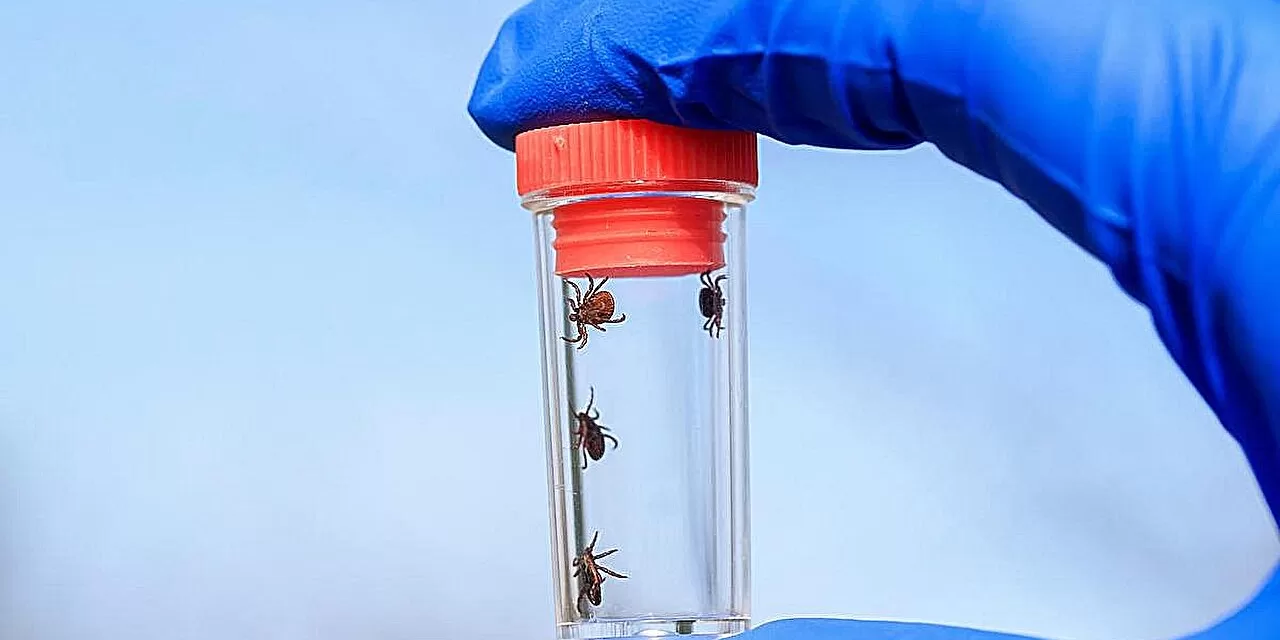
While people of all ages can contract the syndrome, the vast majority of cases occur in adults. In the United States, AGS has historically been tied to the lone star tick (Amblyomma americanum), which is easily recognized by the distinctive white dot on the back of the female. Consequently, most reported cases cluster heavily across Southern, Eastern, and Central states where lone star ticks are highly abundant.
Symptoms and Diagnostic Challenges
Unlike typical food allergies that prompt an immediate reaction, alpha-gal symptoms are notoriously stealthy. Allergic reactions typically begin 2 to 8 hours after eating red meat or being exposed to mammalian byproducts. This substantial delay often makes it incredibly difficult for patients—and even doctors—to connect their physical symptoms to a meal eaten hours prior.
The manifestations of AGS span a wide spectrum of severity:
-
Skin Reactions: Recurrent hives (urticaria), intense itching, and severe swelling of the lips, face, throat, or eyelids.
-
Digestive Distress: Severe stomach pain, diarrhea, nausea, and vomiting.
-
Respiratory Issues: Wheezing, shortness of breath, and a dangerous tightening of the airways.
-
Systemic Collapse: A rapid but weak pulse, dizziness, lightheadedness, and full-blown anaphylaxis.
Clinical reviews indicate that hives are the most common presentation, appearing in 71.2% of cases, while a staggering 51.7% of patients experience life-threatening anaphylaxis.
Diagnosing the condition requires a careful physical examination, a detailed history of outdoor activities, and a specialized blood test that detects alpha-gal-specific IgE antibodies. However, experts caution that laboratory metrics are only one piece of the puzzle.
“The blood test in and of itself is great, but you can’t rely on that just for diagnosis. You need the actual symptoms too,” says Dr. Scott Commins, an alpha-gal syndrome researcher and Associate Chief for Allergy and Immunology at the University of North Carolina School of Medicine. “In the allergy world, we have a lot of trouble with false positives on blood tests.”
Expert Commentary: Why Cases Are Increasing
Epidemiologists attribute the rising case numbers to a combination of heightened clinical awareness and a dramatic expansion of tick habitats.
“I think part of it is more people have learned about it and are on the watch for this syndrome,” notes Dr. Maria Diuk-Wasser, a professor in the Department of Ecology, Evolution and Environmental Biology at Columbia University who tracks tick-borne disease vectors.
The lone star tick’s footprint has grown substantially. Once largely confined to the American South during the mid-20th century, the species has pushed steadily into the Great Lakes region and northward into coastal New England, including Martha’s Vineyard, Massachusetts. Researchers point to climate change—specifically warming winter temperatures and longer humid seasons—as a primary driver making northeastern and midwestern regions highly hospitable to these ticks.
Critically, the threat is no longer isolated to a single tick species. Scientists have recently confirmed that blacklegged ticks (Ixodes scapularis) and western blacklegged ticks (Ixodes pacificus)—the primary vectors responsible for transmitting Lyme disease—can also provoke alpha-gal syndrome. This discovery means that the potential geographic zone for AGS transmission is far larger than previously assumed, extending deep into the Upper Midwest and the Pacific Northwest.
The First Fatal Case: A Stark Warning
The potential severity of alpha-gal syndrome was underscored in late 2025, when researchers published the details of the first documented death directly attributed to the condition.
A 47-year-old airline pilot from New Jersey experienced a severe, sudden allergic reaction after eating a hamburger at a family barbecue. Weeks prior, the man had fallen ill with vague gastrointestinal distress after eating red meat during a camping trip, but he had seemingly recovered. Following his second exposure at the barbecue, he suffered rapid anaphylactic shock and died.
An initial autopsy left the abrupt death unexplained. Seeking answers, his family coordinated with researchers at the University of Virginia to test his preserved blood samples. The laboratory identified exceptionally high levels of alpha-gal antibodies, confirming fatal anaphylaxis.
The case study, published in the Journal of Allergy and Clinical Immunology: Practice, was co-authored by Dr. Thomas Platts-Mills, the renowned allergist who originally discovered alpha-gal syndrome in the late 2000s. The tragedy serves as a stark warning to the medical community that AGS is not merely an inconvenient dietary restriction, but a volatile, highly dangerous condition.
Treatment and Management: Dietary Avoidance and Breakthrough Drugs
Currently, there is no cure for alpha-gal syndrome. The cornerstone of management is strict, lifelong avoidance of all mammalian meat. This includes beef, pork, lamb, venison, rabbit, and goat. Depending on individual sensitivity, some patients must also eliminate secondary mammalian derivatives.
| Category | Products Requiring Care |
| Standard Avoidance | Beef, pork, lamb, venison, rabbit, and goat meat. |
| Organ Meats | Kidneys, livers, intestines, and sweetbreads (which carry highly concentrated alpha-gal levels). |
| Dairy Products | Milk, cheese, yogurt, and butter (reactive in approximately 5% to 20% of AGS patients). |
| Gelatin & Byproducts | Marshmallows, gummy candies, gelatin-capsule medications, and lard. |
| Medical Products | Heparin, certain pancreatic enzymes, specific monoclonal antibodies, and prosthetic porcine heart valves. |
A rare exception to the dietary rule exists in GalSafe pigs—animals genetically modified to completely lack the alpha-gal sugar. Originally designed for human tissue and organ transplantation research, their meat has been approved by the FDA and is available in limited quantities for consumer purchase.
A New Pharmaceutical Shield
For decades, avoidance was a patient’s only defense. However, a major regulatory milestone occurred when the FDA approved the use of Xolair (omalizumab) for the reduction of allergic reactions caused by accidental exposure to multiple food allergens, including alpha-gal.
Xolair is an injectable biologic drug that works by binding to and blocking IgE antibodies, effectively raising the threshold of what the immune system can tolerate before launching an allergic cascade.
“This is a tremendous breakthrough for food allergy treatment,” says Dr. Ruchi Gupta, a food allergy expert at Northwestern University. “We now have an FDA-approved biologic for multiple food allergies that reduces the risk of anaphylaxis if individuals accidentally ingest an allergen.”
However, health authorities emphasize that Xolair is a preventative measure, not a cure. It does not replace emergency epinephrine (such as an EpiPen), nor is it approved to treat acute, ongoing anaphylactic episodes. Patients prescribed the drug must still maintain strict dietary avoidance.
Prevention: Tick Bite Avoidance is Critical
Because treating AGS is so complex, public health agencies emphasize that preventing tick bites in the first place is the absolute best line of defense. The risk of developing the allergy compounds significantly with multiple tick bites. Experts recommend the following standard precautions:
-
Cover Up: When entering wooded, brushy, or tall grassy areas, wear long-sleeved shirts and long pants tucked directly into your socks.
-
Apply Repellents: Use EPA-registered insect repellents containing 20% or more DEET on exposed skin, and treat outdoor gear and clothing with permethrin.
-
Perform Tick Checks: Thoroughly inspect your body, clothing, children, and pets immediately after returning indoors. Pay close attention to the underarms, behind the ears, and around the waist.
-
Shower Promptly: Showering within two hours of coming indoors can wash away unattached ticks that may be crawling on the skin.
-
Remove Ticks Safely: If a tick is found attached, use fine-tipped tweezers to grasp it as close to the skin’s surface as possible. Pull upward with steady, even pressure without twisting or squeezing the tick’s body. Clean the bite area thoroughly with rubbing alcohol or soap and water.
Important Limitations and Uncertainties
While scientific understanding of alpha-gal syndrome has advanced rapidly, several critical blind spots remain a challenge for the medical community:
-
Varying Susceptibility: Scientists still do not understand why certain individuals develop high antibody counts and severe allergies after a single lone star tick bite, while others remain completely unaffected despite frequent exposure.
-
Potential Transience: Unlike standard peanut or shellfish allergies, AGS is not always permanent. Dr. Commins has noted that the allergy spontaneously fades in roughly 15% to 20% of patients after several years—provided they successfully avoid sustaining any new tick bites.
-
Inconsistent Reactions: Symptom presentation can fluctuate wildly. An individual with AGS might eat a piece of pork one day with zero ill effects, yet experience severe, life-threatening airway constriction after eating a hamburger the following week. The fat content of the meat, alcohol consumption, and physical exercise are suspected co-factors that accelerate absorption and worsen reactions.
Implications for Public Health
The rapid spread of alpha-gal syndrome has exposed a critical vulnerability in the American healthcare system. Dr. Commins has frequently described severe, systemic cases of AGS as the “cancer side of alpha-gal,” emphasizing how profoundly the condition disrupts daily life, mental health, and nutritional wellness.
Despite the gravity of the condition, medical literacy regarding the syndrome remains dangerously low. Surveys indicate that roughly 78% of practicing physicians know little to nothing about alpha-gal syndrome, and a mere 5% feel confident in diagnosing or managing it.
As tick populations continue to surge across expanded territories, public health agencies are calling for an urgent overhaul of medical school curricula and continuing education programs. Clinicians nationwide must begin considering alpha-gal syndrome as a primary suspect whenever a patient presents with unexplained, delayed gastrointestinal distress or overnight anaphylaxis. Prompt diagnosis and education are the only ways to prevent further preventable tragedies.
Medical Disclaimer: This article is for informational purposes only and should not be considered medical advice. Always consult with qualified healthcare professionals before making any health-related decisions or changes to your treatment plan. The information presented here is based on current research and expert opinions, which may evolve as new evidence emerges.
References
- https://www.ndtv.com/health/what-to-know-about-alpha-gal-syndrome-the-life-threatening-meat-allergy-caused-by-tick-bites-11631979