 0
0
 0
0
KINSHASA, Democratic Republic of Congo — A global diagnostics alliance has narrowed a competitive process to five potential manufacturers to develop a rapid antigen test for the Bundibugyo strain of Ebola, aiming to send the first devices to eastern Democratic Republic of Congo (DRC) for field trials within weeks. The initiative, led by Geneva-based non-profit FIND, seeks to shorten diagnostic delays that currently stretch into days, hampering immediate containment, patient treatment, and outbreak control.
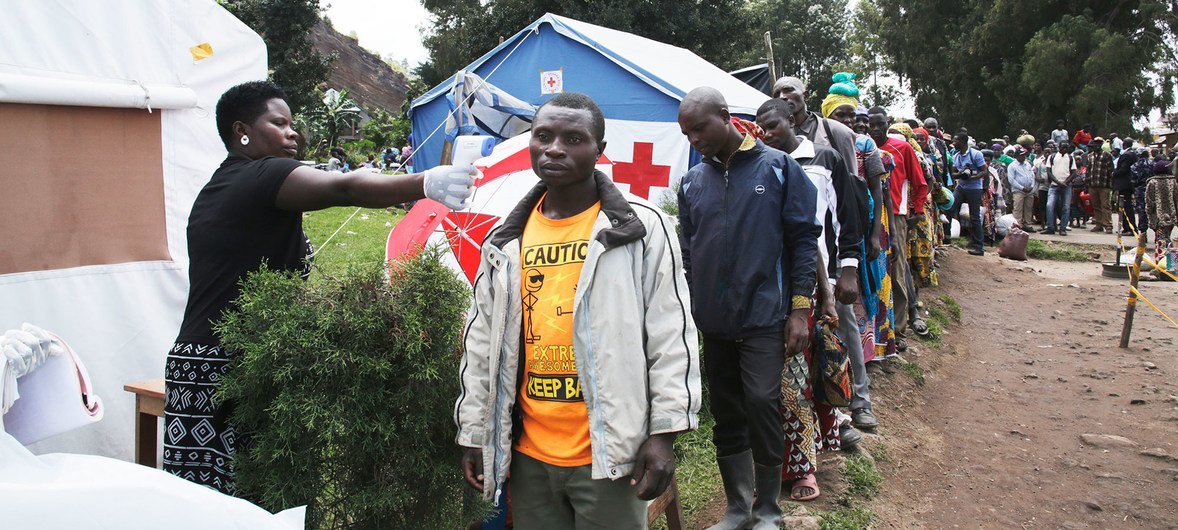
The ongoing outbreak in eastern DRC, declared on May 15, has rapidly intensified. According to health authority data released on July 1, the epidemic has infected 1,406 people and claimed 438 lives across three provinces: Ituri, North Kivu, and South Kivu. Responders are working under intense pressure in an under-prepared health system complicated by severe foreign aid cuts, geopolitical insecurity, and local communities heavily scarred by decades of conflict.
By targeting rapid diagnostic infrastructure, health organizations hope to radically disrupt the transmission cycle of one of the world’s most lethal pathogens.
Shifting From Labs to the Frontlines
The current gold standard for Ebola testing relies on Polymerase Chain Reaction (PCR) molecular tests, which amplify viral genetic material. While highly accurate, PCR requires sophisticated laboratory equipment, stable electrical grids, and trained personnel. In rural or conflict-afflicted areas of the DRC, where paved roads are rare and power outages are frequent, transporting patient samples to one of the region’s 10 functioning laboratories can cause delays of several days. During this waiting period, a symptomatic patient may continue to expose family members and healthcare workers.
To bypass these logistical barriers, FIND selected five final manufacturers from a pool of 21 international applicants. The shortlist consists of two companies based in West Africa, two in South Korea, and one in the United States.
Unlike prior diagnostic efforts that primarily utilized rapid tests to confirm Ebola on post-mortem samples (dead bodies), this project focuses exclusively on creating an antigen-based rapid diagnostic test (RDT) optimized for blood samples drawn from live patients.
“The shortlisted manufacturers were chosen specifically for their speed and scale capabilities,” Kavi Ramjeet, head of business development at FIND, told Reuters. Ramjeet noted that if regulatory clearances and implementation protocols proceed smoothly, the first prototype devices could arrive in the field as early as mid-July for real-world evaluation.
Technical Hurdles of Antigen Detection
While the speed of a point-of-care test is revolutionary, independent medical specialists urge caution regarding the biological trade-offs. Antigen-based lateral-flow tests—similar in design to home COVID-19 or pregnancy tests—work by capturing specific viral proteins rather than copying nucleic acids like a PCR test.
The Sensitivity Trade-Off: Historically, rapid antigen tests trade a degree of analytical sensitivity for simplicity and speed. If a patient has a low viral load early in the infection, an antigen test may fail to detect the virus, returning a false negative.
Past scientific evaluations published in Chemical & Engineering News and peer-reviewed studies in PubMed Central emphasize that Ebola antigen tests can show high variability across different manufacturing designs. A test that misses true cases can lead to catastrophic public health outcomes if an infected person is sent back to the community. Conversely, false positives can overwhelm isolation wards, placing uninfected individuals at risk of exposure to genuine Ebola patients.
Furthermore, the Bundibugyo ebolavirus is a distinct, less common species of the virus compared to the more frequently tracked Zaire ebolavirus. Because the structural proteins differ between species, diagnostic tools engineered for Zaire do not reliably detect Bundibugyo, making species-specific field validation vital.
+--------------------------------------------------------------------------+
|                        Ebola Diagnostic Approaches                       |
+--------------------------+-----------------------------------------------+
| Test Type                | Processing Time  | Key Limitations            |
+--------------------------+-----------------------------------------------+
| Laboratory PCR           | 24–72 hours      | Requires stable power,     |
| (Molecular)              | (inc. transport) | labs, and expert staff     |
+--------------------------+-----------------------------------------------+
| Point-of-Care Antigen   | 15–30 minutes    | Reduced sensitivity early  |
| (Rapid Test)             |                  | in infection               |
+--------------------------+-----------------------------------------------+
Transforming Public Health Strategy
If the upcoming field evaluations in the DRC demonstrate acceptable clinical accuracy, a validated rapid test would shift the dynamics of outbreak management. Instead of broad, proactive quarantines based on symptoms alone, clinicians could triage patients within minutes.
Dr. Tedros Adhanom Ghebreyesus, Director-General of the World Health Organization (WHO), noted that the response infrastructure is expanding, with approximately 96% of the region’s 650 specialized beds currently occupied. Concurrently, the WHO has initiated a clinical trial evaluating experimental therapeutics—specifically Mapp Biopharmaceutical’s MBP134 monoclonal antibody alone and combined with Gilead Sciences’ antiviral remdesivir—for Bundibugyo patients.
A rapid test would complement these therapeutic advances by helping health workers:
-
Accelerate Treatment Entry: Connect confirmed patients to experimental therapies hours or days faster than standard protocols allow.
-
Optimize Isolation Units: Reduce the burden on isolation facilities by quickly identifying uninfected individuals.
-
Streamline Contact Tracing: Give emergency response teams an immediate marker to trace and monitor exposed family members.
However, epidemiological models emphasize that rapid tests are not an outright replacement for laboratory confirmation. Public health frameworks will require a multi-tiered testing algorithm, using rapid tests for initial screening on the ground and secondary PCR tests to confirm ambiguous or high-risk negative results.
Limitations and Looking Ahead
The selection of five manufacturers is a crucial milestone, but it does not guarantee a successful, field-ready deployment. The timeline targeting mid-July relies entirely on expedited emergency regulatory reviews and stable logistics within a highly volatile conflict zone.
Previous global health emergencies have shown that early laboratory prototypes often face unforeseen challenges during mass production, such as batch-to-batch quality control issues or degradation when exposed to extreme tropical heat and humidity. On-the-ground training for rural health workers presents an additional hurdle; if a test strip is misread or sample collection is performed incorrectly, the operational utility drops sharply.
For the general public and local communities in the DRC, the development of these tools provides a path toward faster care and reduced community transmission. Yet, independent public health experts reinforce that a diagnostic test is only as effective as the system built around it. Classic intervention strategies—including community engagement, strict infection prevention protocols, safe burial practices, and comprehensive contact tracing—remain the cornerstone of ending the epidemic.
References
-
Reuters: “Race for rapid Ebola test narrows to five potential manufacturers.” Reported by Jessica Donati. Published July 2, 2026.
Medical Disclaimer: This article is for informational purposes only and should not be considered medical advice. Always consult with qualified healthcare professionals before making any health-related decisions or changes to your treatment plan. The information presented here is based on current research and expert opinions, which may evolve as new evidence emerges.