 0
0
 0
0
WASHINGTON — The U.S. State Department announced an additional $20 million in emergency funding to combat an escalating Ebola outbreak in central Africa, bringing total direct American assistance past the $220 million mark. The urgent funding injection comes amid stark warnings from the Centers for Disease Control and Prevention (CDC) that the current surge in the Democratic Republic of Congo (DRC) could spiral into one of the largest and most destructive Ebola crises in medical history if containment efforts falter.
The fresh resources are strategically earmarked to bolster pandemic preparedness and border defenses in four vulnerable neighboring nations: Burundi, Kenya, Rwanda, and South Sudan. The move signals growing international anxiety over the rapid regional expansion of the virus.
Outbreak Reaches Historical Urgency
According to data compiled by the Congolese Health Ministry, the DRC has recorded 635 confirmed cases and at least 115 fatalities. The flare-up is driven by the rare Bundibugyo strain of the Ebola virus. Officially declared on May 15, the virus has rapidly metastasized across 26 distinct health zones within the conflict-heavy provinces of Ituri, North Kivu, and South Kivu.
Ituri province remains the epicenter of the crisis, anchoring more than 94% of all confirmed cases. Compounding regional fears, the disease has already breached international borders, with neighboring Uganda reporting 19 confirmed cases and two deaths.
Recognizing the gravity of the cross-border threat, the World Health Organization (WHO) designated the outbreak a Public Health Emergency of International Concern (PHEIC). This marks the 17th time the DRC has battled an Ebola outbreak since the pathogen was first discovered near the Ebola River in 1976.
CDC Projections Warn of Unprecedented Scale
The decision to accelerate international financing is tied to mathematical modeling released by the CDC’s Hub for Forecasting and Outbreak Analytics. According to agency projections, if aggressive tracking, isolation, and treatment interventions are not expanded immediately, this Bundibugyo outbreak could mimic or eclipse the catastrophic 2014–2016 West Africa epidemic, which ultimately sickened more than 28,000 individuals and claimed over 11,000 lives.
The data reveals a precarious tipping point: in scenarios where only a small percentage of infected patients are successfully identified and isolated, there is a 65% probability that case counts will exceed 20,000 within just three months.
“The public health response to control this outbreak will likely need to be of similar magnitude to the response for the 2014-2016 West Africa Ebola outbreak,” the CDC noted in its formal briefing.
Where the Funding Will Go
The newly mobilized $20 million represents the second significant financial commitment from Washington in less than a week, following a $38 million allocation. According to the State Department, the funding bypasses the overwhelmed epicenters to fortify a defensive perimeter in neighboring East African nations. The funds will directly support:
-
National Emergency Operations Centers: Creating centralized command hubs for rapid data sharing.
-
Surveillance and Diagnostic Testing: Standing up field labs to catch infections early.
-
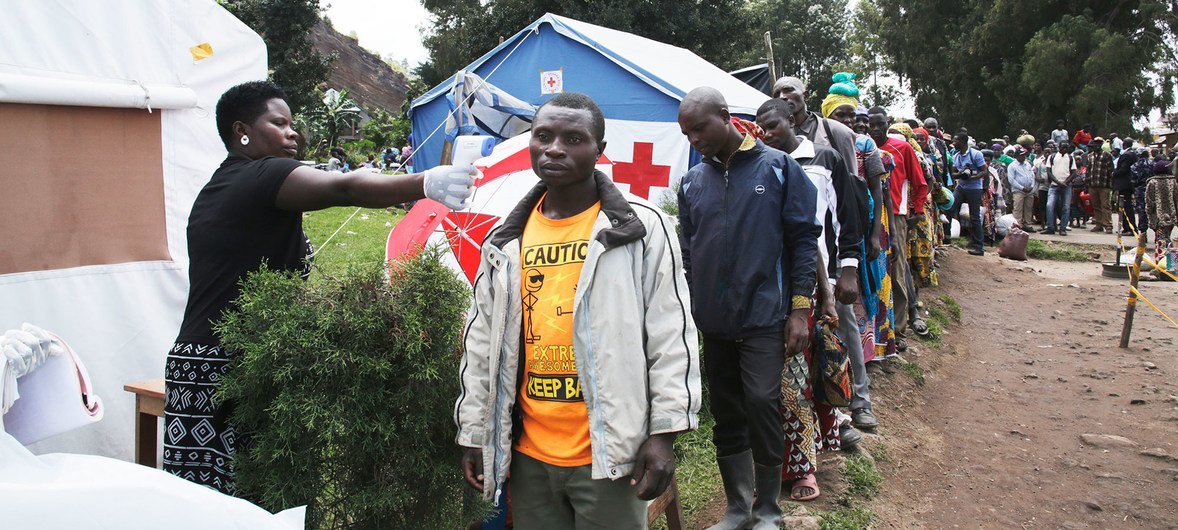
Border Inspections: Implementing thermal scanning and health checks at high-traffic checkpoints.
-
Infection Prevention: Delivering personal protective equipment (PPE) and clean water infrastructure to border clinics.
The Bundibugyo Strain Challenge
The current crisis is significantly more complex than recent outbreaks due to the specific viral strain at play. While public health officials successfully deployed Merck’s licensed Ervebo vaccine during recent Zaire ebolavirus outbreaks, that vaccine offers no cross-protection against the Bundibugyo strain. Currently, there are zero approved vaccines or therapeutic drugs available for commercial use against Bundibugyo.
Historically, the Bundibugyo strain carries a case fatality rate ranging from 30% to 50%. This makes it roughly as lethal as the Zaire strain responsible for the West African crisis a decade ago.
WHO Director-General Dr. Tedros Adhanom Ghebreyesus expressed grave concerns over the logistics of the current response, warning that “the epidemic is outpacing us.” Dr. Tedros cited severe friction points on the ground, including critical delays in laboratory confirmation, fragmented contact tracing, geopolitical instability, and deep-seated community mistrust of health workers.
The Race for a Vaccine
Despite the lack of an immediate shield, global scientific coalitions are moving at an accelerated pace. Africa CDC Chief Jean Kaseya announced optimism that a dedicated Bundibugyo vaccine and therapeutic protocol could be ready by the conclusion of 2026.
The WHO has prioritized a one-dose candidate developed by IAVI (International AIDS Vaccine Initiative) as the frontrunner for upcoming clinical trials, though the agency noted it will take seven to nine months before field trials can safely begin. A second candidate, developed jointly by Oxford University and the Serum Institute of India, could enter testing within two to three months, pending final animal study validations.
Concurrently, the WHO has cleared three experimental antiviral treatments to be evaluated under compassionate use and clinical trial frameworks:
-
MBP134 (Mapp Biopharmaceutical)
-
Maftivimab (Regeneron)
-
Remdesivir (Gilead Sciences)
Children Bearing the Brunt
The human toll of the outbreak is increasingly impacting vulnerable demographics. Preliminary data released by UNICEF indicates that children account for approximately 17% of all confirmed Ebola cases in this cycle.
Public health pediatricians warn that children suffer disproportionately from severe dehydration and rapid systemic failure when exposed to Ebola. Furthermore, widespread regional malnutrition significantly lowers immune defenses, making young children more susceptible to severe health outcomes. The tragedy was underscored by the recent deaths of two infants in a Congolese orphanage, including a 12-day-old newborn named Buswaza, who stands among the youngest casualties of the outbreak.
Structural Hurdles: Empty Labs and Border Controls
Even as international funds arrive, local health infrastructure is buckling under acute operational shortages. The WHO confirmed that three pivotal diagnostic laboratories located in Bukavu, Lwiro, and Goma have entirely depleted their chemical reagents. This shortage has frozen testing capabilities and left an undisclosed backlog of patient samples in limbo.
In response to the global threat, strict biosecurity measures have been enacted beyond Africa. U.S. Secretary of State Marco Rubio emphasized a rigid domestic defense posture, and the CDC has initiated temporary travel restrictions on individuals arriving from the DRC, Uganda, and South Sudan.
Under these protocols, travelers from the affected zone are subject to enhanced health screenings at three designated U.S. airports. Furthermore, an innovative quarantine framework has been established: asymptomatic individuals exposed to the virus will be held at a specialized facility currently under construction in Kenya, while any travelers demonstrating active symptoms will be redirected to a designated third country for isolation rather than being flown to domestic U.S. soil.
What This Means for Public Health
For global medical communities and health-conscious citizens, this outbreak serves as a stark reminder of how rapidly localized infectious diseases can trigger international emergencies. Because field trials for vaccines remain months away, the immediate containment of this outbreak relies entirely on classic, resource-intensive epidemiology: meticulous contact tracing, rapid diagnostic isolation, and strict border hygiene.
Currently, health authorities note that only about 45% of known Ebola contacts are being actively tracked in the DRC. For effective containment and eradication, that metric must consistently exceed 90%. Until that operational gap is closed, international travel restrictions and heightened clinical surveillance will remain essential safeguards against global transmission.
Medical Disclaimer
Medical Disclaimer: This article is for informational purposes only and should not be considered medical advice. Always consult with qualified healthcare professionals before making any health-related decisions or changes to your treatment plan. The information presented here is based on current research and expert opinions, which may evolve as new evidence emerges.
References