 0
0
 0
0
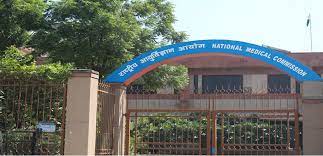
RAIPUR, CHHATTISGARH — In a decisive move that underscores a tightening grip on the quality of medical training in India, the National Medical Commission (NMC) has rejected applications to establish five new government medical colleges in Chhattisgarh. Announced by the NMC’s Medical Assessment and Rating Board (MARB), the regulatory block eliminates 250 anticipated MBBS seats for the 2026–27 academic year. The ruling deals a severe blow to thousands of National Eligibility cum Entrance Test (NEET-UG) aspirants relying on expanded local seat quotas, while simultaneously intensifying a fierce national debate: How does a developing healthcare system balance the desperate need for more doctors with the non-negotiable requirement for high-quality clinical education?
The Infrastructure Deficit: Why the Colleges Failed Inspection
The five proposed institutions were slated to open in geographically critical and socio-economically diverse regions of the state: Kawardha, Janjgir-Champa, Manendragarh, Dantewada, and Kunkuri. Each institution was designed to inject 50 MBBS seats into the state’s medical education pool.
However, rigorous physical and digital evaluations by the MARB uncovered sweeping, fundamental non-compliance with the NMC’s baseline criteria. Rather than marginal oversights, investigators documented systemic deficits in physical infrastructure, human resources, and essential clinical resources necessary to safely train undergraduate medical students.
| Deficiency Area | Specific Investigative Findings |
| Physical Infrastructure | Incomplete construction; critical educational and residential facilities remain active work zones. |
| Faculty Recruiting | Failure to appoint qualified professors, associate professors, and residents matching mandatory NMC staffing ratios. |
| Clinical Volume | Affiliated hospitals exhibited inadequate Outpatient Department (OPD) attendance; lacks functional, ongoing patient care. |
| Inpatient Metrics | Continuous daily inpatient bed occupancy fell significantly below the legal minimum thresholds required for clinical rounds. |
| Medical Equipment | Diagnostic machinery, emergency life-support units, and basic specialized laboratory tools were completely missing. |
| Legal Documentation | Administrative failure to properly submit valid attachment and affiliation certificates for the linked public hospitals. |
Local reporting highlights that these operational failures point directly to administrative oversight and execution delays within the state’s medical education department, which attempted to greenlight colleges before physical and human structures were operational.
High Stakes for Aspirants and the Local Cut-off Crunch
For local students, the regulatory rejection translates immediately into a numbers crisis. Chhattisgarh currently possesses 15 functioning medical colleges (10 government-run and 5 private), yielding a combined total of 2,330 MBBS seats.
The introduction of 250 additional state-quota seats would have offered vital breathing room for students hovering just below traditional admission boundaries. Historically, the general category safe score for a state-quota government MBBS seat in Chhattisgarh ranges between 590 and 625 marks. To put the competition in perspective, data from the 2025 admissions cycle showed the closing rank at the Raipur Institute of Medical Sciences reaching 150,688 for the All India Quota General category.
With the new seats blocked, local competition is projected to stiffen, maintaining an exceptionally high cut-off ceiling that leaves little margin for error for the state’s top-performing youth.
The Macro Picture: India’s Deepening Rural Healthcare Void
The regulatory rejection in Chhattisgarh highlights a painful paradox: a state dropping potential medical seats while actively suffering under an acute shortage of practicing physician professionals.
According to data from the World Health Organization (WHO) and the Ministry of Health and Family Welfare, India faces a stark, structural maldistribution of medical personnel. While India graduates upwards of 100,000 MBBS students annually, the physician-to-population density remains critical.
-
The Global Gap: India averages roughly 7.2 practicing doctors per 10,000 citizens. By comparison, Brazil reports 23.6 doctors per 10,000, while the United States maintains 95.4.
-
The Rural-Urban Divide: In India’s rural sectors—which include areas like Dantewada and Kunkuri—the average plunges to just 3 doctors per 10,000 people.
-
The Target: The WHO recommends a baseline ratio of 1 doctor per 1,000 people (or 10 per 10,000). India currently hovers around 1 per 1,400. Public health projections indicate that to comfortably hit the comprehensive sustainable development goal of 4.45 healthcare workers per 1,000 people by 2030, India requires an influx of 2.07 million active physicians.
Biometrics and Crushing Fines: The NMC’s Quality War
Faced with historical criticisms regarding “ghost faculty” (qualified doctors hired temporarily solely to pass inspection days) and paper-only hospitals, the NMC has transitioned to an uncompromising, technology-driven enforcement model. This strategy directly explains the blunt rejection of Chhattisgarh’s unfinished campuses.
Key mechanisms driving this modern enforcement push include:
-
Aadhaar-Enabled Biometric Attendance Systems (AEBAS): Medical college faculty must log daily attendance via localized, biometric, and face-authentication networks linked directly to national databases. Inspections now rely on months of automated digital records rather than single-day, physical roll calls.
-
Severe Financial Penalties: The commission has instituted sweeping monetary penalties reaching up to ₹1 crore for institutions falsifying data or operating with severe staff vacancies.
-
Aggressive Recurrent Auditing: The crackdown is already deeply felt within Chhattisgarh. In June 2025, the NMC penalized five existing state government medical colleges for staffing deficiencies. Notably, Kanker Medical College was slapped with a ₹1 crore fine, while Durg Medical College was fined ₹4 lakh. Currently, three existing institutions in Mahasamund, Kanker, and Raigarh remain under strict regulatory observation, facing potential loss of accreditation if chronic staff shortages are not resolved.
This rigid approach has ignited political friction within the state capital. Members of the opposition Congress party have cited the rejections as clear evidence of infrastructural neglect by the sitting administration. In response, Chhattisgarh’s Health Minister offered a defiant perspective, using a sports analogy to state that “the match is still ongoing” (मैach अभी बाकी है), implying that intense remediation efforts and administrative appeals are already underway to reverse the decision before final allocations conclude.
The Dynamic Policy Paradox: Capping vs. Expanding
The zero-tolerance stance on substandard campuses coexists with an unprecedented policy push by the NMC to expand capacity at compliant institutions. In an effort to rapidly build the country’s medical workforce without compromising safety, the commission executed a major policy shift in April 2026.
The NMC completely removed its traditional clause capping maximum MBBS enrollment at 150 seats per college for expansion requests, while simultaneously eliminating the requirement for states to strictly maintain a ratio of 100 seats per 10 lakh population. Under these updated guidelines, an eligible, high-performing medical college can scale up its intake to 250 MBBS seats annually—provided its existing faculty ratios, physical infrastructure, and real-world clinical patient volume can verifiedly sustain the load.
Nationally, this targeted liberalization cleared 10,650 new MBBS seats and 41 new medical colleges for the NEET-UG 2026 cycle. Furthermore, under Centrally Sponsored Schemes, the Central Government has approved 10,023 additional medical seats across established government institutions spanning a rollout phase from 2025–26 through 2028–29.
Balancing the Scales: Perspectives from the Field
Medical education experts and public health advocates broadly defend the NMC’s unyielding position, pointing out that a medical degree is only as good as the clinical environment where it is earned.
“The NMC’s rigid stance prevents the rise of predatory or severely substandard medical colleges that function essentially as degree mills,” notes a senior medical education consultant familiar with the MARB inspection framework. “If you train an undergraduate student in a hospital that lacks actual inpatients, a functional OPD, or modern diagnostic machinery, you are producing a doctor who lacks baseline diagnostic instincts. Ultimately, that compromises patient safety and cascading healthcare outcomes across entire communities.”
The scale of the quality crisis was made clear in self-declaration forms from the 2024–25 academic period, which revealed that nearly 600 of India’s 684 tested MBBS colleges exhibited internal operational deficiencies, leaving them open to active regulatory penalties.
Conversely, some public policy critics argue that the sheer speed of immediate rejections may be counterproductive for under-resourced states. They suggest that a “work-in-progress” conditional approval model—with strict, time-bound milestones—could incentivize rapid infrastructure completion while preventing the total loss of an academic calendar year for regional students. The NMC, however, has firmly shut down this counterargument, reiterating that it will not evaluate speculative timelines or promises of future compliance; colleges must be fully operational on the day of inspection.
The Path Forward for Readers, Patients, and Aspirants
For the general public, this development offers critical takeaways regarding how the medical system operates:
-
For Prospective Medical Students: The Chhattisgarh rejections highlight the risk of assuming an announced college is a recognized one. Aspirants must strictly cross-reference active college choices against the official, live database maintained on the National Medical Commission’s website before finalizing counseling preferences.
-
For Healthcare Consumers (Patients): While news of a halted hospital or college can feel like a loss of local resources, stringent educational quality control protects community health. Medical colleges that consistently meet modern standards ensure that the physicians entering local clinics are highly competent and clinically sound.
-
For Policy Observers: The situation in Raipur emphasizes that solving India’s healthcare shortages is not as simple as building structures and declaring them open. True sustainability requires long-term investments in faculty retention, competitive compensation, and advanced procurement pipelines to ensure rural infrastructure mirrors urban quality.
Chhattisgarh’s medical education department must now systematically fill faculty vacancies and complete building infrastructure before seeking a re-inspection. Until these five regional hubs successfully clear the NMC’s benchmark, the state’s medical hopefuls must navigate a hyper-competitive admission landscape, vying for a finite pool of 2,330 government seats where the margin for success remains razor-thin.
Medical Disclaimer
Medical Disclaimer: This article is for informational purposes only and should not be considered medical advice. Always consult with qualified healthcare professionals before making any health-related decisions or changes to your treatment plan. The information presented here is based on current research and expert opinions, which may evolve as new evidence emerges.
References
News & Study Citations
-
Medical Dialogues. “NMC rejects applications for 5 new medical colleges, loss of 250 MBBS seats in Chhattisgarh.” Published June 11, 2026.