 0
0
 0
0
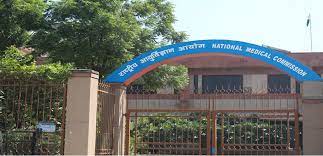
NEW DELHI — In a decisive move to safeguard the quality of advanced medical training in India, the National Medical Commission (NMC) has implemented stringent new regulations for super-specialty admissions. Effective immediately, medical colleges nationwide are restricted to admitting only one student per unit annually for Post-Doctoral Certificate Courses (PDCC) or Post-Doctoral Fellowships (PDF). Announced by the Post-Graduate Medical Education Board (PGMEB) on March 11, 2026, this amendment to the Post-Graduate Medical Education Regulations (PGMER) 2023 eliminates previous flexibilities that allowed institutions to fill extra seats based on vacancies, signaling a shift toward rigorous standardization in the nation’s healthcare education.
A Shift Toward Standardized Excellence
The landscape of Indian medical education is undergoing a significant “course correction.” For years, PDCC (one-year) and PDF (two-year) programs—which provide highly specialized training in fields like interventional cardiology, neuro-oncology, and robotic surgery—operated with varying degrees of oversight.
Under the newly clarified Minimum Standards of Requirements (PGMSR) 2023, the rules are now absolute:
-
Unit-Based Departments: Colleges may admit either one PDCC or one PDF student per year, over and above the sanctioned postgraduate seats in a specific unit.
-
Non-Unit Departments: In smaller specialties where units are not defined, the ratio is capped at one seat for every five sanctioned postgraduate seats.
Previously, colleges often utilized “elastic” admission policies, sometimes over-enrolling fellows if regular postgraduate seats remained vacant. The NMC’s new cap removes this ambiguity, ensuring that faculty members are not spread too thin and that every fellow receives adequate hands-on mentorship.
Balancing the Faculty-to-Student Equation
The primary driver behind this regulation is the maintenance of “minimum standards.” As super-specialty seats (DM/MCh) have surged by 20% in recent years, concern has grown regarding the “dilution of expertise.”
Dr. Rajesh Sharma, Head of Cardiology at AIIMS Delhi, who was not involved in drafting the amendment, supports the tightening of rules. “Super-specialty training isn’t just about reading textbooks; it’s about mastering complex, life-saving procedures,” Dr. Sharma explained. “By limiting a unit to one fellow, we ensure that the mentor can provide the intense, one-on-one guidance necessary for something as delicate as interventional neurology or neonatal surgery.”
Dr. Vijay Oza, former President of the PGMEB, has previously noted that standardized permissions are essential for the long-term recognition of these degrees. Without such caps, the market risks being flooded with specialists who may have lacked sufficient “table time” in the operating theater.
Impact on Public Health and Patients
For the general public, these administrative changes have direct implications for patient safety and the quality of care. India currently faces a significant specialist gap, particularly in oncology and critical care. While more specialists are needed, the NMC is betting that better-trained specialists are the higher priority.
What This Means for You:
-
Enhanced Safety: Fellows trained under strict 1:1 mentorship ratios are statistically less likely to encounter complications in advanced procedures.
-
Specialized Care Access: As colleges upgrade their infrastructure to meet NMC’s 80% bed occupancy and digital record mandates, patients in Tier-2 cities may soon see an influx of highly qualified talent.
-
Future-Ready Doctors: The focus on sub-specialties like trauma surgery means that in emergencies, the surgeon on call is more likely to have completed a rigorous, standardized fellowship.
Challenges and Counterarguments
Despite the push for quality, the “one-size-fits-all” approach has met with resistance from some institutional leaders. The “either/or” restriction—meaning a unit cannot run both a PDCC and a PDF simultaneously—is a particular point of contention.
“In high-volume departments with a massive patient load, these rigid caps ignore the reality of our capacity,” says Dr. Priya Menon, Dean of a prominent medical college in Maharashtra. “Unfilled postgraduate seats represent lost opportunities to train the next generation of specialists when the infrastructure is already there.”
Critics also worry that smaller, rural institutions might struggle to meet the unit-based requirements, potentially centralizing advanced medical training in major metropolitan hubs and further widening the urban-rural healthcare divide.
The Global Context of Reform
The NMC’s move aligns India with international best practices. For example, the General Medical Council (GMC) in the UK and various accreditation bodies in the United States maintain strict supervisor-to-fellow ratios (often 1:2) to prevent trainee burnout and ensure clinical excellence.
Beyond seat caps, the 2026 reforms include:
-
Mandatory 75% faculty attendance tracked via biometric systems.
-
Requirement for Audio-Visual (AV) equipped teaching rooms.
-
A transition to full-time faculty without private practice to ensure total dedication to teaching.
Conclusion
The NMC’s decision to tighten admission rules for post-doctoral courses marks a transition from a period of rapid expansion to one of consolidated quality. While the immediate result may be a 10-15% reduction in available fellowship seats, the long-term goal is a healthcare system where every super-specialist has been forged in an environment of focused, expert mentorship. For a nation striving to meet global healthcare benchmarks, this “quality-first” approach may be the necessary prescription.
Medical Disclaimer: This article is for informational purposes only and should not be considered medical advice. Always consult with qualified healthcare professionals before making any health-related decisions or changes to your treatment plan. The information presented here is based on current research and expert opinions, which may evolve as new evidence emerges.
References
-
National Medical Commission (NMC). Public Notice: Minimum Standards of Requirements for Post-Graduate Courses-2023 (PGMSR-2023, Amended as on 20.02.2026). Published March 11, 2026.
-
Medical Dialogues. “NMC revises rules for PDCC, post doctoral fellowship admissions in medical colleges.” Published April 12, 2026.