 0
0
 0
0
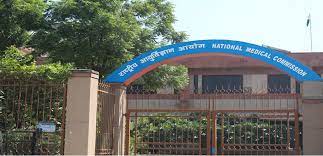
NEW DELHI — In a decisive move to protect the standards of medical education amid rapid infrastructure expansion, the National Medical Commission (NMC) has issued a strict directive warning medical colleges and counselling authorities nationwide against admitting undergraduate students beyond officially sanctioned capacities for the upcoming 2026–27 academic year.
The warning, issued by the Medical Assessment and Rating Board (MARB) on July 14, 2026, accompanied the release of the highly anticipated national MBBS seat matrix. The comprehensive registry reveals a historic high of 1,36,939 undergraduate medical seats distributed across 823 colleges. By strictly capping admissions at these approved thresholds, the apex medical regulator aims to prevent institutional overcrowding that could compromise training quality and trigger severe penal actions under the National Medical Commission Act, 2019.
The Crackdown on Over-Admission
The NMC’s directive lays down an uncompromising boundary for both institutional administrators and state-level counselling bodies. According to the official notice, the MARB has instructed all participating medical colleges to meticulously verify their approved seat tallies before the commencement of the National Eligibility cum Entrance Test undergraduate (NEET-UG) counselling process. Any discrepancies or mismatches must be reported to the commission immediately.
Crucially, the NMC explicitly instructed the Medical Counselling Committee (MCC) and respective state counselling authorities not to permit or process admissions exceeding sanctioned capacities under any circumstances.
The commission’s message is straightforward: only the intake officially approved by MARB carries legal validity. If a medical college admits more students than permitted, the institution will face strict regulatory and legal consequences under the law. Furthermore, any excess seats filled will be deemed invalid, leaving over-admitted students without recognized medical registrations.
Inside the 2026–27 Seat Matrix
The newly released seat matrix represents a major milestone in India’s efforts to scale up its medical education infrastructure. The figures reflect a substantial year-over-year growth, adding 9,911 undergraduate seats to the national pipeline—rising from 1,27,028 seats in the previous academic session to the current 1,36,939.
This seat matrix encompasses all undergraduate medical institutions regulated directly by the NMC, though it excludes Institutes of National Importance (INIs) such as the All India Institutes of Medical Sciences (AIIMS) and JIPMER, which operate under independent statutory frameworks.
An analysis of the 823 colleges currently registered within the NMC system reveals a close balance between public and private infrastructure:
-
Government Medical Colleges: 441 institutions providing 63,296 seats.
-
Private Medical Colleges & Deemed Universities: 382 institutions providing 73,643 seats.
This growth includes both the commissioning of brand-new medical institutions and the approved expansion of seat capacities within existing, well-performing colleges.
The Public Health Context: Quantity vs. Distribution
This unprecedented expansion comes at a crucial juncture for India’s public health system. According to an official press release issued by the Ministry of Health and Family Welfare in February 2026, India’s estimated doctor-population ratio stands at an impressive 1:811. This metric, which aggregates registered allopathic (MBBS) doctors and traditional AYUSH practitioners, comfortably surpasses the World Health Organization’s (WHO) recommended benchmark of 1:1,000.
However, public health experts note that national averages can be deceptive. A favorable aggregate ratio frequently masks severe geographic and structural imbalances. The vast majority of healthcare workers remain heavily concentrated in urban centers and economically advanced states, leaving rural districts and marginalized communities facing persistent workforce deficits.
While widening the pipeline of future doctors through increased MBBS seats is a vital step, it does not automatically resolve the uneven distribution of medical professionals or eliminate acute shortages in underserved areas.
Expert Perspectives: Balancing Numbers with Competency
Independent medical education analysts welcome the NMC’s rigid stance on seat compliance, viewing it as a necessary guardrail against the commercialization of medical training.
“Expanding the seat matrix is an excellent long-term strategy to address health shortages, but medical education cannot be treated as a numbers game,” says Dr. Anita Roy, a veteran medical education consultant and former professor of community medicine, who was not involved in drafting the matrix.
“Training a competent physician requires an intricate balance of adequate faculty ratios, clinical material, hospital bed occupancy, and physical infrastructure. When a college over-admits students beyond its approved limits, it dilutes the quality of clinical exposure per student. The NMC’s warning is a crucial quality-control measure to ensure we are not just graduating more doctors, but capable doctors.”
What This Means for Students and Parents
For aspiring medical students and their families preparing for the high-stakes NEET-UG counselling process, the NMC’s directive carries immediate practical implications. The regulator emphasizes that candidates must rely exclusively on the official seat matrix published by the NMC and authorized counselling notices.
Accepting a seat offered outside the approved matrix—whether through informal institutional claims, management quota misrepresentations, or administrative oversights—carries severe risks. Such admissions face mandatory cancellation upon regulatory audit, creating immense financial loss and catastrophic academic setbacks for families.
For institutional leadership, the directive significantly raises the compliance bar. In an academic year where the NMC has already tightened its scrutiny surrounding infrastructure verification, faculty biometric attendance, and hospital functionalities, admission errors could severely damage institutional credibility, delay future approvals, and invite criminal liabilities.
Limitations and Looking Ahead
While the addition of nearly 10,000 seats is a positive development, health policy analysts emphasize its structural limitations. Resolving India’s broader healthcare delivery challenges requires looking beyond the sheer volume of graduates. Long-term solutions demand strategic policy interventions aimed at structural retention: incentivizing rural service, expanding post-graduate specialty seats evenly, and improving working conditions within public health systems to prevent brain drain.
Furthermore, stakeholders must remember that the seat matrix is dynamic. Decisions on pending institutional appeals or subsequent compliance reviews mean the current figure of 1,36,939 seats could experience minor modifications as the admission cycle progresses. Aspiring candidates are strongly urged to cross-reference the latest notices on the official NMC portal before finalizing their college preferences or submitting institutional fees.
Medical Disclaimer
Medical Disclaimer: This article is for informational purposes only and should not be considered medical advice. Always consult with qualified healthcare professionals before making any health-related decisions or changes to your treatment plan. The information presented here is based on current research and expert opinions, which may evolve as new evidence emerges.
References
Statutory & Regulatory Notices
- Medical Dialogues Bureau. “NMC warns medical colleges against MBBS admissions beyond approved seats for AY 2026-27,” published July 17, 2026.
-
The Print / Press Trust of India (PTI). “NMC approves 1.37 lakh MBBS seats for 2026-27, warns against excess admissions,” published July 16, 2026.