 1
1
 0
0
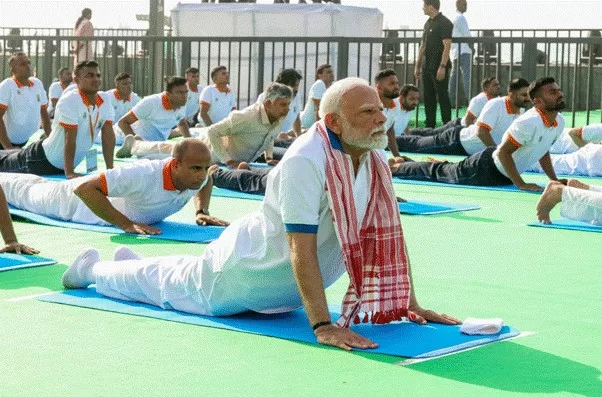
NEW DELHI — On the occasion of World Health Day 2026, Prime Minister Narendra Modi reaffirmed the government’s commitment to a “healthier society,” shifting the national spotlight from curative care to the foundational pillar of preventive wellness. In a statement released Tuesday, the Prime Minister expressed gratitude to healthcare workers while urging citizens to embrace physical activity, citing ancient wisdom to underscore a modern medical necessity: the integration of exercise into daily life to combat the rising tide of non-communicable diseases (NCDs).
The Ancient Science of Modern Fitness
The Prime Minister’s message was anchored by a Sanskrit Subhashitam, an ancient aphorism that outlines the physiological benefits of movement:
“Laaghavam Karma-Saamarthyam Deeptagnir-Medasah Kshayah | > Vibhakta-Ghana-Gatratvam Vyayaamaad-Upajayate ||”
Translated, the verse suggests that exercise leads to lightness of body, an increased capacity for work, a robust digestive system, the reduction of excess fat, and a firm, well-proportioned physique.
While the text is centuries old, its claims align closely with contemporary clinical data. Modern sports medicine confirms that regular physical activity improves metabolic rate (the “digestive fire”), enhances cardiovascular endurance (“capacity to work”), and is a primary tool in managing obesity.
“The Prime Minister’s use of traditional wisdom to promote exercise is timely,” says Dr. Ananya Sharma, a Senior Consultant in Preventive Medicine (not affiliated with the government’s statement). “In clinical terms, what the Subhashitam describes is metabolic flexibility and muscular hypertrophy. By framing exercise as a cultural value rather than just a medical chore, we can better address the behavioral barriers to fitness.”
Strengthening the System: From Infrastructure to Individual
The Prime Minister’s address also emphasized the need for “collective efforts to strengthen healthcare systems.” This comes at a critical juncture for the nation’s public health infrastructure. Over the last decade, the focus has expanded from primary health centers to digital health integration and insurance schemes like Ayushman Bharat.
However, health experts argue that a “healthier society” cannot be built on hospital beds alone. The World Health Organization (WHO) has frequently noted that for every $1 invested in scaled-up interventions for NCDs, there is a return to society of at least $7 in increased employment, productivity, and longer life.
Key Pillars of the 2026 Health Vision:
-
Decentralized Care: Moving diagnostics closer to rural and semi-urban doorsteps.
-
Digital Integration: Utilizing AI and tele-health to manage chronic conditions.
-
Behavioral Change: Promoting the “Fit India” philosophy to reduce the burden on tertiary care hospitals.
The Looming Challenge: The NCD Burden
The call for personal fitness is more than a lifestyle suggestion; it is a public health imperative. Current statistics from the Indian Council of Medical Research (ICMR) indicate a sharp rise in lifestyle-related conditions. As of 2024-2025, an estimated 100 million Indians are living with diabetes, and many more are categorized as pre-diabetic.
Hypertension and cardiovascular diseases remain the leading causes of mortality. Public health advocates point out that even moderate exercise—defined by the WHO as 150 to 300 minutes of moderate-intensity aerobic activity per week—can reduce the risk of premature death by nearly 20-30%.
“We are seeing a ‘lifestyle epidemic,'” explains Dr. Rajesh Varma, an epidemiologist. “By prioritizing ‘well-being of every individual,’ as the PM stated, we are acknowledging that the state can provide the doctors, but the citizens must provide the movement. It is a partnership.”
Limitations and the Road Ahead
While the promotion of exercise is universally lauded, some public health experts caution that individual effort must be supported by urban policy.
“It is easy to say ‘exercise more,’ but we must also address the ‘built environment,'” says Arpit Goel, an urban health researcher. “In many of our densest cities, there is a lack of safe walking tracks, parks, or clean air. For the Prime Minister’s vision of a ‘healthier planet’ and society to manifest, health policy must intersect with urban planning to make exercise accessible to all socioeconomic groups, not just those with gym memberships.”
Furthermore, while the Sanskrit verse mentions “reducing obesity,” medical professionals stress that exercise is only one half of the equation. Nutritional literacy—understanding the impact of processed sugars and ultra-processed foods—is equally vital to the “digestive fire” mentioned in the PM’s shared text.
A Global Context: World Health Day 2026
The theme of World Health Day 2026 echoes the sentiment of equity and resilience. Following years of global health disruptions, the focus has returned to “Health for All.” The Prime Minister’s gratitude toward those in “service of others” highlights the ongoing need to support the nursing and paramedical workforce, who remain the backbone of the system.
As the nation moves forward, the integration of traditional wellness concepts with rigorous clinical standards appears to be the government’s preferred roadmap. The Prime Minister’s message serves as a reminder that while the state is responsible for the “system,” the individual holds significant power over their own biological destiny through the simple, ancient act of movement.
Medical Disclaimer: This article is for informational purposes only and should not be considered medical advice. Always consult with qualified healthcare professionals before making any health-related decisions or changes to your treatment plan. The information presented here is based on current research and expert opinions, which may evolve as new evidence emerges.
References and Sources
Official Statements & Statistics:
-
PIB Delhi: “Prime Minister reaffirms commitment to building a healthier society on World Health Day,” Posted 07 APR 2026.